

Grandma was still breathing when Aunt Linda reached for the ring. It happened so quietly, so seamlessly, that if you blinked, you would’ve missed it.
The hospice room smelled faintly of antiseptic, tinged with the soft, floral scent of lavender lotion Grandma liked to dab on her wrists.
Fluorescent lights hummed overhead, casting a sterile glow over the room. I sat at the foot of her bed, rubbing her heel through the thin hospital blanket, whispering that I loved her, telling her she was safe.
I didn’t notice Linda’s movements at first; she leaned in to “kiss her goodbye,” her posture casual, her expression soft, but there was a practiced precision in the way her hand drifted over Grandma’s left hand.

In a single, almost imperceptible moment, the diamond flashed under the overhead light. And then it was gone, slipped cleanly off her finger and tucked into Linda’s cardigan pocket as if it had always belonged there.
Grandma’s eyes opened at that instant—not wide, not shocked, but aware. Her gaze lingered first on me, then on Linda. She gave a faint, almost sad smile before closing her eyes again.
It was a smile that communicated more than words ever could: acknowledgment, resignation, and perhaps a quiet understanding that she had chosen not to intervene.
Twenty minutes later, Grandma passed peacefully, her hand empty, but her intentions clear.
At the funeral, Linda cried the loudest. She clung to cousins, declared herself “Mom’s favorite,” dabbed at dry eyes with a lace handkerchief, and spoke in carefully modulated tones that drew attention.
She was the center of the room’s focus, performing grief with exacting precision. But behind the polished performance, I knew the truth: the ring was in her possession, and it was only a matter of time before she would reveal it—or rather, parade it as a trophy.
Forty-eight hours later, the inevitable happened. The doorbell rang. A courier, signature required. Linda reached the door before anyone else, smoothing her hair as if expecting applause for her punctuality.
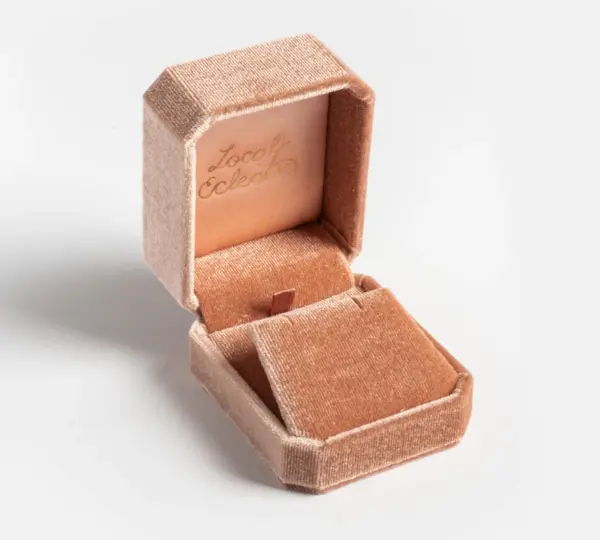
She carried the box inside like a prized possession, her movements deliberate and carefully observed. The packaging was simple, unassuming, but it held a handwritten instruction: Open in front of everyone.
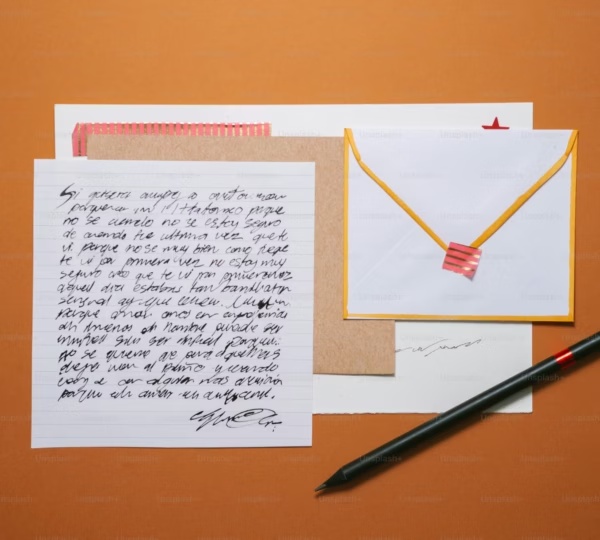
Inside was a small velvet pouch—and a letter. Linda unfolded the paper and began to smile, her fingers trembling slightly with anticipation, until she read the first line.
Her face drained of color. Her hands shook visibly. “No… Mom, that’s cruel,” she whispered, almost as if the words themselves carried a weight too heavy to bear. Silence fell across the room, thick and expectant. “Read it,” I said, my voice steady.
“It’s private,” she protested weakly.
“It says open in front of everyone,” my mother said firmly, the authority in her tone finally cutting through Linda’s theatrics.
Uncle Ray leaned forward, arms resting on his knees. “Out loud,” he said, making clear that this was no longer about secrecy or privacy.
Linda swallowed, trembling, and began. Her voice was tentative at first. “Linda… if you are holding this, it means you did exactly what I knew you would do.” The room tightened.
Every head turned, every eye fixed on her. The words were deliberate, slow, and calculated: I saw you take my ring in hospice. I chose not to stop you. I did not want a fight at my bedside. I did not want Kate blamed for telling the truth.
Hearing my name hit harder than the accusation itself. There was a pause, a brief intake of collective breath, before Linda continued. “I sold the real diamond ten years ago.”
“What?” my mom breathed, her hands flying to her mouth. Ray stood, rigid with disbelief. “Say that again,” he demanded.
I reached into the box and pulled out the pawn receipt, the edges worn and the ink slightly faded. Date. Amount. Signature. Evidence of a transaction made years before, quietly, intentionally.

Linda’s voice cracked as she kept reading, unaware that the very admission she thought would assert power now only revealed vulnerability. “I paid for your rehab.
You called me crying. You promised you were ready to change.” Silence filled the room, dense and almost suffocating. My mother whispered, almost to herself, “She sold her diamond for you.”
Linda’s protest came quick and sharp: “I didn’t ask her to!”
“Yes,” I said quietly, the truth heavy on my tongue. “You did.”
Ray’s gaze shifted to her pocket, where the stolen ring still rested. “So the ring—” he began, but I anticipated the conclusion.
Linda yanked it from her cardigan and slapped it on the table. The stone caught the light, dazzling and brilliant. Too bright. Too perfect. Too fake.
Grandma had replaced it with glass years ago. Linda had stolen a replica.
But the revelation wasn’t over. Beneath the first letter lay another envelope, marked distinctly: FOR KATE — OPEN IN FRONT OF EVERYONE.
Linda lunged for it instinctively, her reaction almost animalistic, but Ray intercepted, his frame a human barricade. I reached for it carefully, unfolding the paper with deliberate patience. Grandma’s handwriting was firm, precise, and deliberate.
“Kate,” the letter began, “you are the only one I trust to do what needs doing. There is a small account set aside for funeral expenses and Grandpa’s headstone cleaning. This is not an inheritance. It is a responsibility.”
Linda’s eyes sharpened instantly. “That’s money,” she said, voice laced with expectation.
I continued reading, unfazed. “Linda will try to twist this into a prize. She will cry. She will threaten. Do not give it to her.” The words cut through the room, a precise instruction, a blueprint for maintaining the integrity Grandma had always valued over theatrics or greed.
Linda shot to her feet. “Are you kidding me?”
My mother rose slightly, her presence calm yet authoritative. “Sit down,” she said firmly.
I finished reading the letter. “Within 24 hours, at Sunday dinner, you will read both letters out loud. All of it. Not to shame her, but to stop the lies that have stolen peace from this family.”
The room exhaled as one, a release of tension held for years, while Linda looked around, seeking rescue. There was none.
When Sunday came, she returned. Black dress, red-rimmed eyes, perfectly applied lipstick—an image of someone expecting judgment. She sat rigidly, poised as if awaiting a verdict.
I read the letters aloud again, methodically, carefully, ensuring each word, each nuance, each revelation landed fully. Hospice. The pawn receipt. The rehab money.
The glass stone. Each revelation stripped away the layers of illusion, exposing the quiet patterns of deception that had quietly eroded family trust for years.
Nobody spoke as the last words were read. Linda’s face betrayed the mix of shame, embarrassment, and helplessness she had long avoided confronting. She stood abruptly, breaking the silence, and said, “You all hate me.”
My mother shook her head slowly, deliberate and unwavering. “We don’t hate you. We’re done rescuing you.”

The words struck harder than any previous accusation, piercing through the performative grief, the pretense of mourning, and the misplaced sense of entitlement. Linda’s voice wavered. “I needed help.”
“You got it,” Ray said simply. “You just didn’t stop.”
For the first time, Linda appeared small. Vulnerable, almost human beyond the rehearsed grief she had perfected. “I took the ring,” she admitted finally. “I thought it was mine.”
There were no dramatics, no theatrics, no deflections. Just the raw truth, simple and undeniable. She left quietly that day. No slammed doors, no final flourish—just the soft click of closure.
The next morning, we went to the bank and placed the funeral account under dual signatures—mine and my mother’s—exactly as Grandma had instructed. Boundaries had been set.
Respect had been established. No applause was necessary. The act itself, quiet and deliberate, was the fulfillment of Grandma’s intent.
That night, I sat at the kitchen table, Grandma’s letters laid out before me. I traced her handwriting with my finger, feeling the intentionality in each stroke.
Her purpose was not to humiliate Linda. It was to expose a pattern. The stealing. The rewriting of history. The slow, quiet erosion of peace that had been ongoing for decades.
The clarity of her words revealed not anger, but wisdom, foresight, and the delicate balance of truth and love she had maintained to the end.
The following Sunday, I cooked a meal for the family. Grandma’s candle burned at the center of the table, flickering softly and casting warm shadows across familiar faces.
Linda’s chair remained empty, a silent acknowledgment of the consequences and the distance that honesty can create. We ate anyway.
Not because everything was fixed, not because grievances had been erased, but because for the first time in years, we were no longer pretending.
No one was pretending a glass stone was a diamond, no one was pretending past misdeeds hadn’t occurred, and most importantly, no one was pretending that the family’s peace could be bought or stolen.
In the aftermath, the letters became a touchstone, a lesson in trust, integrity, and responsibility. They reminded us that true inheritance is not about objects, wealth, or performance—it is about legacy, the careful stewardship of truth, and the boundaries that protect love from being manipulated.
Grandma’s wisdom lingered in the quiet, in the calm decision-making, and in the subtle authority with which she guided the family even after her passing.
Healing, I realized, doesn’t always come through closure, apology, or reconciliation. Sometimes, it begins with acknowledgment: naming what was done, seeing it for what it was, and choosing to move forward without deception.
That evening, as I cleaned the kitchen and placed Grandma’s letters carefully in the top drawer, I felt a quiet peace.
The family had faced the truth together, and for the first time in decades, the weight of stolen objects, manipulated memories, and unspoken grievances had been addressed.
Grandma’s strategy, subtle and brilliant, ensured that her final act was not the giving of material wealth, but the teaching of a timeless lesson: that boundaries, honesty, and responsibility matter more than appearance, performance, or temporary satisfaction.
And as we sat around that table, candlelight reflecting in the windows, I understood that her real inheritance was the gift of discernment—the ability to see clearly, act rightly, and uphold peace even when chaos surrounds you.
Sometimes, healing begins not in dramatic confrontation, but in quiet acknowledgment, deliberate truth-telling, and the courage to place responsibility where it rightfully belongs.
And sometimes, the simplest objects—a glass stone, a pawn receipt, a carefully written letter—carry the weight of a lifetime of lessons.
