
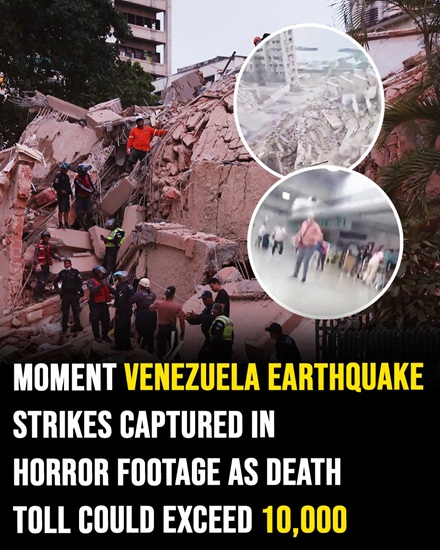
The northern coastline of Venezuela has been hit by a serious seismic disaster after two powerful earthquakes struck within a very short time of each other. The tremors, recorded at magnitudes of 7.2 and 7.5, were felt across large parts of the country, including the capital city Caracas and surrounding coastal regions. The rapid succession of the earthquakes increased the level of destruction and left many residents with very little time to react or seek safety. The epicenters were reported near the Caribbean coastal region, close to the state of La Guaira and west of the town of Morón.
This area is densely populated and includes important transport and infrastructure hubs, which contributed to the scale of disruption. The shaking was strongly felt both in coastal communities and further inland, with aftershocks continuing to be recorded in the hours following the main seismic events, raising ongoing concern among authorities and residents.
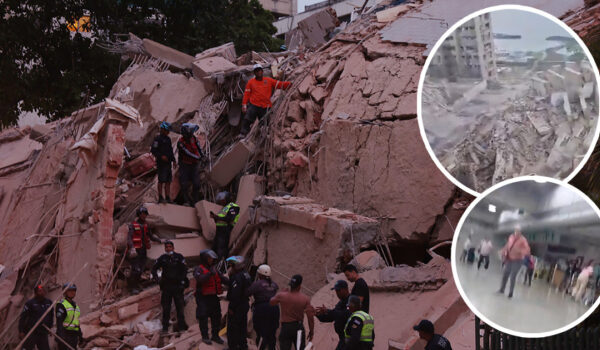
Emergency response teams were quickly deployed across the affected areas as reports emerged of collapsed buildings, damaged roads, and disrupted infrastructure. Officials confirmed that several structures, particularly older residential and commercial properties, suffered partial or complete collapse. Rescue operations have been complicated by debris and blocked access routes, forcing teams to work carefully and often manually to reach people believed to be trapped under rubble.
One of the most significantly affected facilities was Simón Bolívar International Airport in La Guaira, where operations were temporarily suspended after structural damage was reported. Authorities evacuated passengers and staff while conducting urgent safety inspections. The closure of the airport has created additional challenges for logistics and emergency coordination, although alternative entry points for aid and support are being evaluated.
Following the disaster, Venezuelan authorities declared emergency measures in the most heavily affected regions. Search and rescue missions were immediately launched with the priority of locating survivors trapped beneath collapsed structures. Temporary shelters have been set up in public buildings, including schools and sports centers, to provide accommodation for displaced families who lost access to their homes or chose to evacuate due to safety concerns.

Healthcare facilities in impacted areas are operating under significant pressure as hospitals treat a growing number of injured individuals. Medical staff have been working continuously despite difficulties caused by power interruptions and limited medical supplies. Authorities have confirmed that injury figures are still being updated as rescue teams reach new areas and more information becomes available from the field.
Several countries have begun coordinating international assistance efforts in response to the disaster. Search and rescue teams, along with medical and humanitarian aid units, are being prepared for deployment to support local operations. Cooperation between international organizations and Venezuelan emergency services is focused on accelerating urban search and rescue activities in the most heavily affected zones.
Government officials have emphasized that restoring essential services such as electricity, water supply, and communication networks is a top priority alongside ongoing rescue operations. Many affected communities are currently facing disruptions to basic utilities due to damaged infrastructure. Technical teams have been dispatched to assess conditions and begin repair work, although full restoration is expected to take time depending on the extent of damage.

Eyewitness reports and local media coverage describe widespread panic immediately after the earthquakes struck. Residents in multiple cities rushed into open areas as buildings shook violently and emergency alarms were activated. Videos circulating on social platforms show damaged structures, dust clouds, and large groups of people gathering in streets while awaiting official instructions and safety updates from authorities.
Authorities have also warned that aftershocks may continue in the region and have advised residents to avoid entering damaged buildings. Engineers are currently evaluating critical infrastructure including bridges, hospitals, schools, and transport systems to determine structural safety. These inspections will help decide whether buildings can be repaired or must be demolished due to severe damage.
Although early assessments indicate significant destruction, officials have stressed that final evaluations are still in progress. At this stage, there is no confirmed final count of fatalities or total economic losses. Emergency agencies continue to update information as rescue teams gain access to previously unreachable locations and communication lines are gradually restored.
The Venezuelan government has called for unity and international cooperation as recovery efforts continue. Authorities have highlighted that the immediate focus remains on saving lives, supporting displaced citizens, and ensuring medical care for the injured. Humanitarian organizations are also working to distribute essential supplies such as food, water, and emergency equipment to the most affected regions.
As developments continue, global attention remains on Venezuela’s recovery efforts and the resilience of affected communities. The coming days are expected to be crucial as more accurate information emerges and rescue operations continue to expand across the impacted areas.

