
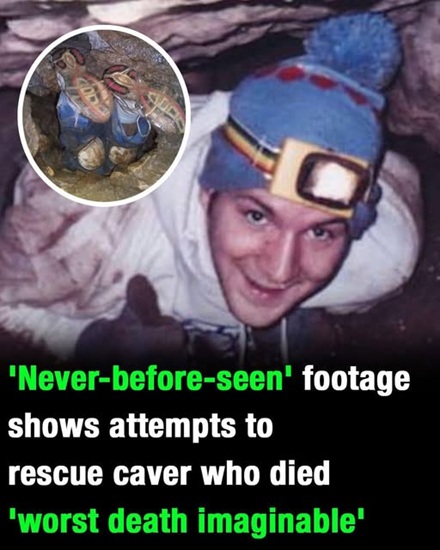
The story of John Edward Jones is one of the most haunting and widely remembered cave exploration tragedies in modern history. What began as a recreational underground adventure in Utah in 2009 ended in a devastating loss that deeply affected his family, rescuers, and the entire caving community. Over time, the incident has become a powerful reminder of the extreme risks associated with narrow, unmapped cave systems and the importance of safety in extreme environments.
John Edward Jones was a 26-year-old medical student, husband, and father. He was known by those close to him as intelligent, kind, and deeply committed to his family. Like many outdoor enthusiasts, he enjoyed physical challenges such as hiking, climbing, and cave exploration. For John, caving was not just a hobby but a way to experience nature in its most hidden and mysterious form. He had explored caves before and felt comfortable in underground environments that required careful movement and awareness.
On November 24, 2009, John joined his brother and several family members for what was intended to be a memorable recreational trip to Nutty Putty Cave in Utah County, near Utah Lake. At the time, Nutty Putty Cave was already known among experienced cavers for its extremely narrow passages, tight vertical squeezes, and complex underground structure. Although it had been temporarily closed in previous years due to safety concerns, it was still accessible through guided or permitted exploration.
The cave was both fascinating and dangerous. Its passages were formed through natural geological processes that created unpredictable tunnels, some of which required explorers to crawl, twist, and maneuver through extremely tight spaces. While this made the cave attractive to experienced adventurers, it also made it hazardous for even skilled individuals.
During the exploration, John and his group moved through familiar sections of the cave system. At some point, John became separated slightly from the main group while attempting to explore a narrow passage that appeared to connect to a known route. In reality, he had entered an unmapped and extremely confined section of the cave that resembled a continuation of the main tunnel but was significantly more dangerous and restrictive.
This passage quickly narrowed into a vertical crevice that measured approximately 10 inches in height and around 18 inches in width. The space was so tight that even experienced cavers would normally avoid attempting to pass through it headfirst. However, believing it might lead back to a familiar route or open space, John proceeded forward into the narrow opening.
As he moved deeper into the passage, gravity began to pull his body downward into the tight space. The angle of the tunnel caused him to slide further in headfirst, and within moments, he became completely wedged in an inverted position. His head was pointed downward into the narrow crevice, while his legs remained above him in a confined space that offered no leverage for movement.
At that point, escape became nearly impossible.
The structure of the cave prevented him from turning around or pushing himself backward. The walls were too tight, and the angle too steep for self-rescue. Even small movements caused him to shift deeper into the narrow passage, worsening his position.
Once his companions realized what had happened, they immediately attempted to assist him. They tried pulling him backward using a rope, but the confined space and the friction against the cave walls made extraction extremely difficult. Instead of freeing him, the tension often caused him to slide further into the crevice.
Recognizing the severity of the situation, they quickly called emergency services.
A large-scale rescue operation was launched, involving local fire departments, search and rescue teams, and experienced cave rescue specialists. The responders faced immediate challenges upon arrival. The cave system was extremely difficult to navigate, with passages so narrow that rescuers had to crawl through tight spaces while carrying equipment.
Inside the cave, conditions were dark, confined, and physically exhausting. Rescuers worked in shifts, rotating in and out of the underground environment due to the physical strain of moving through such tight tunnels. Equipment including ropes, pulleys, communication devices, and lighting systems had to be carefully transported deeper into the cave.
Reaching John was itself a major challenge. The location where he was trapped was not easily accessible, and rescuers had to move through narrow vertical shafts and winding passages to get close enough to assist him. Every movement required precision to avoid destabilizing the environment or causing additional collapse risks.
Once contact was established, rescuers attempted multiple extraction methods. They worked on constructing rope-and-pulley systems designed to shift his position upward. However, the angle of his body, combined with the tightness of the passage, made it extremely difficult to generate enough force in a safe and controlled way.
Time became a critical factor. Being trapped in an inverted position placed severe strain on John’s body. Blood flow, breathing, and physical endurance were all affected by the unnatural position. Rescue teams continued to communicate with him intermittently, providing reassurance and attempting to coordinate movements that could assist in freeing him.
Despite continuous and highly coordinated rescue efforts lasting approximately 27 hours, the situation did not improve. The narrow structure of the cave, combined with the angle of his entrapment, made successful extraction increasingly unlikely as time passed.
Eventually, John’s condition deteriorated beyond recovery while still inside the cave. The rescue teams, despite their tireless efforts and significant risk to themselves, were unable to safely extract him in time.
After his passing, the rescue operation transitioned into a recovery assessment. Due to the extreme difficulty of the cave’s structure and the danger involved in further excavation, authorities made the decision not to retrieve his body. The risk to additional rescuers was deemed too high, and the cave’s layout made recovery operations unsafe.
Shortly afterward, Nutty Putty Cave was permanently sealed. This decision was made to prevent any future incidents and to ensure that no other explorers would face similar danger in the same location. A memorial marker was placed at the entrance of the cave to honor John Edward Jones and acknowledge the tragic event that occurred there.
The impact of this incident extended far beyond the local community. Within the caving world, it became a significant case study in safety awareness, rescue limitations, and the dangers of unmapped or poorly understood cave systems. Training programs and safety discussions have referenced the event to emphasize the importance of preparation, caution, and understanding environmental risks before entering confined underground spaces.
For John’s family, the loss was deeply painful and permanent. He was remembered not only as an adventurer but also as a loving husband and father whose life ended far too soon. His story continues to be shared in educational contexts as a reminder of how quickly adventurous exploration can turn into a life-threatening situation.
Over the years, documentaries, safety analyses, and educational videos have revisited the Nutty Putty Cave incident, often highlighting both the bravery of the rescue teams and the extreme conditions they faced underground. While interpretations vary, the core facts remain consistent: a routine exploration turned into a tragic accident in one of the most challenging cave environments in the United States.
Today, the story of John Edward Jones remains a powerful reminder of the importance of caution in extreme environments. It underscores the need for proper preparation, awareness of risks, and respect for natural formations that can be unpredictable and unforgiving.
Most importantly, it stands as a lasting lesson that even experienced and careful individuals can face unforeseen dangers when exploring environments where space, visibility, and movement are severely limited.

