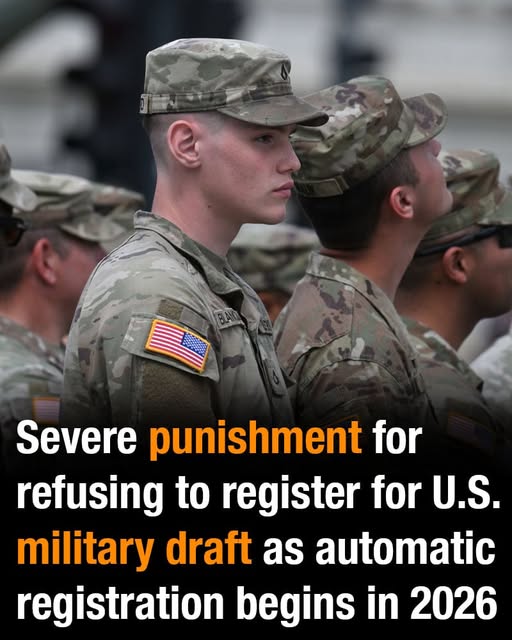
The Selective Service System in the United States is a long-standing federal requirement that applies primarily to male citizens and certain immigrants living in the country. It requires eligible individuals to register within a specific timeframe around their 18th birthday. This registration is not related to active military service today, but it remains a legal requirement under U.S. law. Many people encounter the system during early adulthood, often while applying for college financial aid, government jobs, or other federal programs.
At present, the registration process is still largely manual, although it has been modernized in recent years through online access. Individuals can register through the official Selective Service website or through certain government agencies that offer integrated registration services. Despite these improvements, the responsibility to ensure registration still rests with the individual. This means that failure to complete registration on time can still result in consequences later in life.
One of the most significant reasons Selective Service registration remains important is its connection to federal benefits. For example, eligibility for federal student aid programs, including grants and loans, can be affected if a person has not registered. In addition, some federal employment opportunities may require proof of registration. Certain states also link Selective Service compliance to driver’s licenses or professional licensing processes, depending on local laws.
A common issue among young adults is misunderstanding how the system works. Some assume that registration happens automatically through school records, tax systems, or other government databases. However, in most cases, this is not currently true. Unless an individual has explicitly completed registration or been confirmed through an authorized process, they are still responsible for ensuring it is done correctly and on time.
There have been ongoing discussions about modernizing government systems, including the Selective Service registration process. These discussions generally focus on improving efficiency by using digital databases and reducing administrative burdens. In theory, future systems could potentially integrate existing government records to simplify or automate parts of the registration process. However, as of now, such a system is not fully implemented nationwide and should not be assumed to replace current legal requirements.
Because of this transitional situation, clarity is very important. Any changes to how registration is handled would need to be officially approved and clearly communicated through government channels. Until then, the existing rules remain in effect. Individuals approaching the age of eligibility should assume that manual or direct registration is still required unless they receive verified confirmation otherwise.
Another important factor is timing. Eligible individuals are generally expected to register within a short window around their 18th birthday. Missing this window does not always create immediate consequences, but it can lead to complications later when applying for federal programs or verifying eligibility for certain opportunities. These issues may not appear right away, which is why awareness at the time of eligibility is essential.
From a broader perspective, Selective Service registration is part of a larger system of civic responsibility in the United States. While it is not directly related to active military enlistment, it serves as a legal framework that could be activated in extreme national circumstances. For most people, however, the system functions primarily as an administrative requirement rather than something that affects daily life.
Government systems across many sectors are increasingly moving toward digital integration and automation. This includes tax filing, social security services, healthcare systems, and education records. The idea behind these changes is to improve efficiency, reduce errors, and make processes easier for citizens. Selective Service modernization discussions are part of this broader trend, but implementation varies depending on policy decisions and legal frameworks.
One of the challenges during any transition to automated systems is ensuring accuracy. When multiple databases are connected, data consistency and verification become critical. For example, incorrect or missing information could result in a person being incorrectly marked as registered or not registered. Because of these risks, any automated system must be carefully tested and officially regulated before replacing manual responsibility.
Until such systems are fully established and confirmed, individuals are encouraged to take a proactive approach. This means verifying their registration status directly through official government resources and keeping confirmation records when available. Taking these steps helps ensure that there are no unexpected issues later in life when documentation is required for education, employment, or legal purposes.
Families often play an important role in this process, especially when individuals are approaching adulthood. Many young people are focused on education, career planning, and personal development during this time, so administrative responsibilities can sometimes be overlooked. Having awareness of requirements like Selective Service registration can help prevent avoidable complications in the future.
It is also important to understand that errors or missed registrations are not always permanent. In many cases, there are procedures for correcting or updating records. However, resolving these issues later may require additional documentation or administrative steps, which can be more time-consuming than completing registration correctly at the beginning.
The ongoing discussion about modernization does not eliminate current responsibilities. Instead, it reflects a gradual evolution of how government systems may function in the future. Even if automation becomes more widespread, transitions typically happen over time rather than immediately. During these periods, both old and new systems may operate simultaneously, requiring individuals to stay informed.
Ultimately, the most reliable approach is to follow official guidance from the Selective Service System and other government sources. Relying on assumptions about automation or future changes can create unnecessary risks. By confirming requirements directly, individuals can ensure they remain compliant and avoid potential complications later in life.
In conclusion, Selective Service registration remains an active legal requirement in the United States, even as discussions about modernization continue. While future improvements may simplify the process, current rules still apply today. Staying informed, verifying status, and completing registration on time remain the most important steps for eligible individuals.
Understanding this system is not about alarm, but about awareness. It ensures that individuals maintain access to opportunities that may depend on compliance. As government systems continue to evolve, clarity and responsibility remain essential during any period of transition.
