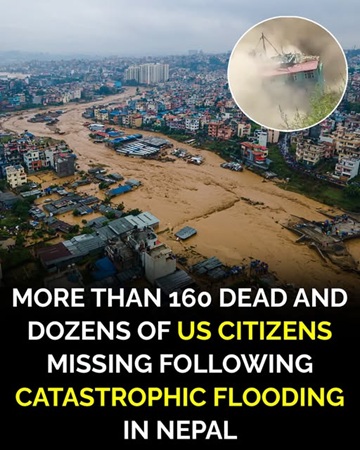
A catastrophic flash flood in the Himalayan region along the border between Nepal and China’s Tibet has caused widespread destruction, leaving hundreds of people dead and many others still unaccounted for. The disaster struck on August 26, sending an enormous mass of water, rock, ice and mud through mountain valleys and populated areas. Rescue teams have continued searching damaged communities while authorities work to establish the full scale of the losses.
The figures have changed rapidly as previously inaccessible locations are reached, making early casualty estimates quickly outdated. By early August 28, Reuters reported that Nepal’s confirmed death toll had reached 389, with almost 1,000 people reported missing across Nepal and neighboring Tibet. The disaster appears to have begun high in the Himalayas when part of a glacier collapsed and sent a huge avalanche of ice and rock toward the valley below.
The material moved into the Lhende Khola river system, generating a powerful debris flow and catastrophic flooding farther downstream. Subsequent analysis and satellite imagery helped researchers better understand how the event developed. The torrent traveled through steep mountain terrain with enormous force before reaching communities, roads and infrastructure located along the river system.
Early reports created some confusion about whether an earthquake had triggered the disaster. Seismic activity was detected around the time of the collapse, leading to initial questions about a possible earthquake in the region. Further analysis by the U.S. Geological Survey indicated that the recorded seismic signal was associated with the enormous mass of glacial ice and rock crashing onto the valley floor rather than a conventional earthquake. This distinction became important as scientists continued investigating the sequence of events that produced the flood.
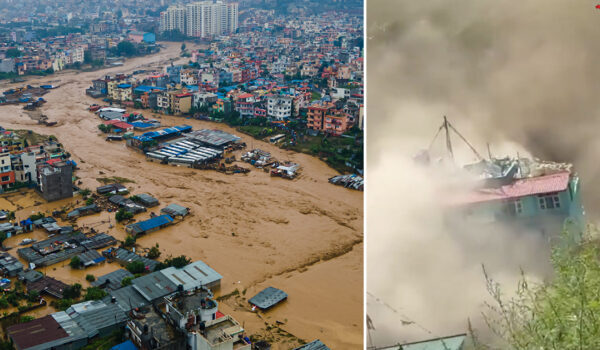
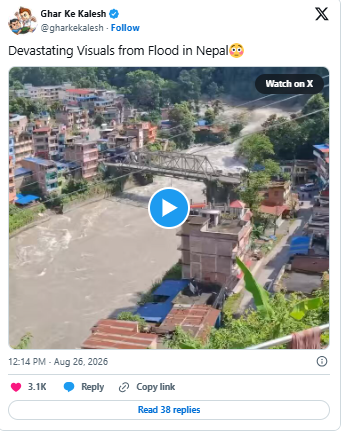
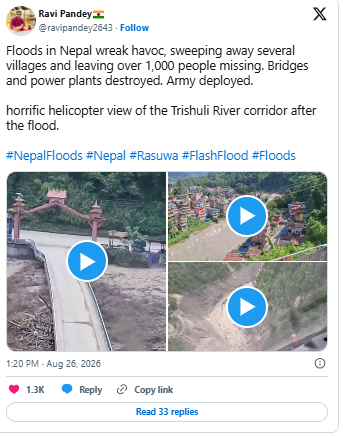
The speed and scale of the debris flow gave people in its path very little time to react. Verified footage from the affected region showed muddy water and debris moving rapidly through developed areas and destroying structures. Roads, bridges, homes and power facilities were among the infrastructure damaged or swept away. In several locations, the landscape was transformed as floodwater and debris altered river channels and covered previously populated areas with mud, rock and other material.
Rasuwa district in Nepal became one of the areas most severely affected. Communities near rivers experienced extensive destruction, while damaged transportation networks made it difficult for rescue teams to reach some locations. Helicopters were deployed because roads and bridges could no longer provide reliable access to every affected settlement. Emergency personnel also used heavy machinery and other equipment to search through debris as efforts shifted between rescuing survivors and recovering victims.
The mountainous geography has made the operation particularly difficult. Himalayan valleys can already be challenging to reach under normal circumstances, and the destruction of roads and bridges further complicated access after the flood. Some communities were left isolated, requiring emergency supplies to be delivered by air. Search teams have continued working despite unstable terrain and the possibility of additional hazards.
The number of missing people has also changed substantially as authorities have gathered more information. Hundreds of foreign visitors were among those initially reported unaccounted for because the affected region includes routes used by tourists and religious pilgrims. Visitors from numerous countries were traveling through Nepal or toward Tibet when the disaster occurred. Authorities and diplomatic missions have therefore been working to determine the whereabouts of their citizens while recognizing that early lists can contain incomplete or changing information.
Tourism officials reported large numbers of missing foreign nationals from countries including India, the United States, Britain, Canada, Australia, Malaysia, Ukraine and several others. India had one of the largest groups affected, reflecting the popularity of travel through this region among pilgrims heading toward sacred destinations in Tibet. Citizens of numerous European and Asian countries were also reported missing or temporarily unreachable.
For families waiting for information, uncertainty has become another painful part of the disaster. Communication networks were damaged in some locations, meaning that being temporarily unreachable does not automatically establish that a person has been killed or injured. Authorities must compare travel records, hotel information, tour-group lists and reports from survivors before determining someone’s status. For this reason, numbers describing missing tourists can rise or fall significantly as communications are restored and people are located.
American authorities confirmed that U.S. citizens had been affected and said diplomatic officials were working with local authorities and travel organizations. Nepalese tourism officials reported dozens of Americans among those missing. Because casualty and missing-person information has continued changing, diplomatic authorities have generally avoided treating preliminary numbers as permanent totals while efforts to locate individuals remain underway.
Canadian authorities have likewise been following developments and working to establish the status of citizens traveling in the region. Canadian officials emphasized that traveler-registration figures cannot provide a perfect count of how many citizens are physically present in a country at any particular moment. Registration programs are voluntary, meaning some travelers may never register while others may remain listed even after their travel arrangements change.
Britain, Australia, India and other countries have also been attempting to locate citizens traveling through the affected region. Australian officials said information from the disaster area was limited because of the scale of the destruction. Some missing travelers had been participating in organized pilgrimages or tours connected with Mount Kailash and Lake Manasarovar, destinations of major religious significance.
The location of the disaster helps explain why so many international travelers were potentially affected. The Nepal-Tibet border region serves as an important route for tourism, trade and pilgrimage. Travelers from different countries pass through the area while visiting Himalayan destinations or continuing toward religious sites in Tibet. A natural disaster affecting a major route can therefore involve people from many nationalities even when the most severe physical destruction occurs within a relatively concentrated geographic area.
On the Tibetan side of the border, Gyirong County also suffered major damage. The Gyirong border crossing was struck by the debris flow, with roads, communications systems and electricity disrupted. Chinese authorities reported hundreds of people missing in the region, including foreign nationals. Rescue crews faced considerable difficulty reaching the most severely damaged areas because access routes had been destroyed or blocked.
China mobilized emergency personnel to support rescue and recovery work. Authorities also evacuated people from areas considered vulnerable to additional geological hazards. Monitoring became particularly important because the initial disaster changed the landscape and created new risks involving blocked rivers and accumulating water.
One major concern after the original flood has been the formation of lakes behind natural debris dams. When rock, ice, trees and mud block a river, water can accumulate behind the obstruction. If the temporary barrier later fails, another sudden surge of water can travel downstream. Authorities in Nepal and China have therefore been monitoring newly formed or expanding bodies of water while rescue operations continue.
Nepalese authorities warned that a debris blockage along the Bhotekoshi River was creating additional flood risk. Chinese authorities separately monitored a large volume of water accumulating upstream. These secondary hazards demonstrate why the emergency did not end when the first torrent passed through the valleys. The landscape itself was altered by the disaster, meaning rescue personnel and nearby communities must continue watching for further changes.
Emergency operations have involved helicopters, ground teams, heavy machinery and specialized search resources. Helicopters have been particularly important for reaching communities cut off by destroyed roads. Supplies have been transported into isolated locations while injured people and survivors have been moved toward safer areas. Some search teams have also used dogs to help locate people among the debris.
Thousands of people have been affected directly or indirectly. Even individuals who survived without serious physical injuries may have lost homes, possessions, businesses or access to basic services. Damaged power facilities contributed to electricity disruptions, while destroyed transportation infrastructure complicated the delivery of food, water, medicine and other necessities.
Hydropower infrastructure was among the facilities affected by the flood. Mountain rivers play an important role in Nepal’s energy system, and infrastructure located near waterways can be particularly vulnerable to extreme floods and landslides. Damage to power installations therefore has consequences beyond the immediate flood zone because it can interfere with electricity supply and communications during an emergency.
Road destruction has created similar difficulties. Mountain highways often follow valleys because the surrounding terrain provides few practical alternatives. Those same routes can become extremely vulnerable when rivers suddenly expand or debris flows descend from steep slopes. Once a major bridge or section of highway disappears, entire communities can become difficult to reach by land.
The human accounts emerging from the disaster illustrate how quickly conditions changed. Survivors described seeing rivers rise and enormous quantities of mud and debris approaching with little warning. Some people escaped to higher ground, while others were rescued later by helicopter. Many families continue waiting for information about relatives who were traveling or living in affected communities.
Rescue workers face the difficult task of searching an enormous amount of debris. Buildings can be buried beneath mud, while vehicles and other objects may be carried considerable distances downstream. In a disaster involving fast-moving water, identifying exactly where to search can become complicated because victims may not remain near the location where they were last seen.
The international nature of the missing-person lists has resulted in coordination between Nepalese authorities, foreign embassies, tourism companies and governments around the world. Tour operators can provide passenger and itinerary information, while diplomatic officials can communicate with relatives and local authorities. Establishing accurate lists is especially important because initial reports made during chaotic conditions can contain duplication or people who later make contact safely.
The tragedy has also drawn offers of international assistance. Countries in the region and farther abroad have offered or provided support as Nepal responds to the scale of the emergency. International cooperation can include rescue personnel, emergency supplies, technical expertise and assistance for citizens affected while traveling.
Scientists have meanwhile been studying the physical causes of the disaster. Satellite imagery indicates that the lower section of a glacier near the Langtang Lirung area collapsed, producing an avalanche of ice and rock. The material traveled rapidly into the river system and created the destructive flood that moved through the valleys below.
Researchers continue examining why the glacier section became unstable. High-mountain environments are influenced by numerous interacting processes, and scientists have cautioned against reducing an individual event to one simple explanation before detailed analysis is complete. Temperature, ice conditions, geological structure, meltwater and patterns of freezing and thawing can all affect slope stability.
Climate change is an important part of the broader scientific discussion surrounding Himalayan hazards. Rising temperatures are contributing to glacier loss and changing conditions in high-mountain environments. Scientists have explained that warming can reduce the stabilizing influence of ice on mountain slopes and alter patterns of melting, freezing and rainfall. These changes can increase the likelihood of some types of cascading hazards involving rock, ice and water.
However, describing climate change as a factor influencing broader risk is different from claiming that it alone caused this specific collapse. Researchers continue studying the immediate sequence that produced the disaster. Maintaining that distinction is important because responsible reporting should reflect what scientists have established while acknowledging areas where investigation is continuing.
Nepal is particularly exposed to natural hazards because of its mountainous geography. Earthquakes, landslides, floods, avalanches and glacial-lake outburst floods have all affected the country historically. Communities located along steep valleys can face several hazards at once, especially when one event triggers another.
Glacial hazards are not unique to Nepal. Mountain regions in India, Tibet and other parts of the Himalayas have experienced destructive events involving ice, rock and sudden floods. The combination of steep terrain, large glaciers and populated river valleys means that a collapse high in the mountains can produce consequences far downstream.
The August 2026 disaster demonstrated this cascading process dramatically. What began high in the mountains became an avalanche, debris flow and then a destructive flood moving through river systems. The effects extended far beyond the original collapse site as water and debris traveled downstream and damaged communities and infrastructure.
Authorities are therefore not only searching the immediate area where the collapse occurred. River systems can transport debris and victims over substantial distances. Search and recovery operations have extended downstream as teams examine riverbanks, floodplains and areas where material accumulated.
The disaster has also highlighted the limitations of information during a rapidly developing emergency. Early reports gave much lower death and missing-person totals than figures confirmed only a day or two later. That does not necessarily mean earlier information was incorrect when released. Rescue teams simply had not yet reached every affected area or completed the process of identifying victims.
For the same reason, current numbers should also be understood as provisional while search operations remain active. Authorities have warned that the confirmed death toll could continue rising as additional locations become accessible. Missing-person totals may simultaneously decline when people make contact with relatives or authorities.
Responsible reporting therefore requires dates and context alongside casualty figures. Saying that a certain number of people had been confirmed dead at a particular time is more accurate than presenting an evolving number as a permanent final total. The same principle applies to nationalities among missing tourists because diplomatic agencies may release updated information as individuals are located.
Images and videos circulating online can document the extraordinary force of the disaster, but they should also be interpreted carefully. Footage from one location cannot necessarily describe conditions everywhere across the affected region. Likewise, dramatic images should not be used to support claims about casualty numbers unless those figures have been independently confirmed by responsible authorities or reliable reporting.
The focus remains on people still missing and communities requiring assistance. Search teams continue working through difficult terrain while emergency supplies are delivered to locations cut off from ordinary transportation. Families inside Nepal and around the world continue waiting for verified information.
The long-term recovery will extend beyond the immediate rescue operation. Roads, bridges, electricity infrastructure, homes and businesses will need to be repaired or rebuilt. Communities that depend on tourism may also experience economic consequences after the physical emergency has passed.
There will also be questions about future disaster preparedness. Scientists and authorities can use information gathered from the collapse to improve hazard monitoring, evacuation planning and understanding of high-mountain risks. Satellite technology and remote monitoring have become increasingly important because many dangerous glacier areas are extremely difficult to observe continuously from the ground.
For now, however, rescue and humanitarian needs remain the priority. The latest confirmed information shows that this was an exceptionally destructive natural disaster affecting communities on both sides of the Nepal-Tibet border and travelers from many countries.
The tragedy should not be reduced to dramatic social-media claims or unsupported explanations. Confirmed information already demonstrates the severity of what occurred: a major glacial collapse produced an avalanche and debris flow, catastrophic flooding followed downstream, hundreds of people died, many remain missing, and critical infrastructure was destroyed.
As rescue teams continue reaching affected areas, the numbers will likely continue changing. Updates should therefore rely on identifiable authorities and credible reporting rather than speculation circulating online. The exact final scale of the disaster will become clearer only after search operations progress and missing-person records are reconciled.
Behind every changing statistic are individuals, families and communities dealing with loss and uncertainty. For survivors, recovery involves far more than rebuilding physical structures. Homes, livelihoods and personal relationships have been disrupted in a matter of minutes.
The clearest account at this stage is therefore one that acknowledges both what is known and what remains uncertain. Hundreds have been confirmed dead, many others remain missing across Nepal and Tibet, international visitors are among those affected, and rescue operations continue under extremely difficult conditions.
As authorities gather more reliable information, further updates will provide a clearer picture of the disaster’s full consequences. Until then, separating confirmed developments from preliminary reports remains essential. In a rapidly changing emergency of this scale, accuracy and context are more valuable than speculation or sensational conclusions.
