
I thought stopping by my mother’s house after work would mean nothing more than sharing her favorite Thai takeout, catching up on the day, and enjoying a quiet evening together. She had mentioned earlier that week that her back had been bothering her again, so I figured she could use both the company and a meal she wouldn’t have to prepare herself. It sounded like the perfect way to end a long Tuesday. I had no reason to expect that opening her front door would reveal a situation that had been quietly developing for months without anyone in the family truly recognizing how serious it had become.
My mother lived only a few streets away from my husband’s older sister, Rachel. For years everyone had considered that arrangement convenient. Holidays were easier to organize, birthdays required less travel, and if someone needed help in an emergency, another family member was always nearby. We often described the neighborhood as one where family looked after one another. At the time, I believed that was exactly what was happening. Looking back, I realize there is an important difference between helping someone willingly and having your time quietly assumed to belong to everyone else.
Rachel often joked that Mom was “the extra grandmother every family wishes they had.” Everyone laughed because it sounded affectionate. I laughed too. It never occurred to me that behind those casual remarks was an expectation that my mother’s availability wasn’t something to ask about—it was something to count on. Rachel rarely wondered whether Mom had plans of her own. Instead, she simply assumed that if Mom happened to be home, she would naturally be available to help. At the time, I didn’t recognize how often those assumptions quietly replaced genuine conversations.
That Tuesday afternoon, I picked up our favorite takeout before heading toward Mom’s house. The smell of fresh basil, noodles, and curry filled my car as I drove through the neighborhood. I imagined finding her reading on the couch with a blanket over her knees, complaining about television judges or laughing about something she’d seen online. It had become one of our small traditions after my father passed away. Those evenings reminded me that even simple moments together could become meaningful memories.
When I reached the house, something immediately felt unusual. The front door wasn’t fully closed. Before I even stepped inside, I heard loud voices echoing through the hallway. Children were shouting over one another. Something heavy hit the floor. Someone burst into tears. For a brief moment I wondered whether neighborhood kids had wandered inside during a family visit. Then I recognized the voices. They belonged to Rachel’s children.
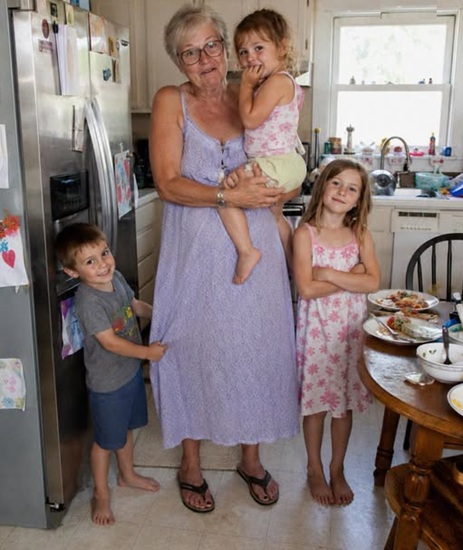
As I pushed open the door, balancing the takeout bags against my shoulder, I stopped in the middle of the hallway. Seven-year-old Noah was crawling beneath the dining room table searching for a toy dinosaur. Five-year-old Emma stood crying beside an overturned basket of laundry while socks and towels covered the floor. Two-year-old Caleb balanced dangerously on a kitchen chair, waving a wooden spoon over his head while laughing loudly. The kitchen timer beeped continuously, a pot boiled over on the stove, cereal covered part of the floor, and through the middle of the chaos stood my mother with one hand pressed firmly against her lower back.
She looked exhausted.
Not the kind of tired someone feels after a busy afternoon. She looked physically drained. Her shoulders sagged, her movements were slow, and every step seemed uncomfortable. The moment she noticed me, she forced a small smile that disappeared almost immediately. Before saying hello, she quietly asked me to turn off the stove because she was afraid dinner would burn before she could reach it. That simple request said more than any explanation could have. Instead of enjoying a peaceful retirement, she looked like someone struggling to keep up with responsibilities she had never intended to carry.
I immediately turned off the burner, moved the overflowing pot away from the heat, and began picking cereal off the floor while trying to calm the children. Caleb happily handed me the wooden spoon without understanding why everyone seemed so stressed. Emma sniffled as I helped gather the laundry, and Noah proudly emerged from beneath the table holding his dinosaur as though nothing unusual had happened. Only after the kitchen was safe did I finally ask the question that had been building in my mind since I walked through the door.
“Mom… why are Rachel’s children here?”
She lowered herself carefully into a chair, closing her eyes for a moment before answering. Instead of explaining immediately, she rubbed her forehead and sighed deeply. It was obvious she wasn’t trying to hide anything. She simply seemed embarrassed that I had discovered the situation this way. After another long pause, she quietly admitted that Rachel had dropped the children off early that morning, promising she would only be gone for about an hour. That hour had slowly turned into an entire day.
I looked at the clock.
It was nearly six o’clock in the evening.
“Does this happen often?” I asked gently.
Mom hesitated before answering. At first she said, “Every now and then.” Then, after another pause, she admitted the truth. It wasn’t every now and then. It happened several times each week. Some weeks Rachel brought the children over four separate mornings. She usually promised to return quickly, but unexpected errands, shopping trips, appointments, lunches, and other commitments somehow filled the rest of the day. Mom rarely knew exactly when Rachel would return.
The realization hit me harder than I expected.
My mother was sixty-eight years old. Her back pain had become worse during the previous year, and even carrying groceries sometimes caused discomfort. Yet she was regularly lifting a toddler, preparing meals, supervising three energetic children, cleaning up after them, and doing it all while pretending everything was perfectly manageable. What disturbed me most wasn’t simply the physical workload. It was that she seemed convinced she couldn’t say no without disappointing someone she loved.

