
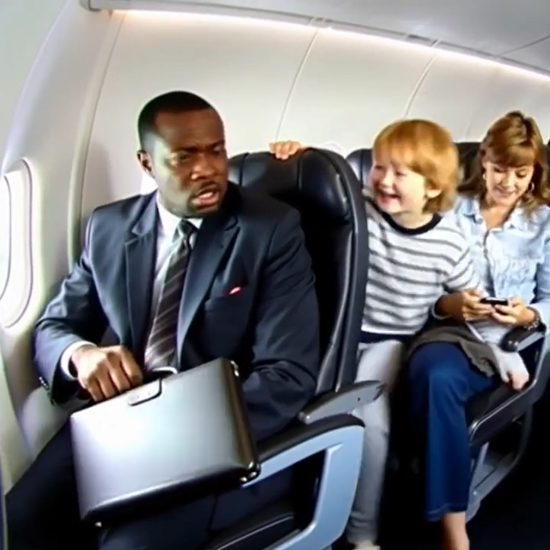
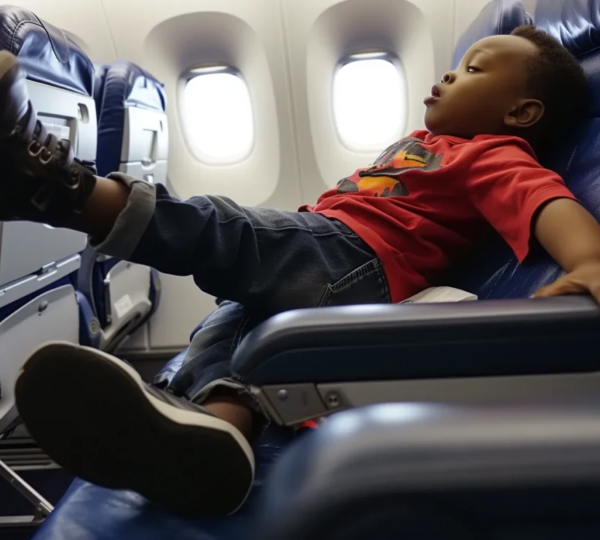
The rhythmic thumping from the seat behind me was relentless, a persistent reminder of a restless energy that seemed impossible to ignore.
I felt my patience fray, but I also recognized the opportunity to transform irritation into something unexpectedly positive.
Air travel often exposes one to minor frustrations, from crying infants to fidgeting children, yet it can also provide moments of human connection that are both surprising and profoundly meaningful. Today, I intended to see which path I would take.
I turned around, making eye contact with the boy’s mother, offering a reassuring nod that this interaction would be friendly, not confrontational. She smiled, a hint of relief in her expression, silently granting permission for engagement.
“Hey there, I couldn’t help but hear your questions about airplanes,” I said gently, my tone calm and inviting, designed to draw his attention without scolding. Curiosity sparked in his eyes, and the kicking slowed almost immediately.
“Do you want to know something really cool about airplanes?” I asked, leaning slightly forward to ensure I had his full focus. His enthusiasm was immediate and genuine: “Yeah!” he replied, sitting up straighter in his seat.
I took a measured breath, letting the moment settle before diving into an improvised lesson about flight. I began with the basic principles: lift, thrust, drag, and weight — the four forces that govern how planes stay airborne.
His eyes widened as I explained how wings are shaped to create lift, how engines generate thrust, and how aerodynamics ensures stability during flight. I could see the gears turning in his young mind, hungry for understanding.
I moved on to discuss the different types of aircraft, highlighting small propeller planes, massive passenger jets, and agile fighter planes, emphasizing each type’s unique capabilities and what made them special in aviation history.
To illustrate my points, I shared fun facts: how the Concorde could cross the Atlantic faster than sound, how gliders silently ride thermals without engines, and how some cargo planes transport incredible amounts of weight globally.
He listened intently, his small legs now still, his focus entirely captured by the stories of airplanes soaring through the clouds, navigating storms, and carrying passengers to destinations far beyond his imagination.
The mother whispered a soft “thank you” under her breath, her relief evident. She had likely experienced countless similar situations, and the sudden transformation of her son’s energy into curiosity was nothing short of miraculous in a crowded cabin.
I continued, weaving in anecdotes about aviation pioneers, like Amelia Earhart and Charles Lindbergh, whose daring flights paved the way for modern air travel, demonstrating courage, ingenuity, and a lifelong passion for exploration.
The boy asked questions, each one more detailed than the last. “How fast can a jet go?” he inquired. “What do pilots eat? How do airplanes know where to go in storms?” I answered with enthusiasm, keeping explanations age-appropriate yet engaging.
His imagination seemed boundless. He pictured himself as a pilot, navigating through the skies, performing aerial maneuvers, and safely landing planes at bustling airports, imagining adventures that spanned continents and oceans alike.
Other passengers gradually began to notice the animated discussion. Some chuckled quietly; others leaned in slightly, drawn to the infectious energy that had transformed what was once a minor disturbance into a shared moment of fascination.
I invited him to share his thoughts, encouraging him to speculate about what he might do if he became a pilot. He imagined designing his own airplane, piloting humanitarian missions, and flying to remote islands for scientific research.
He was captivated by the instruments in cockpits, asking about altimeters, artificial horizons, and radar screens. I explained how each tool helps pilots navigate, maintain altitude, and ensure passenger safety, weaving technical details into understandable terms.
The dialogue soon expanded, including nearby passengers who shared flying experiences, from simple sightseeing trips to stories of turbulence, snowy landings, and glimpses of wildlife from high altitudes, enriching the young boy’s understanding of aviation.
As the conversation continued, the kicks from behind subsided entirely. His curiosity transformed the cabin energy, turning frustration into collective engagement, where adults and children alike became participants in a miniature educational session at thirty thousand feet.
I shared stories of aviation breakthroughs, such as the first transatlantic flight and the development of jet engines. He was fascinated by how technology evolved over decades, allowing humans to conquer distance and connect the world.
We discussed airport operations, from air traffic control towers guiding landings to baggage logistics, and how teamwork in aviation ensures flights remain safe and efficient, impressing him with the complexity of the system behind each journey.
I explained how pilots train for emergencies, simulating situations in flight simulators, practicing landings in fog and storms, and rehearsing responses to mechanical failures, illustrating the dedication and skill necessary to fly modern aircraft safely.
He became increasingly animated, asking about different aircraft careers beyond pilots, including flight attendants, mechanics, and air traffic controllers. I described each role with enthusiasm, highlighting the teamwork necessary for smooth and safe operations.
The boy asked about airports themselves, curious how runways are maintained, how planes taxi safely, and why air traffic patterns are strictly regulated. Each answer revealed layers of aviation knowledge I hadn’t expected to recount on this flight.
I shared fun trivia about airline history: the evolution of uniforms, iconic aircraft liveries, and even the story of the first commercial flight, illustrating that aviation has always captured human imagination and ambition.
Soon, he began recalling facts himself, repeating information with delight. He asked nearby passengers to share additional insights, turning a quiet flight into a collaborative storytelling session that united strangers around curiosity and learning.
The mother looked increasingly relaxed, her gratitude visible. What had started as a minor annoyance — a restless child bouncing behind my seat — had evolved into a shared journey of knowledge and wonder, a testament to human adaptability.
By this point, other children in the cabin were quietly listening, drawn into the narrative of planes and pilots, as adults nodded and smiled, appreciating the creativity and patience on display during what could have been a tense moment.
I shared stories of famous flights, such as the moon landing support flights, supersonic travel, and pioneering long-haul routes, helping him understand that airplanes are not just machines but symbols of human exploration and ambition.
We discussed aerodynamics in simple terms, like why wings curve and how airflow creates lift, demonstrating how science, technology, and imagination combine to make modern flight possible, all framed in a narrative he could visualize and remember.
As the journey neared its end, he asked about careers in aviation, inspired to imagine himself designing aircraft, becoming a pilot, or joining space programs, his dreams expanding with each new piece of information shared in the cabin.
The plane’s announcement for descent approached, and passengers began gathering belongings. The boy’s mother leaned in, smiling warmly. “Thank you for your patience and for engaging him,” she said sincerely, a moment of quiet acknowledgment for the effort invested.
“Happy to help,” I replied. “He’s got a bright, inquisitive mind. Perhaps a future pilot?” The boy grinned, his imagination fully ignited, excited about the endless possibilities that awaited him above and beyond the clouds.
As the aircraft touched down smoothly, I realized that what began as a minor annoyance had blossomed into an unexpected journey of human connection, knowledge-sharing, and shared curiosity that transcended age and familiarity.
The young boy’s enthusiasm left an impression on everyone around, reminding me that patience, creativity, and willingness to engage can turn frustration into an opportunity to inspire, educate, and delight in the simplest ways.
Even after leaving the aircraft, I reflected on the profound simplicity of the moment: a child’s curiosity, combined with a willingness to respond thoughtfully, can transform ordinary experiences into meaningful, shared memories that linger long afterward.
As the cabin emptied, I could still hear echoes of questions about speed, engines, and destinations, evidence that a single spark of engagement can ripple outward, influencing not only one child but an entire community of travelers.
The boy’s imagination had been activated in a way few toys or books could accomplish, his mind alight with ideas about flight, adventure, and the mechanics that make the human dream of flying a tangible, achievable reality.
His mother’s quiet satisfaction was a subtle reminder that small acts of patience and education have ripple effects, nurturing curiosity, confidence, and the potential for lifelong interest in learning, creativity, and exploration.
By the end of the journey, what could have been a disruptive flight became a collaborative, joyful, and educational experience, highlighting the potential of patience, improvisation, and empathy in turning minor frustrations into shared enrichment.
Even as I disembarked, the image of the boy, wide-eyed and smiling, remained with me, symbolizing the extraordinary impact of curiosity, engagement, and the transformative power of human connection within even the most ordinary moments of travel.
The lesson endured: frustration can either escalate or transform. By choosing engagement over irritation, I had witnessed the power of turning impatience into education, annoyance into fascination, and strangers into participants in a shared, imaginative journey.
As the airport terminal buzzed with travelers, the boy’s laughter and questions lingered in my mind, proof that curiosity, patience, and human connection can resonate far beyond the immediate moment, leaving lasting impressions on everyone involved.
Even weeks later, the memory of that flight served as a reminder of the profound, sometimes unexpected opportunities to teach, inspire, and connect with those around us, no matter how restless, energetic, or disruptive they may initially seem.
