
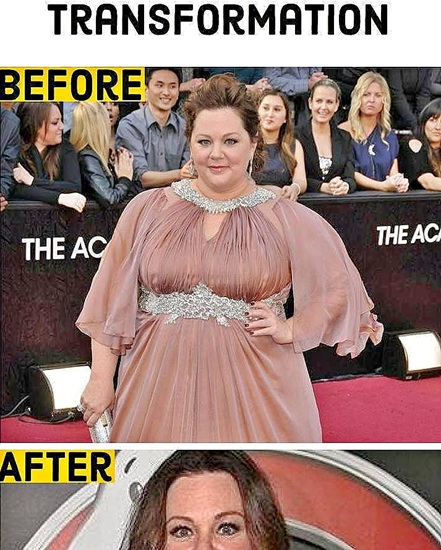
Melissa McCarthy has spent decades proving that her success cannot be reduced to her appearance or a number on a scale. Born on August 26, 1970, the actress, comedian, writer and producer is 55 as of August 2026. She became a familiar face through television before developing into a major film performer, earning acclaim for both comedy and drama. Although changes in her appearance have attracted considerable attention over the years, McCarthy had already established an impressive career long before conversations about her weight became a regular feature of celebrity coverage.
Throughout her career, McCarthy has experienced the intense scrutiny that often surrounds women’s bodies in the entertainment industry. She has discussed receiving comments about her size and encountering assumptions that losing weight could improve her professional opportunities. Yet her career developed in a very different direction from what those assumptions predicted. Rather than waiting until she matched a conventional Hollywood ideal, McCarthy continued working, auditioning and building a reputation based primarily on her ability to make audiences laugh and connect with the characters she portrayed.
Her early television work helped establish that reputation, but her film career eventually brought her to an entirely different level of recognition. One of the most important turning points arrived with the 2011 comedy Bridesmaids. McCarthy’s performance as Megan became one of the movie’s most memorable elements, combining outrageous comedy with a surprising amount of warmth and confidence. The performance earned her an Academy Award nomination for Best Supporting Actress at the 84th Academy Awards in 2012.
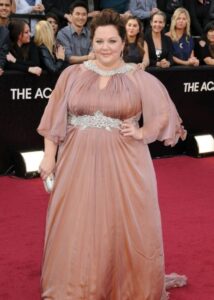
That nomination is particularly important when discussing McCarthy’s body transformation because it demonstrates that her professional credibility did not begin after she lost weight. She was already receiving recognition from the Academy while her larger body remained part of her highly visible public image. Her ability to command attention on screen had little to do with fitting a specific physical standard and considerably more to do with timing, character development and her willingness to commit fully to a performance.
McCarthy later demonstrated that her abilities extended far beyond broad comedy. In Can You Ever Forgive Me?, she portrayed writer Lee Israel in a restrained dramatic performance that differed substantially from many of the roles audiences associated with her. Her work earned her a second Academy Award nomination, this time for Best Actress at the 91st Academy Awards in 2019. As of 2026, McCarthy has therefore received two Oscar nominations, although she has not won an Academy Award.
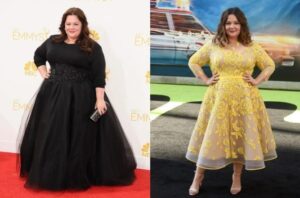
The distinction matters because articles sometimes describe McCarthy vaguely as having been “close to an Oscar” several times. The documented achievement is stronger and more precise: she has been officially nominated twice for acting, once in a supporting category and once as a leading actress. Those nominations also came for remarkably different performances, demonstrating a range that helped move her beyond being viewed exclusively as a comedy star.
Meanwhile, McCarthy’s relationship with her weight has changed repeatedly throughout her adult life. She has been candid about experiencing fluctuations rather than presenting her body transformation as one simple journey from a starting point to a permanent destination. She has acknowledged periods when she gained weight and periods when she lost it, while gradually developing a less stressful attitude toward the subject.

One notable experience occurred in 2003, when McCarthy followed a medically supervised all-liquid diet. She later recalled losing a substantial amount of weight during that period but described the experience negatively. She has said she felt hungry and mentally uncomfortable, and she did not portray the restrictive approach as something she wanted to repeat. That history is important because it challenges the idea that extreme restriction was the secret behind her later changes.
Over subsequent years, McCarthy described a considerably different approach. Instead of promoting a dramatic crash diet, she increasingly talked about reducing the amount of anxiety and obsession surrounding her weight. Her public comments suggested that becoming less consumed by the subject helped her develop a more manageable relationship with food, exercise and her body.
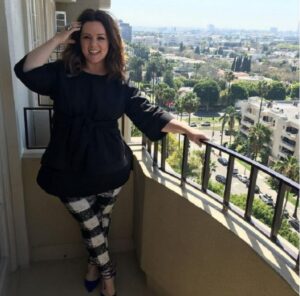
McCarthy has also spoken realistically about fluctuations. Rather than promising that she had discovered a permanent formula that would keep her body at one particular size forever, she acknowledged that her weight might continue changing throughout her life. That perspective is far more consistent with her documented comments than claims that she achieved one final transformation through a secret method.
For that reason, precise numbers circulating online should be treated cautiously. Some articles claim that McCarthy once weighed approximately 110 kilograms and later reached approximately 70 kilograms. While her appearance has clearly changed and she has publicly discussed significant weight loss at different times, exact current measurements should not automatically be treated as confirmed facts unless McCarthy herself provides them through a reliable source.
Photographs cannot determine someone’s precise weight. They also cannot establish someone’s health. Clothing, camera angles, lighting, age and many other factors can affect how a person’s body appears in an image. Responsible coverage should therefore avoid presenting estimates from celebrity websites as though they were verified medical measurements.
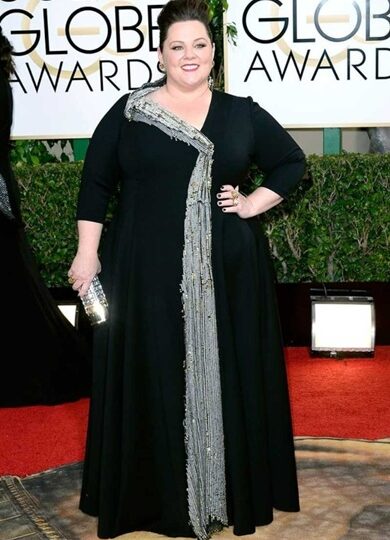
The same principle applies to McCarthy’s height and other personal measurements. Such numbers are frequently repeated across entertainment websites, but repetition does not necessarily transform an estimate into a confirmed fact. The more reliable story is the one McCarthy herself has discussed: her body has changed considerably at different stages of her life, and her attitude toward those changes has evolved as well.
In recent years, celebrity weight loss has increasingly generated speculation about medications. McCarthy became part of that conversation in 2024 after Barbra Streisand left a comment on one of her social-media photographs asking whether she had taken Ozempic. The comment quickly attracted widespread attention before Streisand explained that she had intended to compliment McCarthy’s appearance rather than publicly criticize her.
McCarthy responded with humor, emphasizing how delighted she was that Barbra Streisand had noticed her and thought she looked good. Importantly, Streisand’s question did not constitute evidence that McCarthy had actually used Ozempic, and McCarthy’s response did not confirm that she had done so. Treating the exchange as proof of medication use would therefore turn speculation into an unsupported health claim.
The episode highlights a larger issue with celebrity transformation stories. When a public figure loses weight, people often attempt to identify a single explanation immediately. Diets, medications, surgery and exercise routines may all be suggested despite the absence of direct evidence. Yet medical choices remain personal unless an individual chooses to disclose them publicly.
McCarthy’s own history offers a much more nuanced picture. She has discussed weight loss, restrictive dieting, fluctuations and changes in how much mental energy she gives to the scale. None of those comments establish one universal method responsible for every physical change audiences have noticed.
Her changing perspective also appears connected with getting older and raising a family. McCarthy and her husband, filmmaker and actor Ben Falcone, have two daughters. McCarthy has spoken over the years about body image in ways that suggest she wants her children to develop confidence without believing their value depends on fitting a narrow physical ideal.
That perspective is understandable given her own experiences in Hollywood. McCarthy entered an industry in which women routinely face unusually intense scrutiny over appearance, age, clothing and body size. Rather than allowing those standards to determine whether she deserved major roles, she continued working and eventually became one of the industry’s most recognizable performers.
Her experiences also influenced her interest in fashion. McCarthy has discussed the limited clothing options historically available to women who wear larger sizes. She challenged the assumption that plus-size women should have fewer choices or less interest in fashion simply because conventional retailers did not always serve them adequately.
That part of her public story remains relevant even after her body changed. Celebrating McCarthy exclusively because she became thinner would risk suggesting that the person audiences knew before the transformation somehow needed correcting. Her own career contradicts that idea.
McCarthy was successful before significant weight loss.
She was funny before it.
She earned an Oscar nomination before it.
She was a major television and film performer before it.
Her physical transformation did not create those qualities.
Instead, her weight journey represents one personal aspect of a much larger life and career. She decided at different times to make changes, experimented with different approaches and eventually described a more relaxed relationship with weight than she had experienced earlier.
That distinction is especially important for readers who may encounter celebrity transformation stories while considering changes to their own health. A celebrity’s appearance should not function as medical advice. Individual health circumstances differ, and a method that may be appropriate for one person may be unsuitable for another.
McCarthy herself has never needed a particular weight to prove that she belonged on screen. Her first Academy Award nomination remains one of the clearest examples. Megan in Bridesmaids became memorable because of McCarthy’s performance, not because audiences were evaluating her measurements.
Her later work in Can You Ever Forgive Me? strengthened that point. The role required a very different kind of performance, and McCarthy received another Oscar nomination. Moving successfully between broad comedy and quieter dramatic material demonstrated professional versatility that cannot meaningfully be explained through physical appearance.
That versatility has been central to her longevity. Hollywood careers can be unpredictable, particularly for performers strongly associated with one genre. McCarthy managed to establish herself as a comedy star while still demonstrating that she could handle roles requiring considerably different emotional tones.
Her public confidence has similarly developed over time. Earlier experiences with dieting reveal periods when weight occupied considerable space in her life. Later comments indicate that she became less willing to allow the scale to dominate her thoughts.
This does not mean that McCarthy stopped caring about health or appearance. Rather, her statements suggest that she developed a broader perspective about what deserves her attention. Career, family, happiness and feeling comfortable in her life became important parts of that conversation.
Her experience with the liquid diet provides a useful example of why dramatic results are not always synonymous with a positive experience. Although she lost weight, she later remembered being hungry and unhappy. A lower number on the scale did not automatically make the process beneficial from her perspective.
That is why claims about “the secret” behind McCarthy’s transformation can be misleading. Her story unfolded over many years and included multiple changes rather than one miraculous intervention. She has never provided evidence supporting many of the simplistic explanations that circulate online.
Similarly, before-and-after photographs can create an illusion of overnight change. Two images separated by several years remove everything that happened between them. Gradual changes suddenly look immediate, and readers may assume an extreme intervention occurred when the reality may have been far more complicated.
McCarthy’s story deserves more context than that.
Her body changed.
Her relationship with weight changed.
Her career changed.
Her priorities evolved.
Yet the persistence visible throughout her professional life remained remarkably consistent.
She continued working when people questioned whether someone with her body type could become a major Hollywood performer. She continued expanding the kinds of characters she portrayed. She eventually earned two Academy Award nominations in two different acting categories.
Those accomplishments provide a stronger measure of her career than comparing photographs or estimating kilograms.
McCarthy has also demonstrated an ability to respond to public scrutiny with humor. Her reaction to the 2024 Streisand incident is a good example. Rather than escalating the situation into a dispute, she focused on the amusing fact that one of the entertainment figures she admired had noticed her.
At the same time, her response did not provide permission for the public to speculate freely about private medical information. Appearance alone cannot confirm medication use, medical conditions or someone’s overall health.
That principle should apply to any celebrity, not merely McCarthy.
Public figures may choose to discuss parts of their lives, but they do not automatically surrender every aspect of their medical privacy because they appear in photographs.
For McCarthy, the verified information is already interesting without adding speculation. She has publicly discussed weight fluctuations. She has spoken about an earlier restrictive diet she disliked. She later described taking a less obsessive approach to the subject. Her appearance has changed considerably over the years.
Those facts are sufficient.
There is no need to attach an unverified medication, exact current weight or supposed secret program to make the story compelling.
Her career provides the more substantial transformation.
McCarthy moved from television success into major Hollywood films. She became a leading comedic performer, earned an Academy Award nomination for Bridesmaids, and later earned another for the dramatic Can You Ever Forgive Me?
That progression required considerably more than changing her appearance.
It required persistence, timing, creative risk and an ability to remain relevant in a competitive industry.
McCarthy’s experience also challenges a persistent cultural assumption that physical transformation automatically produces confidence. Her career demonstrates that confidence and achievement can exist at many different body sizes.
She was not waiting to become thinner before pursuing success.
She pursued success while living in the body she had at each stage.
Later changes were part of her personal journey rather than permission to begin living professionally.
That is perhaps the most useful way to frame her story.
A person’s decision to lose weight can be meaningful without suggesting that their previous body was a failure.
A physical change can be acknowledged without turning it into a moral achievement.
And someone’s professional accomplishments can be celebrated without making their appearance the primary measure of their worth.
McCarthy’s journey contains all of those distinctions.
Over the years, she has experienced public criticism, professional success, physical fluctuations and changing priorities. Through those stages, she continued appearing on screen and developing her career.
Today, attention may still follow photographs showing a noticeably different Melissa McCarthy from earlier periods.
That attention is understandable.
But it tells only part of the story.
The more complete story involves an actress who succeeded before the transformation, continued succeeding during periods of change and remained professionally relevant afterward.
It involves someone who learned from an earlier restrictive dieting experience rather than presenting it as an ideal solution.
It involves a mother who has discussed body confidence while raising daughters in a culture where appearance can receive enormous attention.
And it involves a performer whose dramatic abilities eventually earned the same kind of major recognition that her comedy had already received.
As of August 2026, McCarthy is 55 and has two Academy Award acting nominations to her name. Those are verifiable milestones. Exact claims about her present weight, however, should be treated with greater caution unless she chooses to confirm them herself.
That approach allows her transformation to be discussed without turning speculation into fact.
It also avoids presenting weight loss as the achievement that finally made her successful.
Melissa McCarthy did not need to become thinner to establish her place in Hollywood.
She had already done that.
Her changing appearance represents one chapter of a much longer story about work, confidence, family and learning how much importance to give other people’s expectations.
Perhaps that is why her journey continues to attract attention.
The visible change may be what initially catches people’s eyes, but the more enduring transformation involves how she appears to have changed her relationship with the subject itself.
Instead of presenting one perfect weight as the conclusion of the story, McCarthy has acknowledged that bodies can fluctuate.
Instead of promoting severe restriction, she has spoken negatively about an earlier extreme dieting experience.
Instead of allowing outside commentary to define her, she has continued working.
That is a more grounded and responsible way to understand her transformation.
Melissa McCarthy’s body may look different from how it did during earlier stages of her career, but the qualities that helped establish that career were already there: determination, comedic timing, versatility and a willingness to keep moving forward.
Those qualities cannot be measured in pounds or kilograms.
And unlike a number on a scale, they have remained remarkably consistent.

