
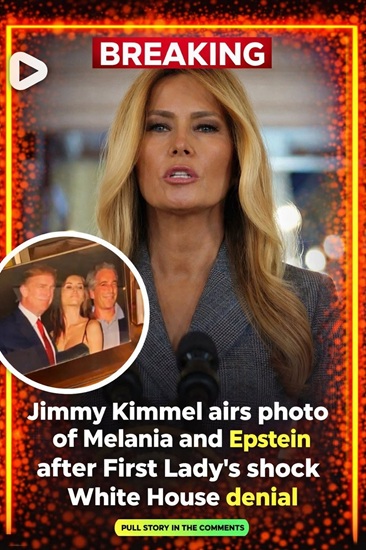
Recent public attention has turned toward First Lady Melania Trump after renewed online and media discussion surrounding her past social associations. The topic resurfaced as social media users and commentators revisited historical narratives involving high-profile social circles in New York and Palm Beach, which have long been subjects of public speculation. In a recent public statement, Melania Trump addressed these discussions directly, emphasizing that many of the claims circulating online have been repeatedly misinterpreted or taken out of context.
Her response focused on clarifying her position and rejecting narratives that she believes lack verified support or proper context. She stated that appearances in shared social environments should not automatically be interpreted as evidence of close personal relationships. According to her clarification, individuals in high-profile social and business circles often attend the same events without having direct or meaningful personal connections. This point formed the basis of her attempt to separate public perception from private reality.
The discussion gained additional visibility after commentary from media and entertainment programs revisited older photographs and public appearances involving various well-known individuals. These discussions were largely driven by online circulation and television commentary, which often reinterpret historical material for modern audiences.
A segment from a late-night talk show contributed further to the renewed attention by referencing widely known archival images. The commentary used a satirical format, which is common in such programs, to highlight how public figures and past associations are interpreted differently over time depending on context and perspective.
As a result, online conversations expanded rapidly, with users expressing differing opinions about the meaning and relevance of the resurfaced material. Some viewed it as harmless historical discussion, while others saw it as an example of how public narratives can be reshaped through media framing and repetition.
During this period, additional commentary also raised broader questions about how public figures respond to fast-moving media cycles. In many cases, responses to online narratives must be issued quickly, even when the original events being discussed occurred many years earlier and under different circumstances.
Media analysts often note that modern communication platforms blur the distinction between verified reporting, commentary, and speculation. As a result, public perception can be influenced not only by official statements but also by how information is shared, edited, and repeatedly circulated online.
As the topic continued to trend, reactions remained divided. Supporters of Melania Trump emphasized her effort to address what they viewed as ongoing misinterpretations, while others focused on the broader historical context of the social environments being discussed. This division reflects how complex and subjective public interpretation of past events can become.
Experts in media and political communication point out that visual material, especially photographs, plays a powerful role in shaping public opinion. Once images enter the digital space, they can be repeatedly shared and reinterpreted, sometimes gaining new meanings that extend beyond their original context.
In this case, renewed attention to older images and commentary has shown how quickly past associations can re-enter public discourse. Even long-standing narratives can be revived when triggered by media coverage, commentary segments, or viral social media discussions.
The situation also reflects a broader pattern in modern political communication, where public figures and their families are subject to continuous scrutiny. In today’s media environment, information spreads rapidly, and interpretations can shift quickly depending on the source and framing of the content.
Ultimately, the renewed discussion surrounding Melania Trump highlights the intersection of media, politics, and public perception. Statements, images, and commentary often combine to form broader narratives that extend beyond their original meaning or context.
As the conversation continues, it remains part of a wider discussion about how public figures are portrayed in the digital age, how historical material is interpreted, and how media influence shapes collective understanding over time.

