
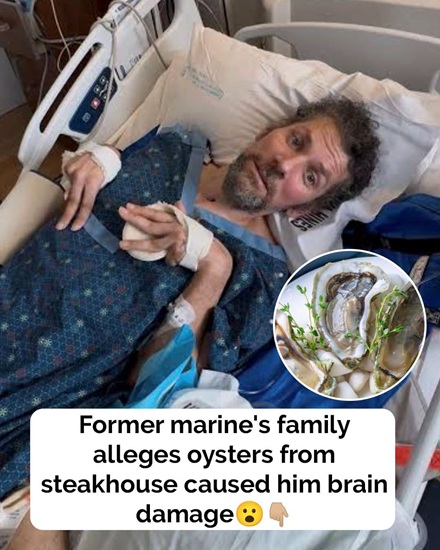
What began as a family dinner at an Illinois steakhouse later became the subject of a major medical and legal dispute after a retired firefighter and Marine veteran suffered a catastrophic health emergency. Joe Belgio, 44, visited Gibsons Bar & Steakhouse in Oak Brook, Illinois, on June 30, 2025, together with his fiancée, Melanie Stayer, and members of their family. According to a lawsuit later filed on his behalf, Belgio ate raw oysters during the meal. Three days afterward, he suffered cardiac arrest and sustained a severe brain injury that has dramatically changed his life.
Belgio had spent much of his adult life serving other people. He previously served in the United States Marine Corps and later worked as a firefighter with the Cicero Fire Department in Illinois. He was also known as a father and Little League coach. His fiancée has described the June dinner as an ordinary family gathering intended to celebrate life together. Nothing about the evening suggested that the family would soon be facing an extended medical crisis.
According to Belgio’s legal team, his condition deteriorated rapidly in the days following the dinner. On July 3, 2025, he suffered cardiac arrest and was unconscious for several minutes before first responders were able to revive him. The emergency was especially personal because members of the Cicero Fire Department, the same department where he had once worked, were involved in helping save his life.
After being revived, Belgio was transported to the hospital for emergency treatment. His attorneys say the lack of oxygen during the cardiac arrest caused an anoxic brain injury. This type of injury can occur when the brain is deprived of oxygen for a significant period and may result in serious, lasting neurological impairment. Belgio’s condition was severe enough that he required prolonged hospitalization and intensive medical care.
His legal team has said that he remained in a coma for months. Since then, he has reportedly been left with profound cognitive and physical limitations. Attorneys representing him have publicly stated that he is expected to require continuous assistance and specialized care for the rest of his life. Those descriptions reflect statements from his legal representatives and should not be interpreted as an independent medical prognosis beyond what has been publicly reported.
The lawsuit claims that Belgio became ill after exposure to pathogens that his attorneys allege were associated with the oysters he ate at Gibsons. Court filings have referenced several organisms, including Enteropathogenic E. coli, commonly known as EPEC, as well as Plesiomonas shigelloides and Vibrio cholerae. Belgio’s attorneys argue that those findings support their claim that the oysters triggered the illness that ultimately led to his cardiac arrest.
That allegation, however, remains disputed.
Gibsons Restaurant Group has denied that the restaurant caused Belgio’s condition. The company has said that it conducted its own review and found no evidence connecting its oysters to his illness. The restaurant has also stated that it received no reports of other customers becoming sick from the same oysters.
Because the lawsuit is still ongoing, it has not been established by a court that the oysters caused Belgio’s medical emergency. That distinction is important. The connection between the food he ate and the medical crisis is currently an allegation made by Belgio’s legal team rather than a final legal finding.
Gibsons has also expressed sympathy for Belgio and his family while maintaining its position that the restaurant was not responsible. The company has said that food safety is an important part of its operations and that it expects the legal process to examine the evidence fairly. Its position directly conflicts with the allegations contained in Belgio’s lawsuit.
The legal action also names companies involved in the seafood supply chain. Among the defendants identified in court filings are Supreme Lobster and Seafood Company and Taylor Shellfish Company, along with other entities connected to the distribution or supply of the oysters. Belgio’s attorneys contend that contaminated seafood reached him through that supply chain.
Those companies, like Gibsons, are entitled to contest the allegations and present evidence as the case moves forward. The lawsuit must therefore be understood as an unresolved dispute involving several parties rather than a completed determination of responsibility.
For Belgio himself, the legal questions are only one part of a much larger reality. His medical condition has reportedly left him unable to live the independent life he had before the cardiac arrest. His attorneys have described serious neurological impairment and a need for rehabilitation, therapy and continuous support.
More than a year after the original incident, Belgio remained under medical care. Public reports have said that he was receiving treatment at a Veterans Affairs medical facility and continued to need significant assistance. His family has had to adjust to circumstances that were unimaginable before the June 2025 dinner.
His fiancée, Melanie Stayer, has spoken publicly about the emotional impact of what happened. She has said the family had simply wanted to spend time together and celebrate life. Within days, their normal routine had been replaced by hospital visits, medical decisions and uncertainty about Belgio’s future.
The couple also has a young daughter, Carmela. The medical crisis has meant that she has spent much of her early childhood with her father seriously impaired and receiving continuing care. Belgio’s family has described the situation as deeply difficult, particularly because he had previously been an active father and community member.
The financial consequences have also been substantial.
Belgio’s attorneys have said that his medical bills have already exceeded $1 million. Because his condition may require lifelong care, those expenses could continue to increase through rehabilitation, therapy, medical supervision, equipment and other forms of support.
A GoFundMe campaign was created to help the family manage those costs. The fundraiser described Belgio as a Marine veteran, retired firefighter, father, fiancé and family member whose unexpected medical emergency had placed enormous pressure on those closest to him.
Importantly, the fundraiser was created before the later lawsuit publicly detailed the theory that contaminated oysters caused his illness. At the time of the early fundraising effort, the precise cause of Belgio’s cardiac arrest had not yet been publicly established.
That timeline matters because it shows how the understanding of Belgio’s medical crisis developed over time. The family initially focused on his survival and recovery. Later, after testing and further investigation, his attorneys filed a lawsuit alleging that foodborne pathogens connected to the oysters caused the chain of events.
Raw oysters are known to carry a general risk of foodborne illness. Public-health agencies such as the Centers for Disease Control and Prevention warn that raw or undercooked shellfish can contain harmful bacteria and other microorganisms.
Oysters are filter feeders, meaning they draw large amounts of water through their bodies. If harmful microorganisms are present in the surrounding water, oysters can accumulate them. A contaminated oyster may still appear, smell and taste completely normal.
This is one reason health authorities advise consumers to understand the risks associated with eating raw shellfish. Cooking oysters thoroughly can reduce the risk from many harmful organisms.
However, those general food-safety facts do not prove what happened in Belgio’s individual case.
The fact that raw oysters can carry bacteria does not automatically establish that the oysters served to Belgio were contaminated. Likewise, the presence of a pathogen in a patient does not by itself necessarily identify the exact source of exposure.
Foodborne bacteria can sometimes be contracted through different routes, including contaminated food, water, handling practices or cross-contamination. Determining the source in an individual case may require medical records, laboratory testing, food-supply information and other evidence.
Those questions are likely to be central to the litigation.
Belgio’s attorneys maintain that the medical evidence supports their argument that the oysters were responsible. Gibsons disputes that interpretation and points to its own investigation and the absence of other reported illnesses.
The restaurant’s statement that no other customers reported becoming sick is part of its defense, but it does not by itself resolve the case. Likewise, the allegations in the lawsuit do not automatically prove liability.
A court will ultimately have to consider the evidence presented by all parties unless the dispute is resolved through a settlement or another legal process before trial.
The lawsuit also raises questions about warnings related to raw or undercooked food. Restaurants commonly include consumer advisories on menus informing customers that consuming raw or undercooked foods may increase the risk of foodborne illness.
Belgio’s legal team has challenged whether the warning provided was sufficient under the circumstances. The attorneys argue that customers should have been given clearer information about the possible risks connected specifically to raw oysters.
Whether the warning met legal requirements is another issue that remains unresolved. It will depend on applicable law, the wording used, the restaurant’s obligations and the evidence presented in the case.
Belgio’s attorneys are seeking damages related to his injuries and continuing medical needs. The lawsuit describes losses that include physical impairment, diminished quality of life, emotional distress, lost earnings and extensive medical and rehabilitation expenses.
His legal team has described the brain injury as severe and permanent. They have also said that Belgio may remain largely dependent on caregivers for everyday activities.
Those claims will need to be examined during the legal proceedings, particularly when determining the extent of damages and future care needs.
Support for Belgio has also come from people connected to his earlier life and career. Firefighters, police officers, fellow veterans and members of the local sports community have participated in fundraising events and other efforts to assist his family.
The response reflects the many roles Belgio held before his medical crisis. He had served in the military, worked in emergency response and helped coach young athletes.
For years, his professional life involved responding when other people were in danger. After the cardiac arrest, the roles changed dramatically, and Belgio became the person depending on emergency responders and medical professionals.
That contrast has contributed to the emotional attention surrounding his story.
Still, his background should not be used to exaggerate or simplify the unresolved legal questions. His history as a Marine and firefighter explains why so many people have supported him, but it does not determine what caused his illness.
The cause must be evaluated through medical and legal evidence.
For Belgio’s family, the immediate concern remains his health and future care.
His fiancée has had to adjust to a life centered around his medical condition. Their daughter is growing up under circumstances that neither parent expected.
The family’s daily reality includes treatment decisions, rehabilitation concerns and the possibility that Belgio may never regain the independence he once had.
According to his lawyers, round-the-clock assistance may be necessary indefinitely.
Long-term care after a major anoxic brain injury can involve many different services. Depending on a person’s condition, this may include physical therapy, occupational therapy, speech therapy, nursing assistance and specialized neurological rehabilitation.
The exact combination of care varies from patient to patient.
Belgio’s case has also drawn attention because his cardiac arrest occurred only a few days after the restaurant dinner. That short timeline forms an important part of his attorneys’ argument.
They contend that the illness developed after exposure to contaminated oysters and progressed to the point that it triggered the cardiac event.
Gibsons rejects that conclusion.
The restaurant maintains that its investigation found no evidence establishing a connection between its food and Belgio’s condition.
These competing versions of events are exactly why careful language is necessary when discussing the case.
It would be inaccurate to write that “Gibsons oysters caused Belgio’s brain injury” as if that were already proven.
A more accurate statement is that Belgio’s lawsuit alleges the oysters were contaminated and caused an infection that ultimately led to his cardiac arrest and brain injury.
It is equally important to mention that Gibsons denies responsibility.
That approach preserves the seriousness of Belgio’s medical condition without presenting an unresolved allegation as a confirmed fact.
The same principle applies to the pathogens reportedly identified during his treatment.
The presence of bacteria is medically relevant, but determining where those bacteria originated is a separate question.
His legal team believes the oysters were the source.
The restaurant disputes that claim.
Evidence from suppliers, hospital records, testing data and food-handling records may all become important as the case develops.
The seafood companies named as defendants may also present their own explanations regarding sourcing, handling and safety procedures.
Because several companies are involved in the supply chain, responsibility could potentially involve complicated factual and legal questions.
The ultimate outcome could differ significantly from the allegations currently described in public court filings.
Until that process is complete, the most responsible account remains one that clearly separates established facts from disputed claims.
What is established is that Belgio ate dinner at Gibsons on June 30, 2025.
It is also established that he suffered cardiac arrest three days later and sustained a severe brain injury.
He survived the emergency but has required extensive medical care.
His attorneys have described his condition as permanently disabling.
His family has incurred enormous medical costs.
A lawsuit has been filed.
What remains disputed is what exactly caused the illness that preceded his cardiac arrest and whether any restaurant or seafood supplier was legally responsible.
Public-health information about raw oysters provides important context but should not be used as proof of liability.
Raw oysters can carry potentially harmful pathogens.
That risk is recognized by federal health agencies.
Some people may face especially serious complications if infected.
Cooking shellfish thoroughly is generally considered safer than eating it raw.
But Belgio’s individual case must still be evaluated on its own evidence.
His story also demonstrates how quickly a family’s circumstances can change after a serious medical emergency.
One evening, Belgio was sharing a meal with the people closest to him.
Only days later, those same people were waiting to learn whether he would survive.
The medical crisis did not end when his heart began beating again.
The lack of oxygen had already caused devastating damage to his brain.
What followed was a prolonged period of hospitalization, coma and rehabilitation.
For his family, the definition of recovery became very different from what they initially hoped.
Instead of simply waiting for him to return home and resume his previous life, they were forced to consider the possibility of permanent disability.
That meant planning for continuing care rather than a short period of recovery.
It also meant confronting financial costs that can become enormous when treatment extends for months or years.
The GoFundMe campaign was created in response to those practical realities.
Donations can help families cover expenses that may not be fully addressed by insurance, including transportation, household costs, rehabilitation and other medical needs.
The fundraiser itself does not prove the allegations in the lawsuit, but it illustrates the scale of the crisis facing Belgio’s family.
The legal case may eventually provide more information about the sequence of events.
Expert testimony could address whether the pathogens detected in Belgio were consistent with the food he ate.
Records could show where the oysters originated and how they were transported, stored and served.
Medical evidence may examine whether an infection caused the cardiac arrest and whether another explanation is possible.
Restaurant records may also become relevant.
Until those questions are resolved, speculation should be avoided.
The story is already serious enough without adding details that have not been proven.
A man who once served in the Marine Corps and worked as a firefighter experienced a catastrophic medical emergency.
He suffered severe brain damage after cardiac arrest.
His family says he now requires continuous care.
Those facts alone explain why the case has received significant attention.
The lawsuit then adds another layer by alleging that the tragedy began with contaminated oysters.
Gibsons strongly rejects that allegation.
The restaurant says it found no evidence that it caused Belgio’s condition and emphasizes that no other related illnesses were reported.
That denial deserves to be included whenever the accusations are discussed.
The seafood suppliers named in the lawsuit also have the right to defend themselves.
No responsible report should determine guilt before the legal process does.
At the same time, accurately describing the family’s hardship does not require taking a position on liability.
Belgio’s injuries are real.
His continuing medical needs are real.
The financial strain described by his family is real.
His daughter’s experience of growing up while her father is seriously impaired is also part of the family’s reality.
Those consequences exist regardless of how the lawsuit is ultimately resolved.
For many readers, the case may also serve as a reminder that raw shellfish carries recognized food-safety risks.
Public-health agencies advise consumers to consider those risks carefully.
People with certain medical conditions may face particularly serious consequences from foodborne infections and are often advised to avoid raw shellfish altogether.
Consumers who want to reduce risk can choose thoroughly cooked seafood instead.
These are general health recommendations and are not accusations against a particular restaurant.
That distinction is essential.
A public-health warning can be factual without implying that Gibsons caused Belgio’s illness.
Similarly, discussing the lawsuit can be accurate without presenting the plaintiffs’ claims as a verdict.
As the legal proceedings continue, both sides may introduce additional information.
The facts known publicly today may therefore change or become more detailed.
A settlement could occur.
A court could rule on liability.
New medical or food-supply evidence could emerge.
Until then, the case remains unresolved.
For Belgio’s family, however, the legal timeline does not change the immediate challenge.
They must continue organizing his care.
They must deal with mounting expenses.
They must adjust their expectations for the future.
And they must support a loved one whose life changed dramatically after a medical emergency.
Belgio once had a career built around responding quickly to dangerous situations.
He served in the Marine Corps.
He worked as a firefighter.
He coached children.
He raised a family.
Today, according to those close to him, he depends heavily on others.
That reversal is one of the most difficult parts of the story.
It is also why friends and former colleagues have continued supporting the family.
The community assistance reflects their relationship with Belgio rather than any legal conclusion about who is responsible for his injuries.
As the case moves through the courts, the central question will remain causation.
Did contaminated oysters cause the infection described by Belgio’s attorneys?
If so, where in the supply chain did the problem occur?
Were appropriate warnings and food-safety procedures followed?
Did any defendant breach a legal duty?
Those are questions for evidence and legal proceedings, not assumptions.
Until answers are available, the language used to describe the case should remain precise.
Belgio’s lawsuit alleges that contaminated raw oysters caused a serious bacterial illness.
His attorneys say that illness led to cardiac arrest and severe brain injury.
Gibsons denies that its food caused the condition.
No court has yet established liability.
Meanwhile, Belgio continues to live with the consequences of the medical emergency.
His family continues to seek financial and emotional support.
And a dinner intended simply as a family celebration remains connected to a lawsuit that could take considerable time to resolve.
Whatever the eventual legal outcome, the medical impact on Belgio and his family has already been profound.
A previously active veteran, firefighter, father and coach now requires extensive assistance.
His fiancée is facing a future very different from the one they expected.
Their daughter is growing up while her father remains seriously disabled.
Those facts do not require speculation or dramatic exaggeration.
They tell a powerful story on their own.
For now, the fairest description is that Joe Belgio suffered a devastating medical crisis days after eating raw oysters during a family dinner, and his legal team alleges that contaminated shellfish caused the illness that led to his injuries.
The restaurant and other defendants dispute responsibility.
The lawsuit remains ongoing.
Until a court or settlement establishes what happened, both the family’s allegations and the defendants’ denials should remain clearly identified.
Behind that legal dispute is a family still adapting to a permanent medical reality.
And while the courtroom may eventually determine responsibility, Belgio’s need for continued care is already part of everyday life.

