
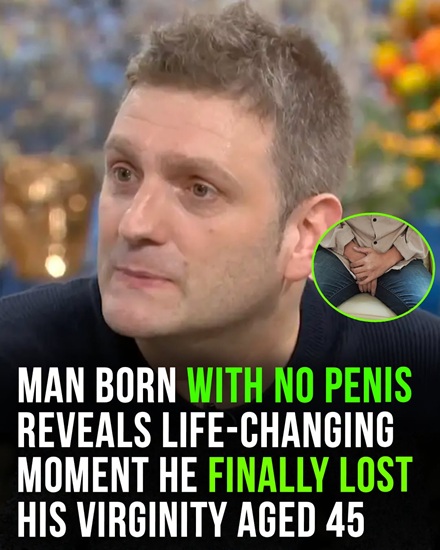
Andrew Wardle’s story is one of the rarest and most medically complex cases ever publicly discussed, centered around a congenital condition known as bladder exstrophy. This disorder occurs during fetal development when the bladder forms outside the body instead of inside the abdomen, leading to severe complications with urinary function and surrounding anatomy. In Wardle’s case, the condition was even more complicated, involving multiple urological abnormalities that required lifelong medical intervention.
From the moment he was born, Wardle’s life was shaped by hospitals, surgeries, and long periods of medical care. Doctors worked early on to reconstruct parts of his urinary system so that he could survive and function, but the challenges were significant. Over time, he underwent numerous operations aimed at improving his ability to urinate and reducing life-threatening complications such as kidney damage and chronic infections. Despite these efforts, his condition remained one of extreme rarity and difficulty.
Wardle was born in the United Kingdom and entered the world under circumstances that were overwhelming for his young mother. Faced with the intensity of his medical needs, she made the painful decision to place him for adoption. This meant that Andrew grew up separated from his biological parents, beginning life in foster care and later being raised in adoptive homes where his condition remained a constant medical concern.

As he grew older, Wardle became aware that his condition set him apart from other children. Medical visits, surgeries, and physical limitations became a regular part of his childhood. In addition to the physical challenges, there was also an emotional burden. He often struggled with feelings of isolation, particularly as he reached adolescence and began to understand more about identity, relationships, and body image.
One of the most difficult aspects of Wardle’s early life was the secrecy he felt forced to maintain. As a teenager and young adult, he chose not to disclose the full extent of his condition to friends or romantic partners. This decision, he later explained in interviews, came from fear of rejection and misunderstanding. The emotional weight of hiding such a fundamental part of his life created repeated cycles of anxiety, especially in relationships where disclosure eventually became unavoidable.
Throughout his early adulthood, Wardle underwent a total of around 15 surgical procedures. These operations were not cosmetic but essential, aimed at reconstructing parts of his urinary system and improving his quality of life. Even with these interventions, he continued to face complications, including kidney-related health issues that required ongoing monitoring and care. His medical history placed him among some of the most complex reconstructive cases seen in modern urology.
Despite the challenges, Wardle eventually reached a turning point where he chose to speak publicly about his condition. This decision marked the beginning of a new chapter in his life, one focused not on secrecy but on awareness and openness. By sharing his experience, he aimed to help others who might be living with rare conditions feel less alone and more understood.
After years of living privately with his condition, Andrew Wardle eventually made the decision to step into the public eye, sharing his story in a documentary titled The Man with No Penis. This moment marked a major emotional shift in his life, as he moved from secrecy and isolation toward openness and advocacy. Speaking publicly was not easy for him, but it became an important step in breaking the silence around rare congenital conditions and the psychological burden they can carry.
In interviews following the documentary, Wardle explained that one of the most difficult parts of his life had been navigating relationships. He often feared rejection, and on multiple occasions, opening up about his condition led to painful endings in his romantic life. These repeated experiences contributed to emotional stress and made intimacy a complex and sensitive topic for him over many years.
Despite these challenges, Wardle maintained long-term relationships, including with his partner Fedra Fabian. Their relationship became an important part of his journey, as she supported him through both emotional difficulties and eventual medical decisions. Wardle has described how, for many years, he struggled with how to explain his condition honestly while also trying to protect himself from judgment and misunderstanding.
A major turning point in his life came when he decided to undergo a complex reconstructive surgery known as phalloplasty. This procedure is one of the most advanced types of genital reconstruction surgery and is typically performed using tissue from other parts of the body. In Wardle’s case, the operation involved a long and highly technical process, including the use of tissue from his arm and leg to construct a functional structure, followed by the insertion of a mechanical implant system designed to allow controlled function.
The surgery itself reportedly lasted around ten hours and involved a team of specialist surgeons. According to reports shared in interviews, the procedure was among the most complex and costly of its kind due to Wardle’s underlying medical condition and the reconstructive work required on his urinary system. The goal was not only physical reconstruction but also improving quality of life and giving him the possibility of experiencing intimacy in a more typical way.
Following recovery, Wardle spoke openly about the emotional impact of the surgery. He described the result not in sensational terms, but as a deeply personal milestone that allowed him to feel more complete and confident in his body. While physical recovery was gradual, the psychological adjustment was just as significant. Years of medical trauma and emotional stress meant that rebuilding comfort and trust in his own body took time.
Wardle has been honest about the fact that the emotional healing process did not end with surgery. He has spoken about the need for counselling and ongoing support to help him adjust to experiences that had been absent or difficult throughout most of his life. For him, intimacy was not simply a physical change but a mental and emotional journey that required patience and understanding.
Over time, Wardle and his partner reached an important milestone in their relationship when they were finally able to share a more complete form of intimacy. He described the moment as natural and meaningful, emphasizing the emotional significance rather than focusing on physical details. For both him and his partner, it represented the result of years of trust, support, and shared struggle.
His partner, Fedra Fabian, has also spoken publicly about their journey together, highlighting the emotional strength of their relationship and the importance of understanding and patience. She has emphasized that their bond was built long before surgery and was not defined solely by physical circumstances, but by emotional connection and mutual care.
Today, Wardle continues to reflect on his experiences with a balanced perspective. He acknowledges both the physical and emotional challenges he has faced, while also recognizing the progress he has made. His story is often referenced in discussions about rare medical conditions, resilience, and the psychological impact of long-term health struggles.
Ultimately, Andrew Wardle’s journey is not only about a rare medical case but also about human resilience, acceptance, and the long process of rebuilding a life shaped by extraordinary circumstances.

