Growing up in the golden age of television, audiences around the world found themselves enchanted by the charm, beauty, and charisma of Barbara Eden.
Her role in I Dream of Jeannie became an enduring symbol of classic American entertainment. The series, which premiered in 1965, blended fantasy and comedy in a way that felt fresh and imaginative.
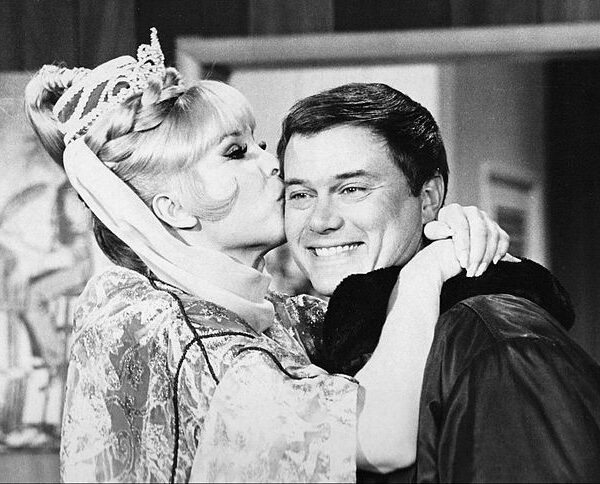
Viewers were drawn not only to the magical premise but also to the warmth and chemistry among the cast. At the heart of the show was the relationship between Jeannie and Major Tony Nelson, played by Larry Hagman.
Their dynamic created a perfect balance of humor, tension, and affection that resonated with audiences.
Barbara Eden’s performance stood out for its innocence and playful energy. She portrayed Jeannie as both mischievous and deeply loyal, giving the character a depth that helped elevate the show beyond a simple sitcom.
Despite the polished appearance of the series, like many productions of its time, it was not without its share of small errors and charming bloopers. These imperfections only add to its nostalgic appeal today.
One early example appears in the Season 1 episode “Guess What Happened on the Way to the Moon?” where Tony and Roger are stranded in the desert during astronaut training exercises.
During one scene, Jeannie conjures a large cat to surprise Tony. Observant viewers may notice that the animal’s movement appears controlled, likely for safety reasons, reflecting standard filming practices of the era.
Another subtle detail in that same episode involves the surrounding landscape. While the scene is meant to depict a desert, some vegetation resembles pine trees rather than typical desert flora, revealing filming location inconsistencies.
Costuming also provided a few amusing inaccuracies. Major Healy’s so-called “synthetic boots” were actually real U.S. military cold-weather boots, designed for freezing climates rather than hot desert conditions.
Barbara Eden’s iconic costume also became a topic of discussion. Her midriff-baring outfit was carefully designed, but early episodes occasionally revealed more than intended due to shifting wardrobe placement during filming.
At the time, television standards were much stricter than today. Eventually, producers ensured that her costume consistently covered her navel to align with broadcasting guidelines of the 1960s.
Special effects, though innovative for their time, sometimes revealed the mechanics behind the magic. In one episode, a rainstorm created by Jeannie includes visible equipment above the actors during filming.
These glimpses into production techniques offer a fascinating look at how television magic was created before digital effects. Practical solutions often required creative staging and occasional compromises.
Another minor inconsistency involves military ranks. In one scene, a character is incorrectly addressed as a sergeant, despite wearing insignia that would identify him as a lower-ranking airman.
Timeline continuity also presents occasional challenges. In the episode “Djinn and Water,” a character mentions being absent for 1,500 years, which conflicts with earlier statements about Jeannie’s 2,000-year confinement.
Such discrepancies are common in long-running series, especially during an era when continuity tracking was less rigorous than it is in modern television productions.
Geographical inconsistencies also appear throughout the series. Although the story is set in Florida, some scenes include visible mountains in the background, which are not characteristic of the region.
These details likely resulted from filming in California, where many television productions were based. Studio locations often influenced visual elements more than narrative accuracy.
The show also included subtle cultural references. For example, mentions of dancers and names may have been inspired by real performers popular in Hollywood during the 1960s.
When it comes to realism, the depiction of NASA in the series was largely fictionalized. The show presented a more militarized version than what existed in reality.
In truth, astronauts trained at facilities like the Johnson Space Center in Houston, rather than living full-time in Florida as suggested by the series.
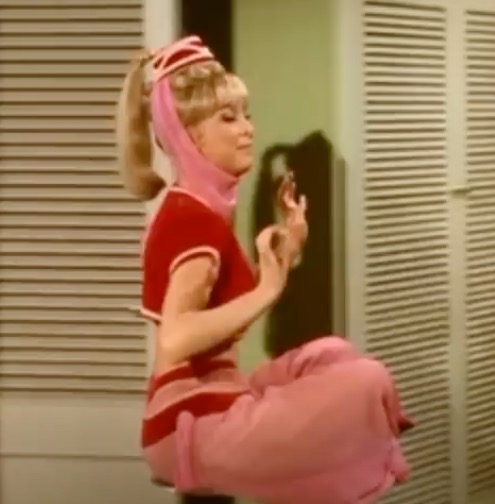
Special effects sometimes revealed their technical limitations. In scenes where Jeannie floats, careful viewers can occasionally spot wires or support devices used to create the illusion.
These practical effects were standard for the time and required precise coordination between actors and crew members to achieve believable results on screen.
The show also experimented with character variations. Barbara Eden later portrayed Jeannie’s mischievous twin, showcasing her versatility and adding an extra layer of intrigue to the storyline.
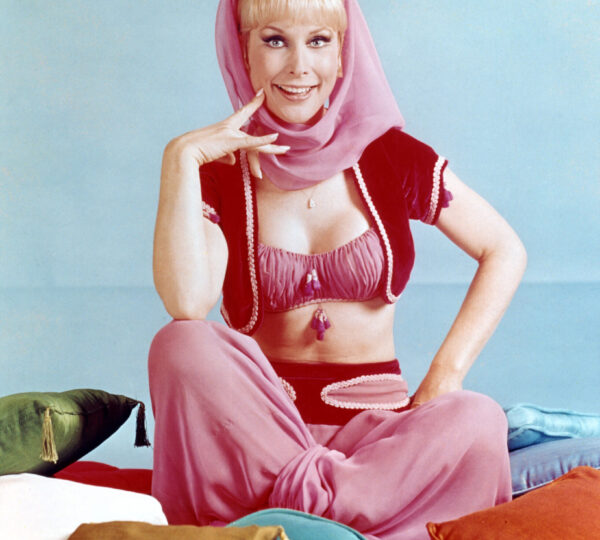
Costume changes and visual transformations were a key part of the show’s charm. Jeannie’s iconic pink outfit became a defining element of her character and remains instantly recognizable today.
In later seasons, certain episodes featured alternative wardrobe choices, which provided variety and allowed Eden to display different aspects of her character’s personality.
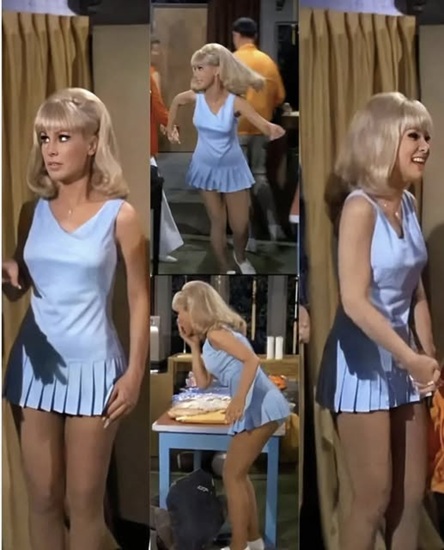
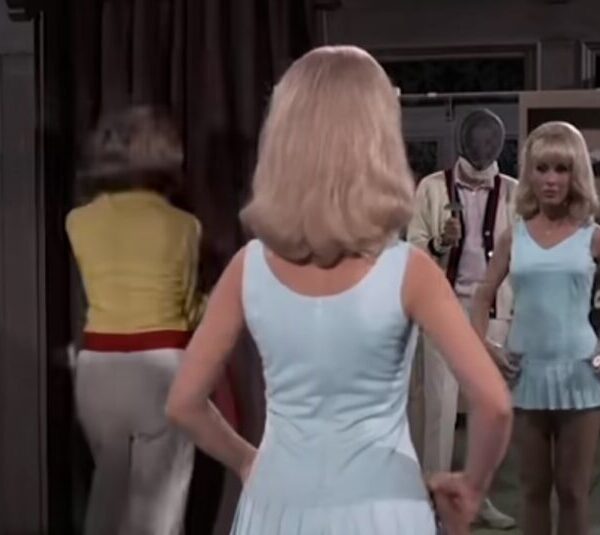
One memorable episode included a tennis scene that highlighted the fashion trends of the era. The costume design reflected both the playful tone of the show and the style of the 1960s.
That same episode featured a young Farrah Fawcett early in her career. Her appearance served as a glimpse into the future success she would later achieve in television.
Production challenges were not limited to technical aspects. Behind the scenes, creative differences sometimes arose between cast and crew members regarding the direction of the show.
Despite occasional tensions, the chemistry between Barbara Eden and Larry Hagman remained strong. Their professional relationship contributed significantly to the show’s enduring success.
Barbara Eden often spoke highly of her co-stars, emphasizing the importance of collaboration and mutual respect in creating a successful television series.
During the early stages of production, Eden was pregnant, which required careful planning to ensure continuity while filming multiple episodes in advance.
The production team worked efficiently to accommodate this situation, demonstrating the adaptability required in television production during that period.
Writers also played a crucial role in shaping the show’s identity. Creative ideas, such as introducing new characters, helped keep the storyline engaging for audiences.
However, working on multiple projects simultaneously sometimes led to complications for writers, reflecting the competitive nature of the television industry at the time.
Barbara Eden took an active role in shaping her character’s appearance. She contributed to the design of Jeannie’s costume, selecting colors that reflected the character’s personality.
Her thoughtful approach helped create a visual identity that complemented Jeannie’s playful and spirited nature, making the character even more memorable.
Despite her confident on-screen presence, Eden was naturally shy during her childhood. Acting provided an outlet that allowed her to express herself more freely.
Her journey from a reserved child to a beloved television icon is a testament to her dedication and passion for her craft.
Supporting cast members also played a vital role in the show’s success. Among them was Hayden Rorke, who portrayed Dr. Bellows with remarkable consistency and charm.
Rorke’s performance added depth to the series, providing a grounding presence amid the fantastical elements of the storyline.
Barbara Eden later described him as a stabilizing force on set, highlighting his professionalism and positive influence during production.
Small continuity errors occasionally appeared in props and set design. For example, objects might change position between shots, revealing the challenges of maintaining visual consistency.
In one scene, a drawer appears to open on its own, likely due to a reset between takes. These moments add an unintentional layer of humor to the show.
Another amusing detail involves flowers changing color between shots, illustrating how scenes filmed at different times could result in subtle inconsistencies.
Lighting effects also contributed to occasional visual quirks. Colored lighting used for special effects sometimes reflected onto actors in unintended ways.
These imperfections are now appreciated as part of the show’s charm, offering insight into the creative process behind classic television.
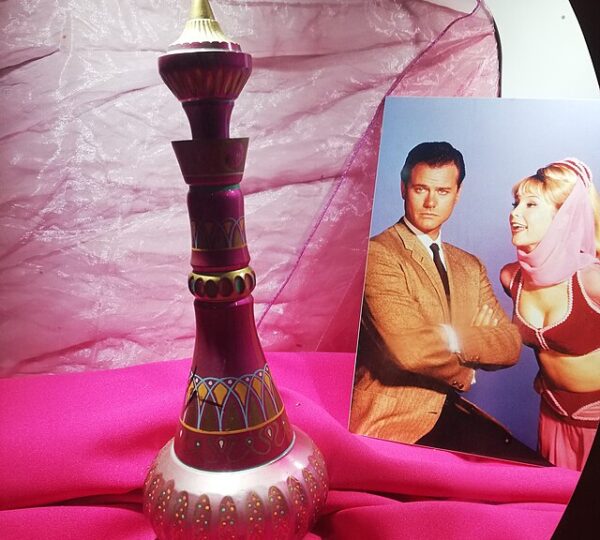
Even the iconic genie bottle has an interesting origin. It was originally a decorative decanter, later modified to create the magical object seen on screen.
This creative reuse of everyday items demonstrates the resourcefulness of the production team in bringing imaginative concepts to life.
Ultimately, the enduring appeal of “I Dream of Jeannie” lies not in its perfection, but in its heart, humor, and creativity.
The show continues to captivate new generations of viewers, proving that timeless storytelling and memorable characters can transcend decades.
These small bloopers and behind-the-scenes details serve as reminders that even the most magical productions are created by real people working together.
They add authenticity and warmth, making the series feel more relatable and human despite its fantastical premise.
Revisiting the show today offers both nostalgia and a deeper appreciation for the artistry involved in early television production.
Each episode becomes an opportunity to notice something new, whether it is a clever detail, a subtle mistake, or a standout performance.
In the end, “I Dream of Jeannie” remains a beloved classic not because it was flawless, but because it embraced imagination, humor, and heart in a truly unforgettable way.
