
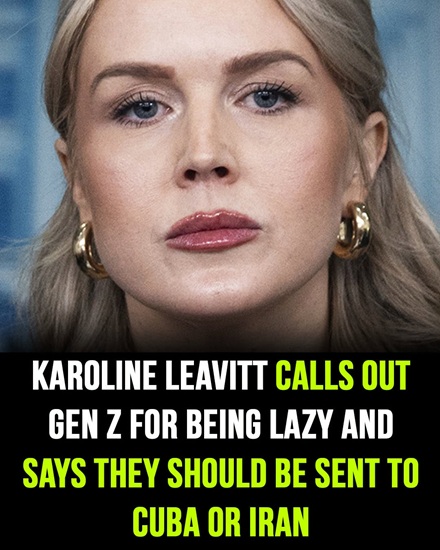
A wave of online debate has emerged following controversy surrounding comments attributed to Karoline Leavitt during a recent television appearance. The discussion quickly spread across social media platforms, where users reacted strongly to what many described as critical remarks about younger generations and broader cultural attitudes toward work and economic expectations. According to widely circulated reports and online commentary, Leavitt’s appearance on Fox News included a discussion about generational differences in work ethic and financial challenges facing younger Americans.
The conversation reportedly took place during an interview segment hosted by television personality Jesse Watters. During the exchange, topics such as rising living costs, job expectations, and cultural values were discussed in a politically charged context. Following the broadcast, social media users began sharing clips and paraphrased statements attributed to Leavitt.
Some posts claimed she criticized younger generations, including Gen Z, suggesting that they had been given advantages without experiencing sufficient hardship. Other posts went further, attributing more extreme wording to her remarks. However, many of these specific quotes circulated online without clear full-context verification, leading to debate over what was actually said versus what was interpreted or amplified on social platforms.
The reaction online was immediate and highly polarized. Critics argued that the comments, as they were being reported, reflected a dismissive attitude toward economic struggles faced by younger Americans, particularly in relation to housing affordability, student debt, and job market instability. Others pointed out what they saw as contradictions in generational labeling, noting that Leavitt herself belongs to a younger age group often associated with Gen Z or late millennial classification, depending on definitions used.
Supporters, however, framed the discussion differently. Some argued that the broader message being expressed in the interview was about personal responsibility and work ethic rather than direct criticism of an entire generation. This perspective emphasized that political commentary often becomes exaggerated once it circulates on social media, where short clips and partial quotes can quickly lose context.
As the debate intensified, additional unrelated claims also began circulating online. One such claim involved images allegedly taken aboard a flight associated with official government transport, where social media users pointed out a bookshelf containing items labeled only with generic wording rather than specific book titles. This led to speculation and humorous commentary online, although the origin and context of the images remain part of broader online discussion rather than confirmed controversy tied directly to policy or official statements.
Observers of digital media trends note that this type of rapid amplification is increasingly common in politically charged environments. Statements made in interviews are often clipped, reinterpreted, or reframed as they spread across platforms, leading to competing narratives about what was actually said. In this case, the combination of generational commentary, political identity, and viral social media reaction contributed to the speed at which the story developed.
The situation also highlights how public figures in communications roles are frequently placed under intense scrutiny. As a spokesperson figure, Leavitt’s statements are often interpreted not only as personal opinions but also as reflective of broader institutional positions, even when the original discussion may have been informal or conversational in tone. This dynamic can amplify both support and criticism depending on audience interpretation.
At the same time, discussions about generational economics continue to be a recurring theme in U.S. political discourse. Issues such as wage growth, inflation, housing access, and employment stability have created friction between different age groups, particularly as younger workers enter markets shaped by higher living costs compared to previous decades. These structural concerns often become the backdrop for viral controversies involving public figures.
As of now, the controversy remains largely centered on interpretation, online reaction, and selective circulation of content rather than a single fully verified transcript of the interview. No unified consensus has emerged from the public discussion, with opinions split between those criticizing the tone of the remarks and those defending them as misrepresented or taken out of context.
The incident reflects a broader pattern in modern political communication, where short-form media, viral clips, and fragmented quotes can quickly escalate into national discussion. Whether or not the original statements match the most widely shared versions online, the reaction demonstrates how quickly narratives can form and evolve in today’s media environment.

