
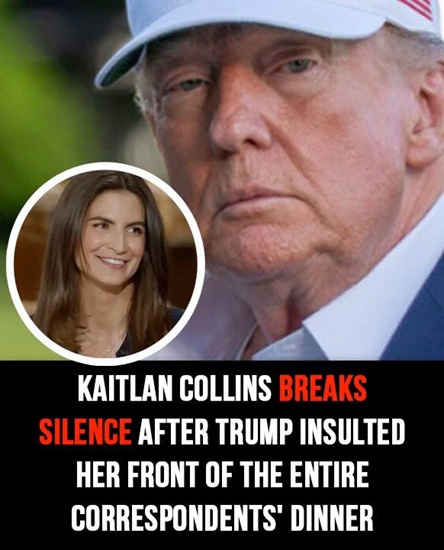
The 2026 White House Correspondents’ Dinner became one of the most widely discussed political and media events of the year after remarks made by President Donald Trump during his speech generated extensive public conversation. The annual gathering, traditionally attended by journalists, government officials, media executives, and invited guests, has long served as both a celebration of press freedom and an occasion where public figures exchange humor and commentary.
This year’s event, however, quickly shifted from lighthearted moments to a broader discussion about the relationship between political leaders and the news media. One of the central moments of the evening involved CNN correspondent Kaitlan Collins, who had earlier been recognized with a journalism award for her reporting. During his remarks, President Trump questioned the recognition she had received and also made comments about her on-stage demeanor.
His statements immediately attracted attention from attendees as well as viewers following the event through news coverage and social media platforms. Within hours, clips from the speech were circulating widely, prompting discussion among journalists, political commentators, and members of the public.
Collins has become one of the most recognizable political reporters in Washington after covering several presidential administrations and numerous major national events. Throughout her career, she has frequently participated in White House press briefings, presidential news conferences, and international diplomatic coverage. Her reporting style is often characterized by direct questioning during interviews and official press events, making her a familiar figure to audiences following American political news.
The award presented to Collins recognized reporting connected to a high-profile meeting involving President Trump and Ukrainian President Volodymyr Zelensky. Journalism organizations frequently present awards honoring reporting that demonstrates thorough research, public interest, and effective coverage of significant national or international events. Such awards are generally determined through independent judging processes established by the organizations presenting them.
During his address at the dinner, President Trump expressed disagreement with Collins’ recognition while also making several personal remarks directed toward the journalist. His comments quickly became one of the most discussed moments of the evening because they combined criticism of media coverage with observations about Collins herself. Similar exchanges between political leaders and reporters have periodically occurred throughout American political history, reflecting the often challenging relationship between elected officials and members of the press.
In the days following the event, Collins discussed the experience during a television interview. She explained that exchanges of this nature were not entirely unfamiliar because journalists who regularly cover the White House sometimes receive direct criticism while performing their professional responsibilities. She also noted that the primary difference on this occasion was the size of the audience witnessing the interaction, as the annual dinner included senior government officials, journalists, invited guests, and members of the public following media coverage.
Collins further explained that she intentionally chose not to respond publicly during the event itself. According to her comments, she believes that journalists should remain focused on their reporting responsibilities rather than becoming the central subject of political exchanges. She emphasized that allowing a public disagreement to become personal could shift attention away from the broader role of journalism and toward an unnecessary confrontation between individuals.
Following the dinner, Collins shared a quotation widely attributed to former First Lady Eleanor Roosevelt emphasizing personal resilience and self-confidence. The accompanying message highlighted the importance of press freedom and the role journalists play in asking questions on behalf of the public. Her post attracted significant attention online, where supporters and critics alike discussed the broader themes of journalism, public accountability, and respectful public discourse.
The evening also included remarks directed toward other public figures, demonstrating that political speeches at such events often contain references to current news stories, cultural debates, and well-known personalities. Political dinners of this nature have historically combined policy discussion with humor, satire, and commentary, though reactions to particular remarks frequently differ depending on audience perspectives and the broader political climate.
Media analysts observed that the widespread discussion following the dinner reflected the continuing national interest in the relationship between elected officials and the news media. In democratic societies, journalists and public officials regularly interact during press conferences, interviews, and official events, sometimes leading to moments of disagreement or criticism. Many observers note that these interactions form part of the broader process through which government actions are questioned, explained, and reported to the public.
Constitutional scholars also point out that freedom of the press, protected by the First Amendment to the United States Constitution, provides an important framework for independent journalism. At the same time, elected officials retain the right to publicly respond to media coverage, express disagreement with reporting, or offer criticism. These parallel principles often create vigorous public exchanges while remaining part of the broader democratic process.
As public discussion continued after the dinner, attention remained focused not only on the specific comments exchanged during the event but also on the broader issues they highlighted, including press freedom, political communication, public accountability, and the evolving relationship between government officials and journalists. Regardless of differing opinions surrounding the event, the discussion underscored the continuing importance of open dialogue, responsible reporting, and respectful public debate in democratic institutions.
Following the White House Correspondents’ Dinner, discussion continued across television networks, newspapers, podcasts, and social media platforms as journalists, legal commentators, political analysts, and members of the public reflected on the exchange that had taken place. As often happens after high-profile political events, reactions varied considerably depending on individual perspectives. Some commentators focused primarily on the president’s remarks, while others emphasized Collins’ public response and the broader relationship between elected officials and the national press corps.
During a later television interview, Kaitlan Collins explained that she chose not to respond during the dinner because she wanted the attention to remain on journalism rather than on a personal exchange. She said that, in her view, reporters should remain focused on asking questions and reporting information instead of becoming central participants in political disagreements. According to Collins, maintaining that professional approach allows journalists to continue performing their responsibilities regardless of who occupies the White House.
Collins also noted that covering the presidency often involves challenging moments, particularly when reporters ask difficult questions during press conferences or official appearances. White House correspondents regularly interact with senior government officials while seeking clarification on policy decisions, international affairs, and domestic issues. Those interactions can sometimes become tense, especially when questions involve controversial subjects or differing interpretations of public events. Nevertheless, experienced journalists generally regard respectful but persistent questioning as an essential part of their work.
Media historians point out that disagreements between presidents and members of the press are not unique to any single administration. Throughout American history, presidents from both major political parties have occasionally criticized journalists, questioned media coverage, or expressed dissatisfaction with particular news organizations. Likewise, reporters have continued asking questions on matters of public interest regardless of political affiliation. These exchanges reflect the independent roles played by elected officials and the news media within democratic institutions.
The White House Correspondents’ Association, established more than a century ago, has long worked to support independent access to presidential coverage while recognizing outstanding journalism through annual awards. These honors typically acknowledge reporting that demonstrates thorough research, public significance, careful verification of facts, and professional excellence. Journalism organizations emphasize that such recognition celebrates reporting rather than personal opinions or political viewpoints.
Observers also noted that the annual dinner traditionally combines formal recognition of journalistic achievement with moments of humor and political commentary. Over many decades, presidents, comedians, journalists, and invited speakers have all participated in lighthearted exchanges during the event. While many remarks are intended to entertain audiences, certain comments occasionally become the subject of broader public discussion when they touch upon issues receiving significant national attention.
Following the dinner, Collins shared a message on social media quoting Eleanor Roosevelt’s well-known statement about confidence and self-worth. In her accompanying remarks, she highlighted the importance of press freedom and the responsibility journalists have to continue asking questions that help inform the public. Her post was widely shared and generated responses from journalists, public officials, and viewers expressing a variety of opinions regarding both the dinner and the broader relationship between government leaders and the media.
The evening also reminded many observers of the essential role professional journalism plays within democratic societies. News organizations routinely report on government decisions, public policy, international affairs, healthcare, economics, science, and numerous other subjects affecting daily life. Reporters gather information, interview public officials, verify facts, and present developments to audiences so citizens can better understand issues of public importance. Although individual news organizations may differ in editorial approach, the broader goal of informing the public remains central to professional journalism.
Communication experts often observe that public trust is strengthened when discussions remain focused on verified facts, transparency, and respectful dialogue. While disagreements between political leaders and journalists are not uncommon, constructive public conversation generally benefits from accurate reporting, careful verification, and clear distinctions between factual information and personal opinion. These principles help audiences evaluate events using reliable information rather than speculation or misinformation.
Political analysts also noted that moments such as these often receive significant attention because they occur at the intersection of politics, media, and public accountability. Public officials communicate policies and decisions, journalists examine and question those actions, and citizens ultimately evaluate information presented from multiple sources. This ongoing interaction represents one of the defining characteristics of democratic governance, where differing viewpoints are expressed openly within established constitutional protections.
Constitutional scholars continue emphasizing that the First Amendment protects freedom of the press while also protecting freedom of speech more broadly. These constitutional principles allow journalists to report independently and public officials to respond publicly, even when disagreements arise. Although exchanges may sometimes become pointed or controversial, the legal framework encourages open discussion rather than limiting public debate.
Ultimately, the conversation surrounding the White House Correspondents’ Dinner extended beyond any single remark or individual. It prompted renewed discussion about the relationship between public officials and journalists, the importance of independent reporting, and the continuing role of professional journalism in informing the public. Regardless of differing political opinions, many observers agree that respectful dialogue, accurate reporting, careful fact-checking, and open communication remain essential elements of a healthy democratic society. As future administrations and journalists continue interacting through press conferences, interviews, and official events, these longstanding principles are likely to remain central to public life and civic engagement.

