
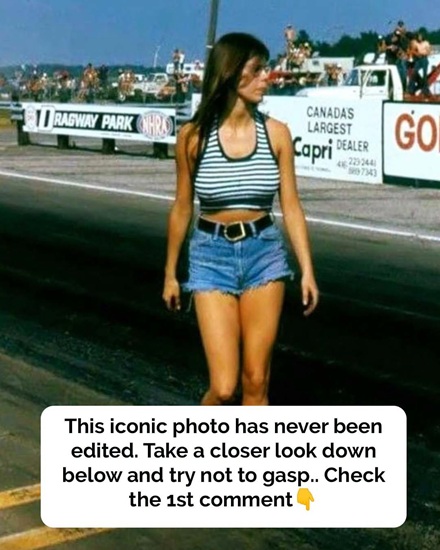
Her presence once stopped men in their tracks, and she quickly became an unforgettable figure for American motorsport fans. But who exactly was Jungle Pam Hardy, and why does her name still carry such weight decades later? Although her time in professional drag racing lasted only a few short years during the 1970s, Jungle Pam’s legacy has endured for nearly half a century. She became widely recognized not just for her striking looks, but for the energy and charisma she brought to the drag strip.
At a time when the sport was defined by raw horsepower, smoke-filled burnouts, and fearless drivers, she added a unique presence that fans instantly noticed. Jungle Pam Hardy was closely associated with the golden era of drag racing, a period when mechanical skill and daring driving defined success long before modern computer systems and digital tuning existed.
Many fans from that era still remember how she contributed to the showmanship side of the sport, making race events feel larger than life. Her role helped create a spectacle that blended speed, personality, and entertainment in a way that stood out in motorsport history.
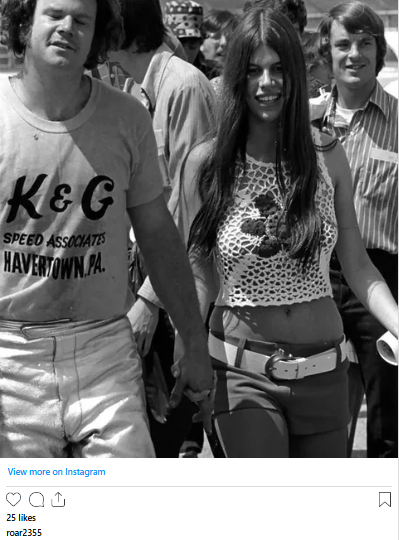
Her rise to fame is inseparable from legendary drag racer Jim Liberman, widely known as “Jungle Jim.” Liberman was one of the most flamboyant figures in American drag racing, famous for his theatrical driving style and ability to entertain crowds as much as compete. Their connection began in 1972, when Liberman reportedly met Pamela Hardy shortly after she finished high school, setting in motion a partnership that would define both of their public images.
Pam had originally planned a more traditional academic path, including attending university and studying business. However, her life took a different turn after meeting Liberman, and she soon joined him on the road as part of his racing team. This decision placed her directly into the heart of the drag racing circuit, where she quickly became a recognizable and talked-about presence at events across the United States.
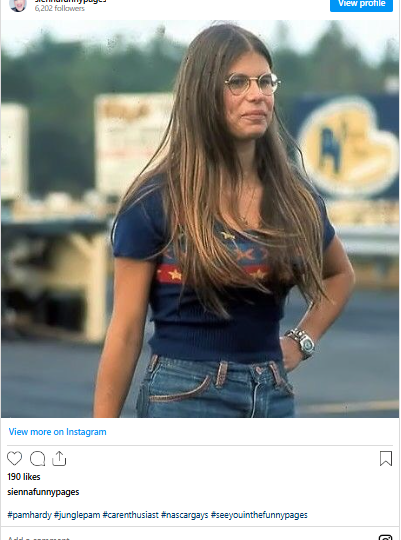
On the track, Jungle Pam became known for her role in assisting Liberman’s racing performances. She would help stage the funny car at the starting line, inspect it for leaks, and assist with various pre-race preparations. Her involvement was not limited to appearance alone; she contributed to the practical side of race-day operations, ensuring the vehicle was ready for each run. This combination of visibility and participation helped solidify her reputation within the racing community.
Fans and photographers were drawn to her presence, and she soon became one of the most photographed figures in drag racing. Her appearances next to Liberman’s car added a distinctive visual element to the sport, and her image frequently appeared in magazines and racing publications of the time. This exposure helped elevate her status beyond the track, making her a recognizable personality in motorsport culture.
Jim Liberman himself was known for his showmanship, often prioritizing entertainment as much as competition. Together, Liberman and Hardy formed a duo that embodied the theatrical side of drag racing. Their partnership reflected a period in motorsport when personality and performance were closely intertwined, and audiences came not only for the races but also for the spectacle surrounding them.
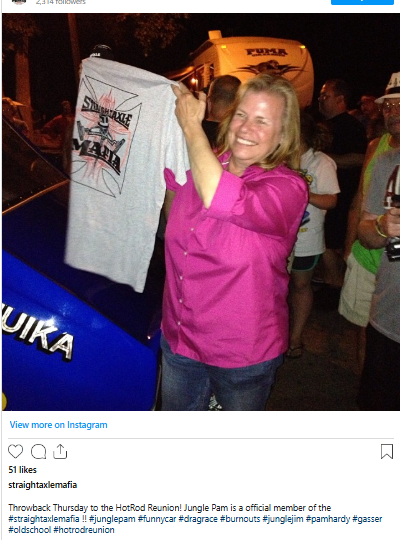
Tragically, the story took a devastating turn in September 1977 when Jim Liberman was killed in a high-speed racing accident. His death shocked the drag racing world and marked the end of an era for many fans. The loss had a profound impact on Pam Hardy, who stepped away from the professional racing scene following the incident, choosing not to continue working with other drivers.
Despite leaving competitive racing, she remained connected to the sport’s community and occasionally attended memorial events honoring Liberman’s legacy. Over time, she became a symbol of a bygone era in drag racing history, representing both its excitement and its risks. Her name continued to appear in retrospectives and historical accounts of the sport’s most memorable figures.
In the years that followed, Pam Hardy lived a more private life, occasionally reflecting on her experiences during interviews. She often emphasized that her role was part of a team effort and that the success they achieved was shared. Her perspective highlighted the collaborative nature of racing, where both drivers and support crew contributed to the final performance on the track.
Today, Jungle Pam Hardy is remembered as an iconic figure from the golden age of drag racing. Her story remains closely tied to the history of the sport, symbolizing a time when racing was as much about personality and showmanship as it was about speed. Even decades later, her presence in old photographs continues to capture the imagination of motorsport enthusiasts.
Her legacy endures not because of championships or technical achievements, but because she became part of a cultural moment that defined an entire era of American drag racing.

