
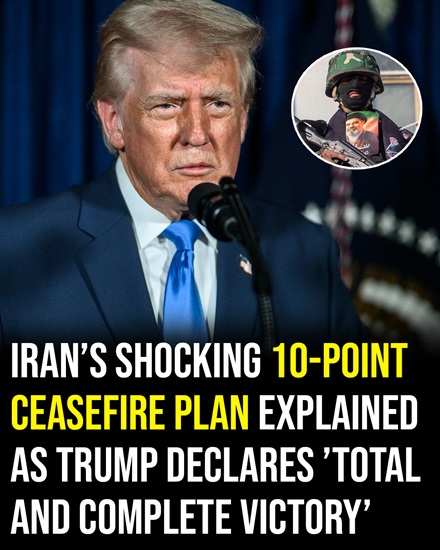
In a widely circulated and highly speculative geopolitical narrative, tensions between the United States and Iran are described as entering a fragile and uncertain phase, where military escalation is reportedly replaced by urgent diplomatic maneuvering and conditional restraint.
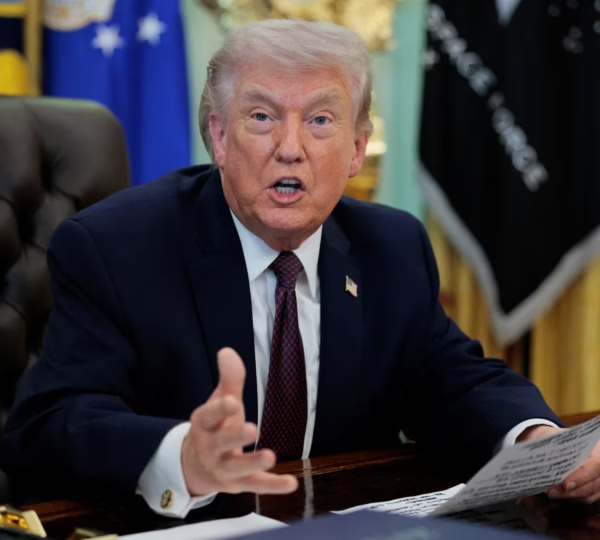
In this scenario, former U.S. President Donald Trump is portrayed as issuing a forceful warning rhetoric that suggests extreme consequences if hostilities were to escalate further in the Middle East region.
However, within the same unfolding narrative, a sudden rhetorical shift is described, where previously hardline positions are allegedly reframed into more flexible diplomatic language interpreted by some observers as openness to negotiation.
Analysts in this speculative context suggest that such a shift, if it were to occur, would immediately trigger polarized reactions across international political circles, particularly among U.S. allies and strategic partners.
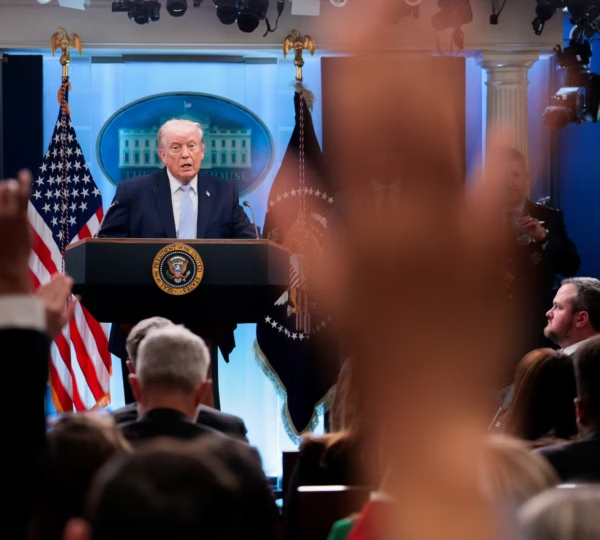
Supporters in this narrative frame the adjustment as pragmatic decision-making designed to prevent escalation, arguing that de-escalation in high-risk regions can be interpreted as strategic restraint rather than weakness.
Critics, however, interpret the same hypothetical shift as a potential erosion of deterrence credibility, suggesting that adversarial states could perceive diplomatic flexibility as an opportunity to expand influence.
Within this constructed scenario, global attention is focused on maritime security routes such as the Strait of Hormuz, which is often described in international relations as a critical chokepoint for global energy transportation.
In the narrative, commercial shipping activity is portrayed as cautiously resuming or adjusting under heightened security awareness, reflecting the broader uncertainty that typically accompanies regional geopolitical tensions.
Military analysts in such scenarios often emphasize that even temporary pauses in conflict rhetoric can create complex interpretations among naval forces, shipping industries, and global markets.
At the same time, diplomatic channels are depicted as becoming increasingly active, with multiple countries allegedly engaging in behind-the-scenes communication efforts aimed at reducing escalation risks.
States such as Pakistan, Egypt, Turkey, and China are sometimes referenced in speculative commentary as potential mediators in broader regional stability discussions, due to their varying strategic relationships.
Israel is also occasionally mentioned in analytical discourse as a key regional actor whose security considerations significantly influence broader Middle Eastern diplomatic calculations.
It is important to note that such descriptions are commonly found in analytical or fictionalized geopolitical commentary and should not be treated as verified reporting unless confirmed by credible international sources.
In this hypothetical framework, international diplomacy is portrayed as a highly fragmented environment where competing national interests overlap with urgent security concerns.
Each participating actor is described as balancing domestic political pressure with external strategic obligations, creating a complex environment for negotiation and communication.
Observers in such scenarios often highlight the role of economic stability, particularly global energy markets, as a major factor influencing diplomatic urgency and decision-making.
The Strait of Hormuz is frequently referenced in international relations analysis because of its importance in global oil transportation routes and its sensitivity during periods of regional tension.
In speculative accounts, any disruption or perceived risk in this region tends to generate rapid responses in global financial markets and energy policy discussions.
Within this narrative structure, military readiness is described as remaining high, even when active engagement is paused or temporarily reduced.
Air and naval forces are often portrayed as maintaining defensive positioning, while awaiting clearer diplomatic outcomes or updated strategic directives.
At the same time, political communication within the United States is depicted as divided, reflecting broader ideological disagreements over foreign policy direction.
Supportive voices in this scenario argue that avoiding large-scale conflict demonstrates responsible leadership and prioritization of human life and economic stability.
Opposing perspectives suggest that rapid diplomatic concessions may create long-term strategic uncertainty, particularly in regions with long-standing historical tensions.
International relations experts frequently emphasize that such debates are common whenever high-stakes diplomacy intersects with military deterrence strategies.
In this type of analytical narrative, media coverage plays a central role in shaping public interpretation of unfolding events.
Different media outlets may emphasize either de-escalation success or strategic vulnerability, depending on editorial framing and audience perspective.
Social media amplification further intensifies these differences by rapidly circulating simplified interpretations of complex geopolitical developments.
As a result, public perception can become fragmented, with competing narratives emerging simultaneously across different information platforms.
In the background of this scenario, diplomatic negotiations are described as highly sensitive, often taking place through indirect communication channels rather than public announcements.
These back-channel discussions are commonly associated with efforts to reduce misinterpretation and avoid unintended escalation between military forces.
In many historical cases, such indirect diplomacy has played a role in preventing conflicts from expanding beyond initial points of tension.
Within this speculative framework, the idea of a temporary “pause” in escalation is portrayed as both an opportunity and a risk for all involved parties.
Supporters of diplomatic engagement argue that even imperfect agreements can create space for long-term stabilization efforts.
Critics argue that temporary pauses may simply delay underlying conflicts rather than resolve them fully.
This tension between immediate stability and long-term resolution is a recurring theme in international relations theory.
The narrative also highlights the psychological pressure placed on decision-makers during periods of heightened global uncertainty.
Leaders, advisors, and military officials are depicted as operating under intense scrutiny, where every statement and action is closely analyzed.
In such environments, communication strategies become as important as military positioning or economic policy decisions.
Even symbolic gestures can be interpreted as signals of intent, influencing how other states respond.
The concept of “strategic ambiguity” is often discussed in academic literature as a tool used to maintain flexibility in uncertain geopolitical situations.
However, ambiguity can also increase the risk of misinterpretation, particularly in high-tension environments.
As the scenario continues, global observers are portrayed as closely monitoring developments, aware that small changes could significantly alter the trajectory of events.
Energy markets, diplomatic institutions, and security alliances are all described as reacting cautiously to evolving signals.
Ultimately, this speculative narrative illustrates how modern geopolitical crises are shaped not only by military capabilities, but also by perception, communication, and interpretation.
It also underscores the importance of verified information, especially when discussing sensitive international topics that may easily be distorted in rapid media cycles.
In conclusion, while such scenarios are often used in commentary or analytical storytelling, real-world verification from credible sources is essential before drawing conclusions about any actual geopolitical developments.
This ensures that public understanding remains grounded in fact-based reporting rather than speculation, narrative amplification, or unconfirmed claims.
