
Cats have captivated human imagination for centuries. Their combination of elegance, independence, and intelligence gives them a mystique unlike any other domesticated animal. Observing a cat is like watching a living work of art in motion.
Agile and precise, cats move with an almost uncanny confidence. Each step seems calculated yet effortless, as if they are aware of every surface, shadow, and sound.
Their balance and coordination make them natural acrobats. A cat’s physical abilities are remarkable. Their muscular yet flexible bodies, combined with sharp claws and powerful hind legs, allow them to leap great distances, land silently, and hunt with unmatched precision in low-light conditions.
Their senses are finely tuned. Cats can detect the slightest rustle of a mouse in grass, hear high-pitched sounds imperceptible to humans, and see clearly in near-darkness, which has long contributed to their reputation as mysterious nocturnal predators.
Despite their hunting instincts, cats often live harmoniously with humans. Unlike dogs, who generally crave constant attention, cats exhibit selective affection, choosing moments of interaction and bonding, which makes their companionship feel earned and precious.
When a cat chooses to curl up beside you after a long day, it’s a demonstration of trust and comfort. Many cat owners describe this behavior as deeply rewarding, a subtle acknowledgment of your presence and care.
Cats are known for balancing independence with social engagement. They explore their surroundings with curiosity, often disappearing for hours to investigate, yet return when they desire warmth, play, or affection, maintaining a delicate equilibrium with their human companions.
Their personalities vary widely. Some cats are playful and mischievous, others calm and contemplative. Even within the same household, no two cats behave identically, making observation a fascinating and continuous learning experience.
The allure of cats extends to their visual appeal. From the sleek elegance of Siamese cats to the fluffy grandeur of Maine Coons, each breed carries unique traits, patterns, and characteristics that inspire admiration and affection among enthusiasts.
Cats’ playful behavior is endlessly entertaining. They chase shadows, bat at dangling objects, and stalk imaginary prey, demonstrating both instinctive hunting skills and a remarkable capacity for joy and engagement with their environment.
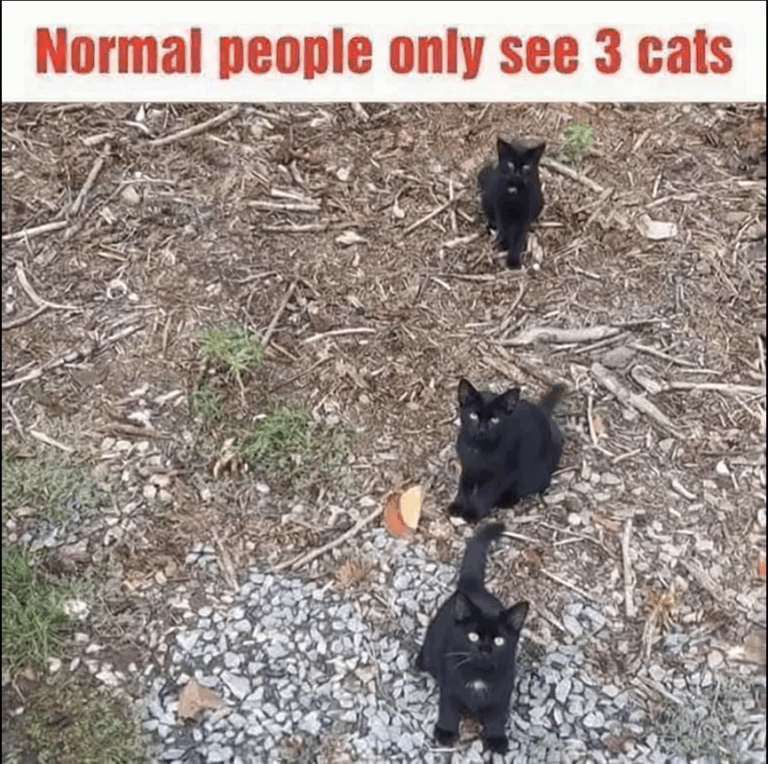
Not long ago, I came across a hilarious photograph online that perfectly captured this playful unpredictability. It featured multiple cats lounging in a room, blending seamlessly with their surroundings, turning the image into a visual puzzle.
Their fur patterns and colors provided natural camouflage. Some were striped like tabby cats, others mottled like calicos, and one had a solid coat. The result was a challenge to identify each feline at first glance.
I spent nearly ten minutes scrutinizing the image, certain I had spotted them all, when suddenly I realized I had missed one. A cleverly hidden fourth cat emerged, eliciting a burst of laughter and surprise.
This small moment perfectly illustrates why cats are endlessly fascinating. They combine elegance with unpredictability, surprise with charm, and independence with affection, constantly reminding humans of their complex and delightful nature.
Cats also display a remarkable range of vocalizations. From gentle purring to sharp meows, hisses, and chirps, their sounds communicate moods, desires, and reactions, forming a nuanced language that owners gradually learn to interpret.
Purring, in particular, is an intriguing behavior. While often associated with contentment, it can also indicate stress or pain, reflecting a cat’s ability to convey complex emotional states through subtle auditory cues.
Play is a critical component of a cat’s development. Kittens pounce on toys, chase laser pointers, and stalk imaginary prey to build coordination, hone hunting instincts, and develop mental sharpness, which continues into adulthood.
Cats are also masters of spatial awareness. They effortlessly navigate narrow ledges, high shelves, and cluttered rooms, calculating jumps and landings with astonishing precision, which demonstrates a sophisticated understanding of their physical environment.
In addition to their physical capabilities, cats are highly intelligent. They learn through observation, adapt to changing circumstances, and can even solve puzzles to access food or toys, showcasing both memory and problem-solving skills.
Cats’ grooming behavior is another fascinating aspect. They spend hours meticulously cleaning their fur, using their tongues to remove dirt, stimulate circulation, and regulate body temperature, reflecting an instinctive drive for hygiene and comfort.
Sleeping habits further emphasize their mystique. Cats often sleep 12 to 16 hours daily, conserving energy for hunting and play. Their tendency to nap in unexpected locations adds to the surprise and humor they bring to daily life.
Their choice of sleeping spots often demonstrates creativity and stealth. Cats may curl up in boxes, laundry baskets, sunbeams, or high perches, seemingly selecting the most strategic or comfortable locations for rest and observation.
The photograph I mentioned illustrates these traits vividly. Some cats were sprawled in sunlight, others hid behind furniture, and one perched atop a bookshelf, exemplifying their versatility and adaptability in any environment.
Beyond individual behavior, cats contribute to human wellbeing. Studies suggest that interacting with cats can reduce stress, lower blood pressure, and provide emotional comfort, demonstrating a mutually beneficial relationship between humans and felines.
Cats also have cultural significance. In ancient Egypt, they were revered as symbols of protection, fertility, and mystery. In modern times, they appear in art, literature, and online media, reflecting their enduring appeal across societies.
Social media has amplified the fascination with cats. Viral videos, memes, and photographs capture their antics, endearing them to millions of viewers worldwide, demonstrating that feline charm transcends geography, age, and language.
Humor is an essential part of cats’ charm. Whether startling at a cucumber, leaping unexpectedly, or engaging in mock combat with another pet, their unpredictable behavior creates moments of laughter and joy for owners and viewers alike.
Cats’ hunting behavior, even in domestic environments, is remarkable. They stalk toys, chase moving objects, and exhibit patience and focus reminiscent of their wild ancestors, revealing instinctual traits preserved despite domestication.
Their sensory abilities also play a role in play and exploration. Cats have highly developed whiskers to sense nearby objects, acute hearing to detect prey or movement, and sharp vision for low-light conditions, making them effective nocturnal hunters.
Cats often display complex social interactions. They may rub against humans to mark territory with scent glands, communicate with tail movements, or engage in gentle nips and paw taps, creating a nuanced system of interaction with their environment.
Cats’ independence contributes to their allure. Unlike dogs, who rely heavily on human guidance, cats navigate their own schedules, showing affection selectively, which enhances the perceived value of their companionship and strengthens emotional bonds.
The hidden cat in the photograph perfectly symbolizes this independence. It remained unseen until carefully observed, emphasizing the subtlety, patience, and cleverness that define feline behavior in both domestic and natural settings.
Feline behavior also reflects play and hunting instincts. Cats may leap suddenly, chase imaginary prey, or engage in mock pouncing, combining entertainment with physical exercise, ensuring they remain agile, healthy, and mentally stimulated.
Even their resting posture can be fascinating. Cats curl, stretch, or sprawl in ways that conserve energy while remaining ready to react instantly, highlighting their evolutionary advantage as both predators and adaptable household companions.
Cats’ adaptability extends to diverse environments. They thrive in homes, farms, apartments, and urban settings, displaying resourcefulness in finding food, shelter, and enrichment, which underscores their intelligence and survival skills.
Behavioral quirks further endear them to humans. Some cats insist on sleeping in sinks, knocking objects off counters, or meowing at unusual hours, creating shared experiences of amusement and affection with their owners.
Cats’ relationship with humans is complex and rewarding. They offer affection on their terms, demonstrate intelligence, and bring joy and laughter through spontaneous, unexpected behavior, which keeps owners engaged and entertained daily.
Whether curling in your lap at the perfect moment, leaping into a sunbeam, or disappearing only to reappear unexpectedly, cats combine unpredictability, charm, and elegance in ways that remain endlessly captivating.
The photograph remains a perfect illustration of these qualities. Cats blended seamlessly with their environment, demonstrating their natural camouflage, independence, and playful cunning, challenging viewers to appreciate their cleverness and subtle beauty.
Cats continue to inspire fascination, creativity, and joy. From ancient civilizations to modern internet culture, their combination of grace, mystery, intelligence, and humor ensures they remain one of humanity’s most cherished animal companions.
Ultimately, cats are masters of both observation and surprise. They engage with their environment, challenge human attention, and reward curiosity, teaching patience, respect, and delight through every small, unexpected action.
Whether observing a playful kitten, a perched adult cat, or an elderly feline resting in the sun, the depth of their personality, intelligence, and charm never ceases to amaze, reminding humans why cats have held a special place in culture and hearts.
