
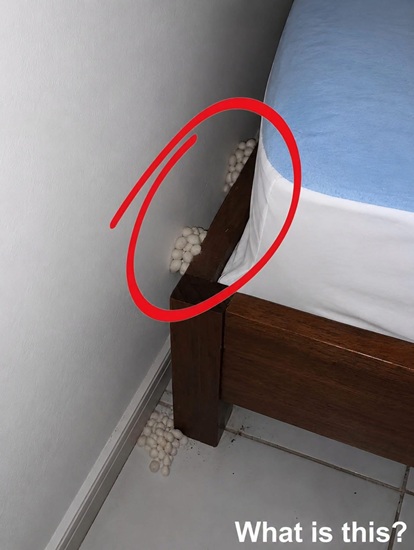
After a long and exhausting day, most people look forward to returning home to a place where they can finally relax. A quiet bedroom often represents comfort, safety, and a moment to escape from the stress of everyday life. However, sometimes a small and unexpected discovery can completely change the way we see our surroundings. One evening, a person returning home noticed something unusual on the bedroom floor that immediately raised questions and created a moment of confusion.
Near the corner of the room was a small group of pale, oval-shaped objects. They appeared smooth, slightly unusual, and unlike anything normally found inside a home. At first glance, it was difficult to understand what they were. Their strange appearance made them seem almost out of place, especially in a private area where nothing unusual was expected.
The discovery created a natural reaction of uncertainty. When people find something unfamiliar inside their home, the first instinct is often to search for an explanation. The human brain is designed to react quickly to unknown situations, especially when something appears unexpected. A harmless object can sometimes seem frightening simply because its purpose or origin is unclear.
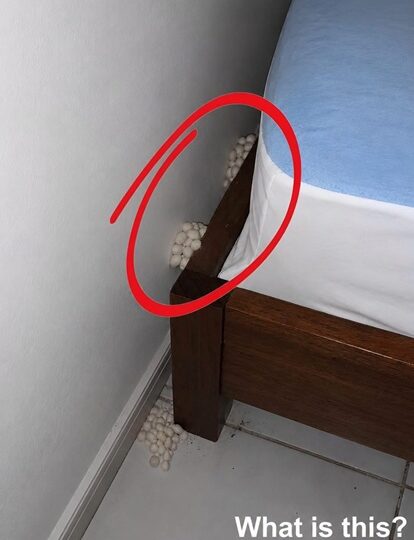
Without touching the objects, the homeowner carefully examined them and tried to understand where they might have come from. The items appeared organic rather than manufactured, suggesting that they were connected to some type of living creature. Questions immediately began forming: How did they get there? Had an animal entered the home? Were they dangerous?
Instead of disturbing them, the person decided to take photographs from different angles. Modern technology allows people to document unusual discoveries and search for information quickly. By taking clear pictures, it became easier to compare the objects with examples found in nature guides and online wildlife communities.
The search for answers led to many possibilities. Similar-looking objects can belong to different animals, insects, or even plants. Without proper identification, it is easy to make incorrect assumptions. Many people have experienced moments where something harmless initially appeared threatening simply because they did not recognize it.
After researching further, the objects were identified as likely reptile eggs, similar to those laid by small house-dwelling lizards such as geckos. Geckos are common in many parts of the world and often live near humans because homes provide warmth, shelter, and protection from predators.
Gecko eggs are usually small, pale, and have a slightly leathery texture. Depending on the species, they may be placed in protected areas such as cracks, corners, walls, or other quiet locations. For a small reptile, a hidden corner of a building can provide a safe environment where eggs can develop.
The discovery changed completely once the explanation became clear. What had first seemed mysterious or alarming was simply a natural event happening nearby. The situation became a reminder that homes are not completely separate from nature. Even in cities and apartments, humans share their environment with countless small creatures.
Many insects and animals quietly live around human spaces without causing harm. Spiders build webs in hidden corners, birds create nests near buildings, and small reptiles search for warm areas where they can survive. These interactions are part of normal ecosystems and often go unnoticed.
Understanding these situations can help reduce unnecessary fear. While some animals can create problems or require professional removal, many unexpected visitors are harmless. Learning how to identify common wildlife signs allows people to respond calmly instead of immediately assuming the worst.
The experience also highlights the importance of curiosity. Instead of destroying something unfamiliar, taking time to investigate can reveal fascinating information about the natural world. A frightening mystery can sometimes become an educational opportunity.
For many people, moments like this serve as reminders that nature continues around us even when we are not paying attention. The walls of a home may provide protection and comfort, but they do not completely separate humans from the environment outside.
What initially appeared to be a disturbing discovery became a simple example of how easily misunderstandings can happen. A few small eggs on a bedroom floor were not a threat or a sign of danger. They were evidence of a tiny creature following its natural instincts and continuing the cycle of life.
After discovering that the mysterious objects were likely reptile eggs, the fear and uncertainty surrounding the situation began to disappear. What had seemed like an invasion of something unknown was actually a small example of wildlife existing alongside humans. The experience showed how quickly emotions can change when information replaces fear and confusion.
Many people have similar experiences when they encounter unfamiliar things in their homes. A strange sound in the wall, an unusual insect, or an unknown object in a corner can immediately create worry. However, once the source is understood, the situation often becomes much less frightening. Knowledge has a powerful way of changing how we view the world around us.
Geckos and other small lizards have lived near human environments for thousands of years. Their ability to adapt allows them to survive in places where people live. They often seek out warm, protected spaces because these areas provide safety from predators and more stable conditions for their eggs.
Unlike some animals that damage property or create serious problems, many gecko species are considered beneficial because they help control insect populations. They commonly eat mosquitoes, flies, moths, and other small insects. In many regions, people actually appreciate having geckos nearby because they contribute to a healthier balance within the local ecosystem.
The discovery of eggs inside a home may seem unusual, but it is not impossible. Small openings around windows, doors, roofs, and walls can provide access points for tiny creatures. Once inside, animals often choose quiet and protected places where they can avoid disturbance.
Experts often recommend observing unknown wildlife from a safe distance before taking action. Touching or moving eggs without understanding what they are can sometimes harm the developing animals. In many situations, the best first step is careful observation and identification.
If someone discovers unknown eggs or signs of wildlife inside their home, reliable sources such as wildlife organizations, local experts, or educational resources can provide guidance. Identifying the species correctly is important because different animals have different needs and behaviors.
The situation also offers a broader lesson about human relationships with nature. Modern life often creates the impression that people exist separately from the natural world. However, ecosystems continue operating everywhere, including neighborhoods, gardens, buildings, and even homes.
Small discoveries can remind people that nature is constantly adapting. A tiny reptile finding a safe place for its eggs is part of a much larger biological process that has existed for millions of years. Every living creature has instincts designed to help it survive and continue its species.
The emotional reaction to the discovery also reveals something interesting about human psychology. People are naturally cautious when they encounter something unfamiliar. Throughout history, recognizing potential threats helped humans survive. Today, that same instinct can sometimes make harmless situations appear more dangerous than they really are.
Taking a moment to investigate before reacting can lead to surprising discoveries. Instead of seeing an unknown object as something frightening, people can view it as a chance to learn. Curiosity can transform anxiety into understanding.
After the mystery was solved, the bedroom no longer felt like a place where something unwanted had appeared. Instead, it became a reminder that even ordinary spaces can contain unexpected connections to the natural world. The small eggs represented a hidden process of life that had been happening quietly.
The experience encouraged a greater appreciation for the small creatures that often go unnoticed. While humans build homes for comfort and protection, many other living beings are also searching for safe places to survive. The same qualities humans value — warmth, shelter, and security — are important throughout nature.
The story of a mysterious discovery becoming a lesson about wildlife is one that many people can relate to. It demonstrates that first impressions are not always accurate and that understanding often comes from patience and research.
Ultimately, the small cluster of eggs was not a sign of danger but a reminder of the connection between humans and the environment. The world around us is filled with countless examples of life adapting and continuing, often in places where we least expect it.
A simple moment of uncertainty became an opportunity for learning. Instead of ending with fear, the discovery ended with appreciation — a reminder that nature is closer than many people realize and that even the smallest creatures have a role in the world we all share.

