
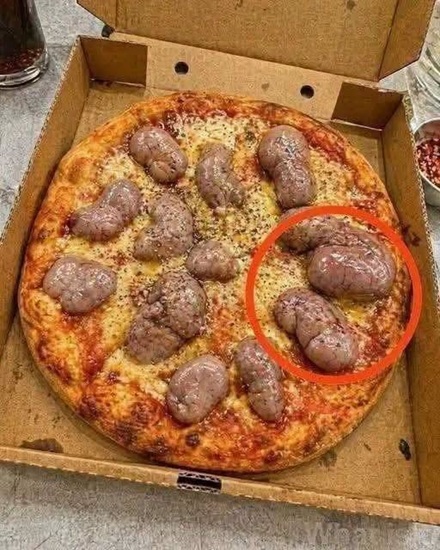
Most people expect a freshly baked pizza to arrive with a perfectly melted layer of cheese, evenly distributed toppings, and a golden-brown crust. Occasionally, however, opening a pizza box reveals something unexpected: several large, raised bubbles stretching across the surface of the cheese. For someone who has never seen this before, the appearance can seem unusual or even concerning. Fortunately, food experts explain that these bubbles are typically a completely normal part of the baking process and are not generally considered a sign that anything is wrong with the pizza.
Imagine ordering a pizza after a long and exhausting day. The delivery arrives quickly, and you eagerly carry the warm box into your kitchen. As you lift the lid, the aroma of baked dough, tomato sauce, garlic, herbs, and melted mozzarella fills the room. Instead of seeing a perfectly flat layer of cheese, though, several rounded domes have formed across the surface. At first glance, they may appear unusual, especially if you have not encountered them before. It is understandable that someone unfamiliar with this common baking result might briefly wonder what caused them.
In many situations, our first reaction to something unfamiliar is influenced by uncertainty rather than evidence. When people are tired, stressed, or simply surprised by an unexpected detail, the mind often begins searching for explanations before all the facts are known. Food scientists and psychologists alike note that unfamiliar appearances can sometimes lead people to assume there is a problem when, in reality, the explanation is quite ordinary. This natural tendency highlights the importance of gathering reliable information before reaching conclusions.
According to baking specialists, those raised areas usually develop because moisture and hot air become trapped beneath the layer of melting cheese while the pizza cooks. As the temperature inside the oven rapidly increases, steam expands and pushes sections of the cheese upward, creating visible bubbles. This process is especially common in high-temperature ovens, including brick ovens and commercial pizza ovens that routinely operate at temperatures significantly hotter than those used in many home kitchens.
The type of cheese used also plays an important role. Mozzarella, the cheese most commonly used on pizza, melts smoothly and contains moisture that reacts to intense heat. If sections of the cheese melt together before trapped steam has an opportunity to escape, the expanding air naturally lifts portions of the cheese into rounded pockets. Once removed from the oven, many of these bubbles gradually collapse as the pizza begins cooling, while others may remain slightly raised until sliced.
Professional pizza makers often see these bubbles every day during food preparation. Depending on the style of pizza being made, some chefs gently press larger bubbles with a spatula or knife before serving, while others intentionally leave them untouched because they contribute to the pizza’s rustic appearance. Neither approach generally affects food safety or the overall quality of the finished meal. Instead, it reflects differences in presentation and personal preference among restaurants.
Several additional factors can influence how many bubbles appear. The amount of cheese applied, the moisture content of the mozzarella, oven temperature, baking time, and even the distribution of toppings may all affect the final appearance. Pizzas baked at very high temperatures often develop more noticeable bubbling because rapid heating causes moisture to expand more quickly than it would during slower baking at lower temperatures.
It is also important to distinguish ordinary cheese bubbles from situations involving genuine food safety concerns. Large bubbles alone are generally not considered an indication that food has been contaminated or prepared improperly. However, consumers should always evaluate food using well-established safety indicators. If a pizza has an unusual odor, visible mold, signs of spoilage, damaged packaging, or appears significantly undercooked, it is reasonable to avoid eating it and contact the restaurant. These factors are far more meaningful indicators of potential problems than naturally occurring cheese bubbles.
Food scientists explain that many of the physical changes observed while baking result from predictable chemical and physical processes. Heat causes proteins within the cheese to soften, fats to melt, and water to convert into steam. As these changes occur simultaneously, pressure occasionally builds beneath the cheese layer, producing the rounded shapes many people notice after opening a pizza box. Understanding these ordinary scientific processes often helps remove unnecessary concern about appearances that initially seem unfamiliar.
Interestingly, experienced pizza enthusiasts sometimes view these bubbles as evidence that the pizza was exposed to the intense heat necessary for proper baking. High temperatures help develop a crisp crust, evenly melted cheese, and the characteristic flavors associated with traditional pizza preparation. While appearance alone should never be used as the only measure of quality, cheese bubbles themselves are commonly regarded as a normal consequence of effective baking rather than a defect.
Ultimately, the appearance of large cheese bubbles provides an excellent reminder that first impressions are not always reliable. Something that initially seems unusual can often have a straightforward scientific explanation. Taking a few moments to seek accurate information rather than relying on assumptions can transform uncertainty into understanding, allowing people to appreciate both the science behind everyday cooking and the value of evidence-based thinking.
Once people understand why cheese bubbles form during baking, a pizza that initially looked unusual often appears completely ordinary. The same raised bubbles that may have seemed surprising at first are actually the result of predictable physical changes that occur inside a hot oven. Rather than indicating a defect, they usually demonstrate how heat, moisture, and melted cheese interact during the cooking process. Learning the science behind these changes helps replace uncertainty with confidence and encourages a more evidence-based way of evaluating everyday foods.
Professional pizzerias often bake pizzas at temperatures ranging from approximately 700°F to 900°F (370°C to 480°C) in traditional brick or stone ovens. At these temperatures, the dough rises rapidly, moisture inside the ingredients turns into steam, and the cheese melts within minutes. Because the baking process happens so quickly, small pockets of steam can become trapped beneath the surface of the cheese before they have an opportunity to escape. As pressure builds, rounded bubbles naturally appear until the pizza is removed from the oven.
The type of mozzarella used can also influence the final appearance of a pizza. Fresh mozzarella contains more moisture than low-moisture varieties commonly used in commercial restaurants. Depending on the recipe, cheese with higher water content may produce more visible bubbling during baking. Likewise, the way cheese is shredded or distributed across the pizza can affect where steam collects, creating different patterns from one pizza to another even when prepared using the same ingredients.
The dough itself also contributes to the baking process. As yeast creates carbon dioxide during fermentation, tiny air pockets develop throughout the dough before it even enters the oven. When exposed to intense heat, those pockets expand, helping create the light texture many people associate with quality pizza crust. At the same time, steam produced from the sauce and cheese continues moving upward, occasionally lifting sections of melted mozzarella into the familiar rounded shapes many customers notice after opening the box.
Experienced pizza makers understand that every pizza is unique. Small variations in oven temperature, humidity, ingredient moisture, baking time, and topping placement can slightly change the finished appearance. For this reason, two pizzas prepared moments apart may look somewhat different while still meeting the same quality standards. These natural variations are part of traditional handcrafted pizza making and are generally considered normal rather than signs of inconsistency.
Food safety experts recommend evaluating prepared food based on reliable indicators rather than appearance alone. A pizza should arrive at an appropriate serving temperature, have ingredients that appear freshly cooked, and be free from signs of spoilage such as mold, unusual discoloration unrelated to cooking, or unpleasant odors. If packaging has been significantly damaged or food appears improperly prepared, customers should contact the restaurant for assistance. However, cheese bubbles by themselves are widely recognized as a normal consequence of baking and are not generally considered evidence of contamination.
Understanding the difference between normal cooking characteristics and genuine food safety concerns can help consumers make informed decisions. Scientific explanations often replace unnecessary worry with practical knowledge. In many cases, what first appears unusual simply reflects the natural behavior of ingredients exposed to high temperatures. This principle extends beyond pizza and applies to many other foods that change appearance during cooking through predictable chemical and physical processes.
Many professional chefs even appreciate the rustic appearance created by naturally blistered cheese. In artisan pizza restaurants, slightly browned cheese bubbles, crisp crust edges, and small variations in shape are often viewed as characteristics of handcrafted preparation rather than imperfections. These visual differences remind customers that each pizza is individually prepared rather than mass-produced, giving every finished product its own unique appearance.
This example also highlights a broader lesson about critical thinking. When something unfamiliar appears unexpectedly, it is natural to feel curious or even briefly concerned. However, taking time to consult reliable information before reaching conclusions often leads to a much more accurate understanding of the situation. Whether evaluating food, technology, health information, or everyday experiences, evidence-based thinking remains one of the most valuable tools for making informed decisions.
Scientific literacy plays an important role in everyday life because it helps explain ordinary events that might otherwise seem confusing. Simple processes such as steam expansion, heat transfer, moisture evaporation, and protein changes occur constantly during cooking, even though most people rarely think about them. Learning how these processes work not only answers common questions but also builds greater confidence when preparing or evaluating food at home and in restaurants.
Ultimately, the next time a pizza arrives with several large bubbles across the melted cheese, there is usually no reason for concern. In most cases, those bubbles are simply the visible result of moisture and air expanding under intense heat during baking. Understanding this straightforward explanation transforms an unfamiliar appearance into something entirely expected, allowing the focus to return to enjoying a freshly prepared meal.
Sometimes, the simplest scientific explanation is also the most reassuring one. A pizza that looks slightly different from what someone expected is often still exactly what it was meant to be—a freshly baked meal prepared using ordinary ingredients and familiar cooking techniques. By relying on accurate information instead of assumptions, people can better distinguish between harmless variations and genuine issues, making everyday experiences both less stressful and more enjoyable.

