
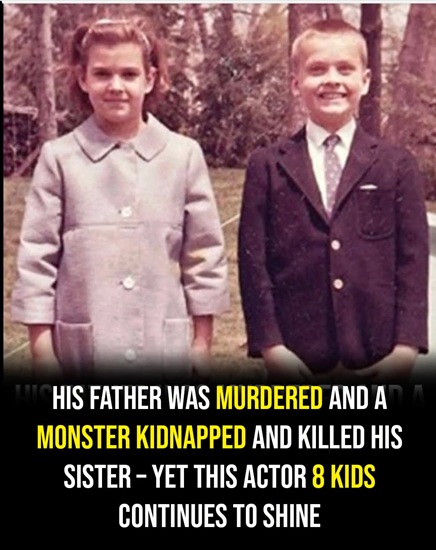
Many people know Kelsey Grammer as the intelligent, witty psychiatrist Dr. Frasier Crane, a character who became one of the most recognizable figures in American television history. Through his performances in Cheers and Frasier, Grammer entertained audiences for decades with sharp humor, memorable dialogue, and remarkable acting ability. Behind that successful career, however, lies a deeply personal story marked by extraordinary loss, resilience, and determination.
His life demonstrates that public success and private hardship can exist side by side in ways few people ever fully see. Born on February 21, 1955, in Saint Thomas, U.S. Virgin Islands, Allen Kelsey Grammer entered the world far from the Hollywood spotlight that would later define his career. His parents separated during his childhood, a life-changing event that altered the direction of his early years. Following the divorce, Grammer was primarily raised in New Jersey by his mother and maternal grandparents. Their home provided stability during a period of major family change, and his grandparents became central figures in his upbringing.
Among the people who influenced him most was his maternal grandfather, Gordon Grammer. In later interviews, Kelsey Grammer described his grandfather as an important father figure during the years after his biological father remained in the Virgin Islands. Like many children seeking guidance, Grammer looked to his grandfather for support, discipline, and encouragement. The relationship helped shape his early understanding of family and responsibility during a period when many aspects of his life were already changing.

When Grammer was around twelve years old, his grandfather died from cancer. The loss deeply affected him, not only because of the close bond they shared but also because it removed another important source of stability from his life. In interviews years later, Grammer reflected that his grandfather’s illness changed his personality during his final months, making him less patient than he had once been. As a child, Grammer struggled to understand those changes and later recalled believing that perhaps he himself had done something wrong.
Only about a year later, another devastating tragedy struck the family. In 1968, when Grammer was just thirteen years old, his father, Frank Allen Grammer Jr., was shot and killed outside his home in the U.S. Virgin Islands. According to publicly documented reports, the person responsible was later found not guilty by reason of insanity. For a young teenager already coping with previous loss, the sudden death of his father created another profound emotional wound that would remain with him throughout adulthood.

As Grammer entered adulthood, he pursued his passion for acting while studying theater at the prestigious Juilliard School in New York City. His dedication to performance continued despite the personal grief he carried from childhood. Yet during those college years, another unimaginable family tragedy occurred. In 1975, his younger sister, Karen Grammer, was kidnapped, sexually assaulted, and murdered in Colorado Springs, Colorado, when she was only eighteen years old. Kelsey Grammer was twenty years old at the time and has spoken openly about how profoundly the crime affected every aspect of his life.
Over the years, Grammer has described the overwhelming guilt he experienced following his sister’s murder. In interviews, including conversations with Vanity Fair, he acknowledged that he blamed himself despite recognizing that such feelings were not rational. He explained that many people who lose siblings experience similar emotions, wondering whether there was something they could have done differently even when the tragedy was entirely beyond their control. His reflections have offered insight into the lasting emotional impact violent crime can have on surviving family members.
The man convicted in connection with Karen Grammer’s murder was Freddie Glenn, who was also convicted in connection with two additional murders. Court proceedings and parole hearings over the decades have repeatedly brought renewed public attention to the case. During various parole reviews, Kelsey Grammer submitted statements describing the enduring pain caused by his sister’s death. Rather than focusing solely on legal proceedings, his public comments often emphasized the lifelong consequences that violent crime leaves for victims’ families.

One of Grammer’s most widely discussed statements came during a parole hearing in 2014, when he addressed Freddie Glenn through a video connection. During that appearance, Grammer acknowledged Glenn’s expression of remorse while also explaining why he could not support his release. He publicly stated that he accepted the apology offered but believed endorsing parole would not honor his sister’s memory. His carefully worded remarks drew attention for balancing personal forgiveness with his position regarding the legal process.
As difficult as those experiences were, they were not the only tragedies his family would endure. In 1980, Grammer lost two half-brothers, Billy and Stephen, during a scuba-diving accident. According to public accounts, Billy disappeared underwater during a dive, and Stephen attempted to rescue him before suffering a fatal air embolism. Billy’s body was never recovered. Losing multiple close family members under entirely different circumstances added another profound layer of grief to an already extraordinary series of personal losses.
In later interviews, Grammer acknowledged that years of unresolved grief contributed to his well-documented struggles with alcohol and substance abuse during the 1980s and early 1990s. He has openly explained that drinking became an unhealthy attempt to numb emotional pain rather than confront it directly. Looking back, he has repeatedly spoken about the importance of recovery, personal responsibility, and seeking healthier ways to cope with overwhelming loss. His willingness to discuss these struggles publicly has helped others better understand the long-term emotional effects of trauma and addiction.
Despite experiencing multiple personal tragedies, Kelsey Grammer gradually rebuilt both his personal life and his professional career. During the 1990s, he publicly acknowledged struggling with alcohol and substance abuse, explaining in later interviews that much of his addiction was connected to unresolved grief. Recovery was not immediate, but Grammer has shared that becoming sober in 1996 marked one of the most significant turning points of his life. Since then, he has often spoken about the importance of accepting help, taking responsibility for personal growth, and continuing forward even after profound loss.
Alongside his recovery, Grammer’s acting career reached extraordinary heights. After first appearing as Dr. Frasier Crane on the sitcom Cheers in 1984, the character became so popular that it eventually led to the creation of the successful spin-off series Frasier. The role showcased Grammer’s ability to combine sophisticated humor with emotional depth, earning widespread recognition from audiences and critics alike. Over the years, his portrayal became one of television’s longest-running and most celebrated character performances.
His work on Frasier earned him numerous industry honors, including multiple Primetime Emmy Awards, Golden Globe Awards, and other acting recognitions. Beyond comedy, Grammer also built an impressive career in theater, dramatic television, film, and voice acting. His distinctive voice made him a sought-after narrator and performer, while his stage work reflected the classical training he received during his early years studying acting. The breadth of his career demonstrated a versatility that extended well beyond the role that first made him a household name.
Throughout the years, Grammer has spoken openly about how faith gradually became an important part of his healing process. In interviews, including conversations with Fox News Digital, he explained that there was a period when overwhelming grief caused him to question his beliefs. Looking back, however, he said he would encourage others facing similar hardship to seek strength rather than isolation. His reflections represent his own personal experiences and beliefs, which he has chosen to share publicly as part of his journey through loss and recovery.
Grammer has also frequently reflected on the universal nature of grief. Rather than presenting his experiences as unique, he has acknowledged that every family eventually faces difficult losses in different forms. In public interviews, he has explained that while the circumstances surrounding his family’s tragedies were extraordinary, suffering itself is something shared by many people. His comments often emphasize compassion for others experiencing hardship and the importance of finding healthy ways to continue living while honoring loved ones who have passed away.
One emotional theme that has appeared repeatedly in Grammer’s interviews is his fear of abandonment. He has candidly stated that losing so many people close to him left lasting emotional scars that could not simply disappear with time. Mental health professionals often explain that repeated traumatic loss can influence how individuals experience relationships, trust, and emotional security throughout adulthood. Grammer’s willingness to discuss these feelings publicly has helped many people better understand the long-term emotional impact that trauma can have even decades after the original events.
While his professional achievements continued to grow, Grammer also experienced important changes in his personal life. In 2011, he married Kayte Walsh, an English flight attendant and the daughter of former footballer Alan Walsh. Grammer has publicly described meeting her as a life-changing experience, explaining in interviews that she brought renewed happiness and optimism during a later chapter of his life. He has spoken warmly about the stability their relationship has provided and the sense of gratitude he feels for the family they have built together.
Family has remained an important focus throughout Grammer’s later years. As a father of eight children, he has openly reflected on both the joys and challenges of parenthood. In interviews with People, he acknowledged that balancing an acting career with family responsibilities was not always easy and expressed a desire to strengthen relationships with all of his children. His comments demonstrate a willingness to examine his own experiences honestly while continuing to grow as both a parent and an individual.
Several of Grammer’s children have developed interests in the entertainment industry. His daughters Spencer Grammer and Greer Grammer have both established acting careers, while other members of the family have pursued studies related to film production and creative media. Watching the next generation explore their own careers has become another meaningful chapter in his life, reflecting the family’s continued connection to storytelling and the performing arts.
Grammer has also shared lessons with his children about responding to anger and grief. Speaking publicly about the murder of his sister, he explained that although feelings of anger are understandable after experiencing terrible loss, allowing those emotions to define one’s life can create additional suffering. Instead, he has encouraged his family to focus on healing, purpose, and building meaningful lives while remembering loved ones with compassion rather than allowing hatred to become their lasting legacy.
Looking back across decades of success and hardship, Grammer’s story is remarkable not simply because of the tragedies he endured, but because of the resilience he demonstrated afterward. His career continued despite overwhelming personal loss, and his willingness to discuss grief, recovery, forgiveness, and personal responsibility has added another dimension to his public legacy. While audiences continue to appreciate his performances on screen and stage, many also respect the honesty with which he has shared his own life’s challenges.
Today, Kelsey Grammer remains one of the most recognizable and accomplished actors in American television history. His journey illustrates that professional achievement does not erase personal pain, but it also shows that healing, growth, and renewed purpose are possible even after profound loss. Through decades of memorable performances, dedication to his family, and openness about recovery and resilience, Grammer’s life continues to inspire many people who face difficult circumstances of their own.

