
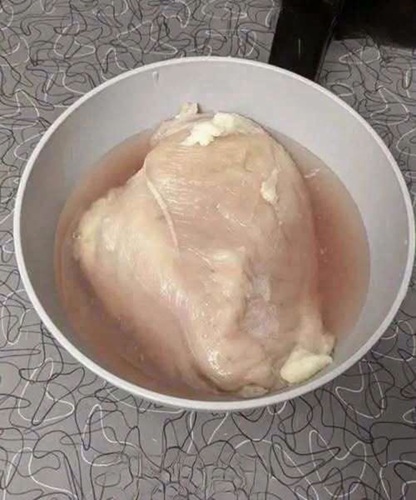
Leftover chicken is a practical and widely used food option because it saves time, reduces waste, and can be turned into many different meals. However, cooked poultry is highly perishable and requires proper handling to remain safe for consumption. Even though cooking kills harmful bacteria present in raw chicken, the food can still become unsafe afterward if it is not stored or reheated correctly. Chicken is especially sensitive to bacterial growth due to its moisture content and nutrient-rich composition.
Once cooked, it must be handled carefully to avoid contamination from surfaces, utensils, or hands. Food safety experts highlight that bacteria can multiply rapidly when food is left at room temperature for too long, even if the food appears normal. One of the most important safety rules is the “two-hour guideline.” Cooked chicken should be placed in the refrigerator within two hours of being cooked or served.
If the environment is hot, above 90°F (32°C), this window decreases to just one hour. In warm conditions, bacteria grow much faster, increasing the risk of foodborne illness. Proper refrigeration is essential for maintaining both safety and quality. Cooked chicken should be stored in airtight containers or sealed packaging and placed in a refrigerator set at 40°F (4°C) or below. Using shallow containers is recommended because they allow food to cool more quickly and evenly, which helps reduce bacterial growth.
When stored correctly, leftover chicken can typically be kept in the refrigerator for up to three to four days. Beyond this period, the risk of spoilage increases significantly. Even if the chicken looks and smells fine, harmful bacteria may still be present, which is why time limits are more reliable than appearance when judging safety.
For longer storage, freezing is the safest option. Freezing at or below 0°F (-18°C) stops bacterial growth completely and preserves the chicken for future use. While frozen chicken remains safe indefinitely, its best quality is usually maintained when consumed within a few months. Proper wrapping or airtight freezer storage helps prevent freezer burn and preserves taste and texture.
Reheating leftover chicken correctly is just as important as storing it properly. The internal temperature should reach at least 165°F (74°C) to ensure that any bacteria that may have developed are destroyed. Uneven heating can leave cold spots where bacteria survive, so food should be stirred, rotated, or evenly heated depending on the method used.
Different reheating methods can be used safely. Ovens and stovetops often provide more consistent heating, while microwaves are convenient but require extra care to ensure even warming. Covering the food, stirring halfway through, and allowing it to rest after heating can help improve safety and texture when using a microwave.
It is also important not to reheat the same portion of chicken multiple times. Each cycle of cooling and reheating increases the risk of bacterial growth and reduces food quality. It is safer to reheat only the portion that will be consumed immediately.
Safe thawing practices are another key part of food safety. Frozen chicken should ideally be thawed in the refrigerator, in cold water with regular changes, or in the microwave if it will be cooked immediately. Leaving chicken at room temperature to thaw is unsafe because the outer layer can enter the danger zone while the inside remains frozen.
Cross-contamination should always be avoided when handling poultry. Cooked chicken must be kept separate from raw foods, and all utensils, cutting boards, and surfaces should be thoroughly cleaned after contact with raw meat. Even small amounts of contamination can spread bacteria to other foods.
Certain groups of people, including young children, older adults, pregnant women, and individuals with weakened immune systems, are more vulnerable to foodborne illness. For these individuals, following strict food safety practices is especially important.
Another useful practice is dividing leftover chicken into smaller portions before storing. This makes it easier to reheat only what is needed and reduces repeated handling of the same food. Labeling containers with dates can also help track freshness more effectively.
While spoilage signs such as odor, texture changes, or discoloration can sometimes indicate that food is no longer safe, harmful bacteria may still be present without visible warning signs. For this reason, proper timing and temperature control are the most reliable safety measures.
By following simple but consistent food safety habits, leftover chicken can be enjoyed safely while minimizing waste. Proper storage, correct refrigeration timing, and careful reheating all work together to protect health and maintain food quality.

