
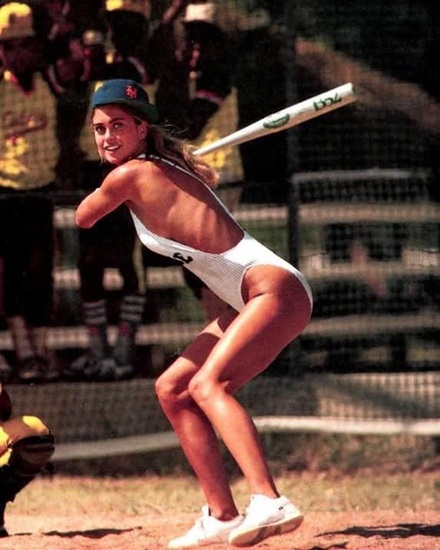
Kathy Ireland became one of the most recognizable American models of the 1980s and 1990s, but the career she built after leaving full-time modeling ultimately became an even larger part of her story. With her distinctive red-brown hair, blue eyes, and approachable image, Ireland appeared in magazines seen by millions of readers around the world. Her long association with the Sports Illustrated Swimsuit Issue made her particularly famous, yet she was already thinking about what would happen when modeling opportunities eventually disappeared.
Instead of treating celebrity as a permanent career, she began experimenting with business ideas while she was still appearing in front of cameras. Decades later, Ireland is known not only as a former model but as an entrepreneur, licensing executive, author, philanthropist, wife, and mother. Born Kathleen Marie Ireland on March 20, 1963, in Glendale, California, she grew up in the Santa Barbara area.
Her childhood was far removed from the international fashion industry she would later enter. Ireland has frequently credited her family, especially her father, with teaching her lessons about responsibility, hard work, and customer service. Those lessons began well before anyone considered her a potential model. As a young girl, she delivered newspapers and learned that doing slightly more than customers expected could make a lasting impression. That simple idea would eventually become part of the philosophy she carried into business.
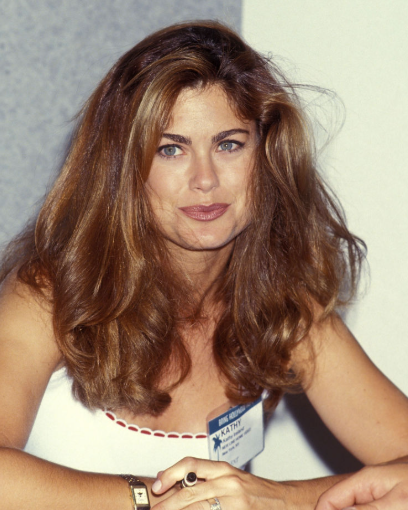
Ireland has recalled her father encouraging her to give more than was expected. If a newspaper subscriber expected the paper to land on the driveway, for example, she was encouraged to take the extra effort and place it closer to the front door. She later summarized the principle as under-promising and over-delivering. Although delivering newspapers might seem unrelated to building an international licensing company, Ireland has repeatedly connected those childhood experiences with her later approach to customers. Her success, she has emphasized, was never simply the product of appearing on magazine covers. It required years of experimentation, mistakes, partnerships, and work from many people.
Her path toward fame began unexpectedly while she was still a teenager. In 1979, when Ireland was 16, she was discovered by a representative connected with Elite Model Management while attending high school. Modeling offered opportunities that few teenagers could have imagined, and Ireland entered the industry at a remarkably young age. The glamorous photographs that eventually made her famous, however, represented only one side of the profession. Ireland later spoke candidly about an environment in which models could face constant criticism regarding their appearance and were frequently expected to follow instructions without questioning the people controlling a photo shoot.
One particularly disturbing experience occurred when Ireland was approximately 17. According to her own account, a photographer pressured her to pose topless even though she had made clear that she did not want to do so. Ireland said the photographer continued pushing the issue and became physically aggressive. She responded by defending herself and striking him. Ireland has discussed the incident publicly as an example of why young people working in modeling need boundaries and the confidence to refuse requests that make them uncomfortable. Her account also illustrates how different the reality behind glamorous photographs could be from the polished image presented to the public.
Ireland later explained that models were often expected simply to pose while other people evaluated nearly every aspect of their appearance. She told FIRST for Women that people could find something to criticize regardless of what a model looked like. That experience eventually helped shape the way she thought about self-worth. Instead of allowing professional criticism to become her definition of herself, Ireland gradually learned to separate other people’s opinions from her own sense of identity. It was a lesson that would become increasingly valuable as she moved from modeling into business, where criticism and rejection followed her again.
Her modeling career nevertheless became enormously successful. During the 1980s, Ireland appeared in numerous fashion and commercial assignments, but her association with Sports Illustrated became the defining feature of her modeling years. She appeared in the magazine’s famous Swimsuit Issue for 13 consecutive years, from 1984 through 1996. That extraordinary run placed her among the publication’s most familiar models and introduced her to an enormous international audience. She appeared on the cover three times, in 1989, 1992, and 1994.
The 1989 Sports Illustrated Swimsuit cover became particularly memorable. The issue marked the 25th anniversary of the magazine’s swimsuit edition, and Ireland was photographed for a cover that became one of the publication’s best-known images. The exposure dramatically increased her public profile. Her relationship with Sports Illustrated also gave her opportunities to work with influential people within publishing, including longtime swimsuit editor Jule Campbell. Ireland later described Campbell with admiration, emphasizing her strength as a woman working in a leadership role in a demanding industry.
Ireland’s modeling success extended beyond Sports Illustrated. Her image appeared in advertising campaigns and numerous publications, and she became part of the generation of models whose names were increasingly familiar to the general public. Modeling in that period could create tremendous visibility, but Ireland understood that visibility was temporary. Fashion careers are often affected by changing trends, age, and decisions made by agencies or clients. Ireland did not want her financial future to depend entirely on whether someone else continued hiring her to stand in front of a camera.
She has also rejected the idea that she was a perfectly disciplined model who followed every rule. Ireland has described herself as rebellious and acknowledged that she sometimes walked away from jobs. She did not always fit comfortably into an industry where models had relatively little control over the final product. In later interviews, she openly said that perfection was never a word that accurately described her. Those imperfections, however, may have contributed to her willingness to experiment outside modeling.
Acting became one of those experiments. Ireland appeared in several movies and television projects during her years of widespread fame. Her credits included the 1988 science-fiction comedy “Alien from L.A.” and other entertainment projects. Acting never replaced modeling as the foundation of her celebrity, and Ireland eventually discovered that neither field represented what she most wanted to build. Behind the scenes, she was becoming increasingly interested in entrepreneurship.
The transition did not happen through one brilliant idea that immediately succeeded. Ireland has emphasized that she attempted multiple businesses and experienced failures along the way. This part of her story is sometimes overlooked because retrospective accounts can make her eventual success appear inevitable. It was not. She entered business without the traditional résumé of a corporate executive, and the fashion industry’s perception of models did not necessarily help her gain credibility with experienced businesspeople.
One modest product ultimately provided an important breakthrough: socks. In the early 1990s, Ireland became involved in marketing socks under her name. The concept sounded almost comically small compared with the lifestyle business that eventually emerged from it, but Ireland saw practical value in starting with an everyday product. Rather than beginning with glamorous swimwear simply because consumers knew her as a swimsuit model, she wanted to sell something ordinary families regularly needed.
The sock business performed strongly, creating opportunities for additional products. Kmart subsequently became an important retail partner, and Ireland expanded into clothing and other categories. The strategy challenged assumptions about how a famous model should commercialize her image. People reportedly told her that building a major lifestyle company beginning with socks would never work and that swimwear would have been the obvious route. Ireland chose a different direction.
In 1993, Kathy Ireland Worldwide, commonly known as kiWW, was established. The company gradually developed beyond conventional celebrity merchandising. Rather than merely attaching Ireland’s photograph to products, the business pursued licensing relationships across multiple categories. Ireland became deeply involved in developing a brand aimed primarily at practical products for families. The company’s philosophy was often summarized around finding solutions for families, particularly busy mothers.
This positioning distinguished the company from celebrity brands primarily focused on luxury fashion. Ireland understood that the people who recognized her from magazines were growing older, establishing households, raising children, and purchasing furniture and other everyday products. She wanted the brand to evolve alongside those consumers. Over time, Kathy Ireland Worldwide expanded into home furnishings and numerous additional categories.
The shift toward home products proved especially important. Ireland has publicly discussed advice she received from legendary investor Warren Buffett, whom she came to regard as a friend and mentor. Buffett’s business philosophy emphasized durable value and understanding customers rather than simply following trends. Ireland’s association with Buffett has sometimes been summarized as though he personally created the strategy behind her company, but the reality is more nuanced. Ireland and her team developed the company, while she has credited Buffett’s guidance as one source of valuable business advice.
After the company’s relationship with Kmart ended in 2003, Ireland continued expanding the brand rather than treating the change as a defeat. Home furnishings became increasingly central to the company’s licensing activities. Furniture, flooring, mattresses, rugs, and other household categories helped transform the brand into something very different from its origins in fashion. Consumers who had never purchased a magazine featuring Ireland could encounter her name through products intended for their homes.
Reports about the scale of Kathy Ireland Worldwide have often cited billions of dollars in annual retail sales. It is important to distinguish retail sales of licensed products from Ireland’s personal income or the company’s own revenue. When publications report several billion dollars in retail sales associated with the brand, that does not mean Ireland personally receives that amount. The figure represents the retail value of products sold under licensing arrangements and related partnerships. Maintaining that distinction prevents impressive business statistics from becoming misleading claims about personal wealth.
Similarly, estimates of Ireland’s personal net worth vary considerably depending on the publication and methodology used. Figures around hundreds of millions of dollars have appeared repeatedly in media coverage, including estimates placing her fortune near $400 million or more. Because Kathy Ireland Worldwide is privately held and personal finances are not fully public, such estimates should not be presented as independently verified bank balances. What can be stated confidently is that Ireland successfully converted her modeling recognition into a substantial and long-running licensing enterprise.
Her accomplishments received formal recognition within the licensing industry. Ireland has been honored for her work and inducted into the Licensing International Hall of Fame. That recognition is significant because it places her business accomplishments within an industry context rather than evaluating her only as a former celebrity who launched products. Over several decades, her company survived changes in retail, fashion, consumer behavior, and media.
Ireland has consistently resisted taking sole credit for that success. She has emphasized that thousands of hours of work by many people contributed to the company’s development. Designers, manufacturers, retailers, licensing partners, executives, and employees all played roles. Her comments about teamwork provide an important counterpoint to headlines that portray the entire enterprise as the achievement of one famous individual.
Her childhood lessons about work remained important throughout the process. Ireland has recalled her father, John Ireland, teaching her to exceed customers’ expectations whenever possible. Her newspaper route became one of her favorite examples. The lesson was simple enough for a child to understand but scalable to a business: customers remember when a company delivers more value than expected. Ireland later carried that philosophy into conversations about entrepreneurship.
Her career also demonstrates the importance of planning beyond a profession that depends heavily on appearance. Ireland knew that modeling had an expiration date that she could not fully control. Instead of waiting until the phone stopped ringing, she experimented with other opportunities while she still had substantial visibility. Some attempts failed, but those failures provided experience. Eventually, the skills she developed in licensing and brand management became more important to her career than modeling itself.
At the same time, Ireland’s personal life was developing away from magazine covers and corporate meetings. In 1988, she married physician Greg Olsen. Their marriage has endured for decades, and they have three children: Erik, Lily, and Chloe. Ireland has frequently spoken about family as one of the most important elements of her life.
Motherhood influenced both her priorities and the way she thought about her customers. Ireland has discussed the value of spending individual time with each child, emphasizing that meaningful attention does not require expensive activities or elaborate plans. In a 2007 interview with People, she described enjoying one-on-one time with her children as their individual personalities developed. Her comments reflected an approach to parenting based more on presence than spectacle.
Family also became connected to the philosophy behind Kathy Ireland Worldwide. The company often described its mission around providing solutions for families, especially women managing households, careers, and parenting responsibilities. While this branding naturally served a commercial purpose, Ireland has said that her experiences as a mother helped her understand practical problems consumers encountered at home.
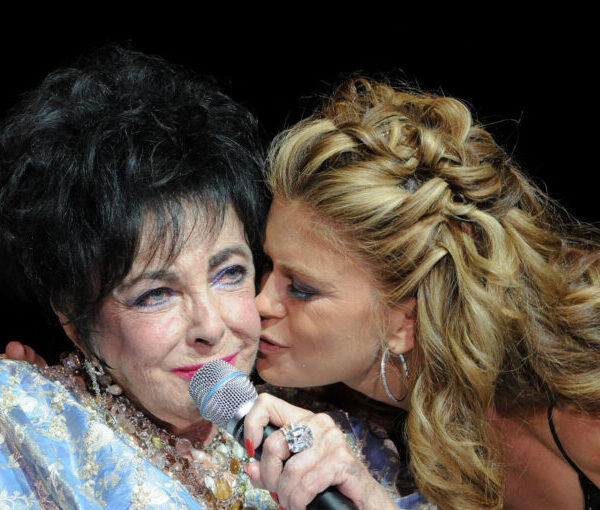
Another important figure in Ireland’s life was Elizabeth Taylor. The legendary actress became much more than a famous acquaintance. Ireland has repeatedly described Taylor as a mentor and close friend whose influence extended into business, philanthropy, and personal life. Their relationship connected two women from different generations of Hollywood who had both experienced the unusual pressures created by international fame.
Taylor was also known for her extensive humanitarian work, particularly her advocacy and fundraising during the HIV/AIDS crisis. Her willingness to use celebrity for causes that were unpopular or stigmatized at the time left a significant impression on Ireland. Ireland has spoken about learning from Taylor’s courage, generosity, and ability to combine public influence with humanitarian work.
Their friendship became publicly visible on numerous occasions. Taylor also defended Ireland after Ireland received criticism for her work as an on-air host around ABC’s 2010 Academy Awards coverage. Taylor praised Ireland’s glamour, grace, and professionalism. Coming from one of Hollywood’s most celebrated actresses, the support carried considerable emotional significance for Ireland.
Following Taylor’s death in 2011, Ireland continued speaking warmly about their friendship and the lessons she had learned. She has credited Taylor with influencing her approach to philanthropy as well as business. Rather than treating charitable involvement as something entirely separate from professional life, Ireland increasingly integrated humanitarian interests into her public work.
Philanthropy has consequently become another important component of Ireland’s activities. Over the years, she has supported organizations and initiatives connected with health, education, humanitarian relief, and efforts to reduce poverty. Her charitable interests have varied, and she has used both personal visibility and corporate partnerships to support causes.
Ireland’s religious faith is also an important part of how she publicly describes herself. She identifies as a Christian and has discussed how her faith influences her decisions and worldview. She has also publicly expressed opposition to abortion based on her beliefs. Because abortion is a politically and socially sensitive subject, accurately describing her position does not require advocating for or against that position. It is simply one documented aspect of Ireland’s publicly stated beliefs, while people and laws across different jurisdictions hold a wide range of views on the issue.
That distinction is especially important when discussing a public figure whose career crosses entertainment, business, religion, and advocacy. Ireland’s personal views should be attributed to her rather than presented as universal conclusions. Her story can be reported without encouraging readers to adopt a particular political or religious position. Doing so preserves the difference between describing someone’s beliefs and attempting to influence a local or domestic political debate.
Ireland’s relationship with aging provides another interesting contrast with the modeling industry in which she began. Modeling once required her to work in an environment intensely focused on physical appearance. Today, she has said she does not wish to return to her younger years. Instead, Ireland has described aging as a process she appreciates because each year offers opportunities to learn and grow.
“I wouldn’t go back in time for anything,” she has said in interviews discussing aging. Her emphasis has generally been on continuing to develop rather than attempting to preserve an exact appearance from decades earlier. For someone whose early career depended so heavily on photographs, that attitude represents a significant evolution.
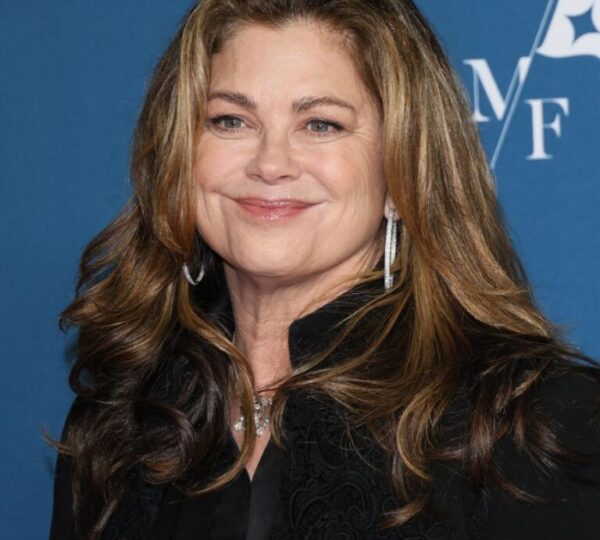
Ireland turned 63 on March 20, 2026. This is worth clarifying because older articles may still describe her as 60, 61, or 62 depending on when they were published. Her appearance today naturally differs from photographs taken during her Sports Illustrated years, just as anyone’s appearance changes over several decades. What has remained more consistent is her recognizable public presence and her continued involvement in business and charitable activities.
Ireland has also spoken positively about remaining physically active. Rather than presenting fitness as an attempt to reproduce her modeling-era body, she describes activity as something connected with health and enjoyment. Growing up in California helped create a lifelong appreciation for outdoor activities. She has mentioned surfing, hiking, biking, walking, the ocean, and the mountains among the things she enjoys.
Her approach to food has similarly been described in terms of balance rather than rigid restriction. Ireland has said she does not like categorizing every food as inherently “good” or “bad.” She has experimented with different approaches over the years but has generally emphasized moderation and practical choices rather than severe dieting.
She has also joked about how differently her metabolism worked when she was younger. During her modeling years, she could consume foods that became more difficult to accommodate as she aged. Instead of presenting this as a personal failure, Ireland has treated changing metabolism as a normal part of life. She has spoken about appreciating her ability to remain active rather than taking health for granted.
Fresh fruits and vegetables have become regular parts of her diet. Ireland has mentioned enjoying tropical fruit, apples, bananas, berries, and vegetables. Even Brussels sprouts, which she once disliked, eventually became something she enjoyed. These details are relatively ordinary, but perhaps that is precisely the point: her approach to wellness does not depend on a dramatic celebrity secret.
The difference between Kathy Ireland’s public image in 1989 and her life decades later demonstrates how incomplete celebrity photographs can be. The Sports Illustrated cover captured a particular moment when she was one of the most recognizable models in America. It could not reveal the entrepreneur she would eventually become, the businesses that would fail before she found a successful strategy, or the enormous licensing network that would later carry her name.
Nor could those photographs show the personal lessons she would take from difficult experiences within modeling. Being evaluated constantly taught Ireland that outside opinions could not be allowed to determine her entire sense of worth. The uncomfortable encounter she described experiencing as a teenager reinforced the importance of boundaries. Rejection taught her persistence, while temporary success reminded her to prepare for the future.
Her friendship with Elizabeth Taylor introduced another dimension to that development. Taylor represented extraordinary Hollywood fame, but she also demonstrated how fame could be redirected toward humanitarian causes. Ireland has said those lessons stayed with her. Warren Buffett provided another kind of mentorship, offering business perspectives from someone whose career was built not on celebrity but on investing and long-term corporate decision-making.
Ireland’s father provided perhaps the earliest lesson of all. Deliver the newspaper farther than expected. Give the customer something slightly better than promised. Take responsibility for the quality of your work. It was hardly glamorous advice, but Ireland has repeatedly returned to it when explaining the foundation of her business thinking.
These influences helped produce a career difficult to summarize simply as “model turned entrepreneur.” Ireland’s fame certainly provided opportunities unavailable to most aspiring business owners. Her name recognition gave her access to retailers, publicity, and consumers. But celebrity alone cannot guarantee that a licensing business will survive for decades. Numerous celebrity brands have appeared and disappeared during the same period.
The durability of Kathy Ireland Worldwide is therefore an important part of her legacy. Beginning with relatively modest consumer products, the company expanded across categories and survived long after Ireland stopped being primarily identified as an active swimsuit model. Her transition anticipated a business strategy that later became common among entertainers, athletes, influencers, and models: using public recognition as the starting point for ownership, licensing, and entrepreneurship.
Ireland was pursuing that strategy before social media made personal brands an everyday concept. There was no Instagram audience to contact directly and no influencer economy resembling today’s environment. Building a consumer brand required relationships with retailers, manufacturers, licensing companies, and traditional media. The barriers were different, and Ireland had to persuade experienced businesspeople that her ambitions extended beyond putting a famous name on merchandise.

