
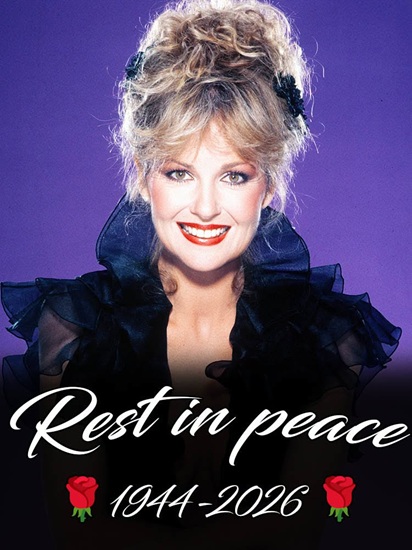
Shelley Fabares, the actress and singer whose work entertained television audiences across several generations, has died at the age of 82. Best remembered for portraying Mary Stone on The Donna Reed Show and Christine Armstrong on Coach, Fabares built a remarkable career that stretched from childhood acting to major television success as an adult. Her family confirmed that she died on Saturday, August 22, 2026, in Los Angeles. According to the family’s announcement, she was surrounded by people who loved her. A specific cause of death was not publicly disclosed.
Following the announcement, Fabares’ family remembered her not only for the performances that made her famous but also for the person she was away from television cameras. They described her as a source of love, strength, laughter, and comfort for relatives and friends. Their remembrance emphasized her warmth, generosity, humor, loyalty, courage, and ability to make people around her feel valued. Although millions knew her through television, movies, and music, those closest to her highlighted the personal relationships that shaped her life.
Born on January 19, 1944, in Santa Monica, California, Shelley Fabares entered show business when she was still very young. Her television career began during childhood, including an appearance on The Loretta Young Show when she was around 10 years old. Those early opportunities gave her experience in front of the camera before the role that would transform her into a nationally recognized television personality. By her teenage years, she was already building a professional career in an entertainment industry filled with established performers.
Her breakthrough came when she joined The Donna Reed Show as Mary Stone, the daughter of Donna Stone, played by Donna Reed. The family sitcom premiered in 1958 and became an important part of American television during its era. Fabares quickly became one of its familiar young faces, appearing regularly during the show’s early seasons. Audiences watched her character experience many of the everyday situations associated with growing up, and the role established Fabares as one of television’s recognizable young performers of the period.
Her connection with Donna Reed also extended beyond what audiences saw on television. Fabares later spoke warmly about Reed and the influence the older actress had on her during those formative years. Working on a successful television program while growing up gave Fabares an unusual childhood and provided the foundation for a career that would continue for decades. Instead of disappearing from entertainment after her early success, she eventually managed the difficult transition from teenage star to adult performer.
While Fabares was becoming widely known through television, another unexpected chapter of her career began in music. In 1962, she released “Johnny Angel,” a song that became a major commercial success. The recording climbed to No. 1 on the Billboard Hot 100, giving the young actress a chart-topping single in addition to her television fame. She followed it with additional recordings, including “Johnny Loves Me,” establishing herself for a period as both a television actress and a successful recording artist.
“Johnny Angel” would remain closely associated with Fabares throughout her life. Its success reflected an era when television personalities sometimes crossed into popular music, but reaching the top of the national singles chart was still a significant achievement. For audiences who grew up during the early 1960s, the song became another enduring part of Fabares’ public identity. It also demonstrated that her career was already expanding beyond the television role that had first made her famous.
Movies soon became another important part of her professional life. During the 1960s, Fabares appeared opposite Elvis Presley in three films: Girl Happy, Spinout, and Clambake. Working with Presley placed her alongside one of the most recognizable entertainment figures of the twentieth century. Those movies gave Fabares additional exposure and helped establish her beyond the world of television sitcoms. They later became some of the most frequently remembered films from the earlier portion of her career.
Fabares continued acting after her years as Mary Stone, gradually moving toward more mature roles. One notable project was the acclaimed 1971 television movie Brian’s Song, which told the story of Chicago Bears football players Brian Piccolo and Gale Sayers. Fabares portrayed Joy Piccolo, the wife of Brian Piccolo, who was played by James Caan. The production became one of the best-known television movies of its era and represented another important stage in Fabares’ transition into adult dramatic roles.
Throughout the 1970s and 1980s, Fabares remained active on television rather than relying solely on the fame she had achieved as a teenager. She appeared in numerous programs and continued demonstrating her versatility in both comedy and drama. Among her notable television roles was Francine Webster on One Day at a Time. By then, viewers who had originally known her from The Donna Reed Show were seeing a very different performer who had successfully developed an adult acting career.
Her persistence eventually led to one of the biggest successes of her professional life. In 1989, Fabares joined the ABC comedy Coach, starring Craig T. Nelson as college football coach Hayden Fox. Fabares played Christine Armstrong, a successful television news professional who became Hayden’s romantic partner and later his wife. The character developed into an essential part of the series and provided Fabares with a major television role more than three decades after she had first become widely known.
Coach ran for nine seasons, giving Fabares another long-running television success. Her chemistry with Craig T. Nelson became an important element of the program, while Christine developed as a character with her own professional ambitions and personality. The role introduced Fabares to viewers who may have been too young to remember The Donna Reed Show or her music career. In this way, she achieved something relatively uncommon in entertainment: major television recognition among entirely different generations of audiences.
Her performance on Coach also brought significant professional recognition. Fabares received two Primetime Emmy Award nominations for her work on the series. The nominations represented an important achievement at a later stage of a career that had begun when she was a child. Instead of being remembered exclusively as a former teenage star, she had established herself again as a successful adult television actress capable of contributing to a long-running prime-time comedy.
Craig T. Nelson was among the colleagues who remembered Fabares following news of her death. Their years working together on Coach had created a close professional connection, and Nelson reflected publicly on her importance in his life. Such tributes offered another perspective on Fabares’ career, showing that her influence was not limited to what audiences saw on screen. The relationships she formed with colleagues became part of the many personal memories shared after her passing.
Away from acting, Fabares shared a long marriage with actor Mike Farrell, widely recognized for portraying Captain B.J. Hunnicutt on M*A*S*H. The couple married on December 31, 1984, and remained together for more than four decades. Before Farrell, Fabares had been married to record producer Lou Adler. Her first marriage ended, and she later built a lasting partnership with Farrell that became an important part of her personal life.
Fabares did not have biological children, but she became stepmother to Farrell’s two children from his previous marriage to actress Judy Farrell. Her family’s statement following her death specifically emphasized the importance she placed on her family relationships. They remembered her as a devoted wife, cherished stepmother, sister, aunt, relative, and loyal friend. Their words presented a picture of someone whose private life meant far more to those around her than the celebrity status that accompanied her career.
Fabares also experienced serious health difficulties later in life. In 1999, she learned that she was dealing with progressive liver failure after an emergency medical situation. She eventually spent an extended period waiting for a donor liver. In October 2000, she underwent a liver transplant, an experience that profoundly affected her life. Fabares later expressed gratitude for receiving another chance at life and acknowledged the support that Farrell provided throughout the difficult period.
Her experiences beyond entertainment also led her toward advocacy. Alzheimer’s disease became an especially meaningful cause after her mother was affected by the illness. Fabares became involved in efforts to increase awareness and support related to the disease. This work represented a quieter but meaningful part of her public life and showed how personal experiences influenced the causes she chose to support outside the entertainment industry.
When her entire career is considered, Fabares’ professional longevity stands out. She began performing as a child in the 1950s, became a television star as a teenager, recorded a No. 1 song, acted alongside Elvis Presley, appeared in dramatic television productions, and eventually earned Emmy nominations for a successful sitcom decades later. Very few performers have careers that connect so many different periods of American entertainment while continuing to reach new audiences.
Different generations therefore remember Shelley Fabares for different reasons. Viewers of The Donna Reed Show may remember the young Mary Stone and the family stories that helped make the series popular. Music fans may immediately associate her name with “Johnny Angel.” Elvis Presley fans remember her appearances in three of his movies. Another generation primarily knows her as Christine Armstrong from Coach. Together, those roles created a career that cannot easily be defined by a single performance.
Her ability to move beyond childhood and teenage fame was particularly significant. Entertainment history includes many young performers who struggled to establish lasting adult careers, but Fabares continued working and eventually found one of her greatest successes many years after her initial breakthrough. Her two Emmy nominations for Coach demonstrated that the later stages of her career were not simply based on nostalgia. She continued earning recognition for new work and new characters.
The announcement of Fabares’ death has prompted renewed appreciation for those many chapters of her professional life. Her career provides a link between the family sitcoms of the late 1950s, the pop music culture of the early 1960s, Elvis Presley’s Hollywood years, television movies of the 1970s, and network sitcoms of the 1990s. Each period added something different to her body of work and allowed audiences to see her develop over time.
At the same time, the statement from her family made clear that professional accomplishments tell only part of her story. Those who personally knew Fabares remembered qualities that could not be measured by television ratings, music charts, movie credits, or award nominations. They emphasized her humor, kindness, courage, generosity, loyalty, and the comfort she provided to others. Their tribute focused on a woman who made friends and relatives feel welcomed and cared for throughout her life.
Shelley Fabares leaves behind a substantial body of work spanning television, film, and music. Her journey from child performer to teenage television star and eventually Emmy-nominated actress represented more than six decades connected to the entertainment world. Programs such as The Donna Reed Show and Coach continue to preserve two very different periods of her career, while “Johnny Angel” remains an enduring reminder of her unexpected success as a recording artist.
For her husband Mike Farrell, her stepchildren, relatives, friends, former colleagues, and longtime admirers, her death marks the loss of someone whose life extended far beyond the characters she portrayed. Public audiences can remember the performances and music she left behind, while those who knew her personally carry memories of the individual behind those accomplishments. Her long career ensured that Shelley Fabares became familiar to several generations, each discovering her through a different chapter of an extraordinary professional journey.
Shelley Fabares died at 82 after spending most of her life connected in some way to entertainment and public service. From Mary Stone and “Johnny Angel” to her films with Elvis Presley and her Emmy-nominated performance as Christine Armstrong, her career contained achievements across multiple areas of popular culture. Her family’s tribute, however, offers perhaps the clearest description of how they hope she will also be remembered: as a loving family member and friend whose warmth, humor, courage, and generosity made a lasting difference to the people around her.

