
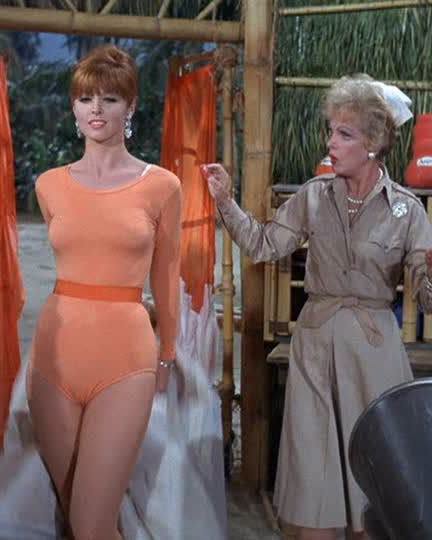
More than six decades after the S.S. Minnow first sailed onto American television screens, Gilligan’s Island continues to occupy a unique place in popular culture. The CBS sitcom originally aired from September 1964 until 1967 and produced 98 episodes across three seasons. Its premise was wonderfully simple: seven very different people became stranded on an uncharted island after what was supposed to be a three-hour sightseeing tour. What followed was a seemingly endless series of escape attempts, unexpected visitors, improbable inventions and comic disasters.
Despite its relatively short original run, the series became enormously successful through reruns and syndication. The cast itself became one of the biggest reasons audiences remained attached to the show. Bob Denver played the accident-prone Gilligan, while Alan Hale Jr. became the warm but easily frustrated Skipper. Jim Backus and Natalie Schafer portrayed wealthy couple Thurston and Lovey Howell. Tina Louise played glamorous movie star Ginger Grant, Russell Johnson appeared as the endlessly resourceful Professor, and Dawn Wells portrayed the kindhearted Mary Ann Summers.
Together, the seven characters formed an unlikely island family whose personalities were deliberately different enough to create conflict without destroying the affectionate tone of the series. The show was created by Sherwood Schwartz, who later created another television institution, The Brady Bunch. Schwartz wanted a comedy built around people from dramatically different backgrounds being forced to live together. The island setting gave him the perfect excuse to place wealthy socialites, working-class sailors, a scientist, a movie star and an ordinary young woman in the same environment. Their differences provided much of the comedy, but the characters generally worked together whenever they faced a larger problem.
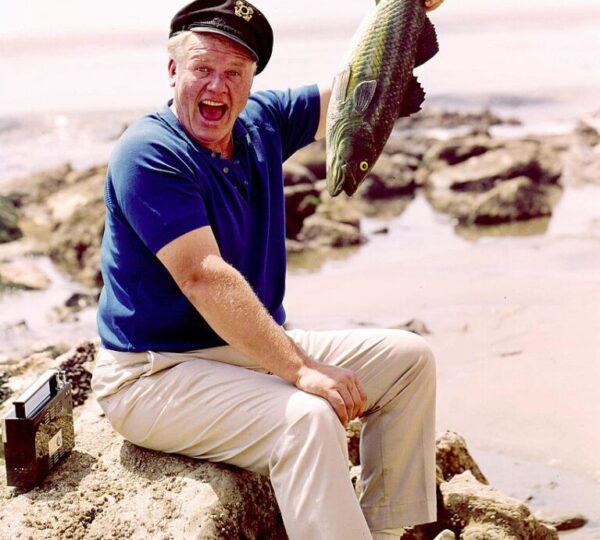
The basic story is explained before almost every episode through one of the most famous television theme songs ever written. Gilligan and the Skipper take five passengers aboard the S.S. Minnow for what is described as a three-hour tour. Bad weather strikes, the boat is damaged and everyone ends up stranded on an island somewhere in the Pacific. The song allowed new viewers to understand the entire premise within minutes, which later proved especially useful when the program entered decades of syndication.
Even the name of the boat contained a private joke from the show’s creator.
The S.S. Minnow was not simply named after a small fish. Sherwood Schwartz said he named the vessel after Newton Minow, who served as chairman of the Federal Communications Commission during the Kennedy administration. Minow became famous for his 1961 speech criticizing much of television programming as a “vast wasteland.” Schwartz disagreed strongly with Minow’s approach to television regulation and later explained that naming a doomed boat after him was his own playful response.
The spelling was deliberately altered.
Newton Minow’s surname contains one “n” in the middle, while the fictional vessel was spelled like the fish, Minnow. Schwartz later confirmed in an interview for the Television Academy that Minow was indeed the inspiration. It is a small joke that millions of viewers watched in the opening sequence without necessarily realizing there was a real person behind the name.
The opening credits themselves also contain fascinating details.
In some distant shots of the S.S. Minnow leaving port, viewers have long noticed what appears to be an extra person aboard the vessel. Wide exterior shots were not always filmed with every principal actor present, and production stand-ins could be used when individual cast members could not clearly be identified from the camera’s distance. That type of production shortcut was common in television, especially when shooting complicated exterior material.
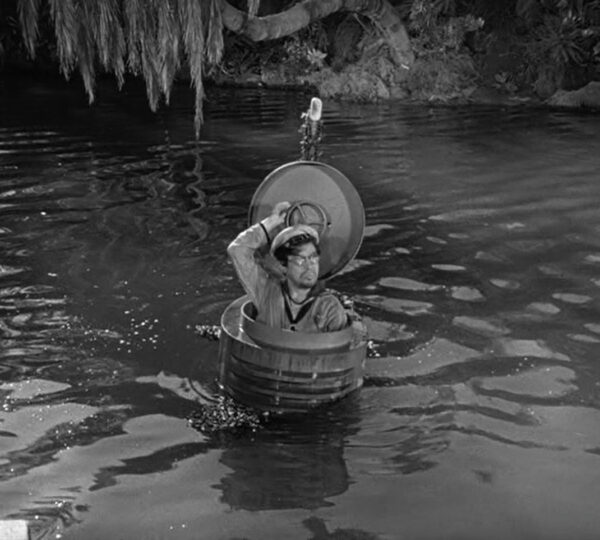
Fans who repeatedly watched reruns eventually began noticing these kinds of details.
One of the joys of classic television is that scenes produced for standard-definition broadcasts can now be examined frame by frame on modern screens. Background crew members, shadows, changing props and pieces of studio equipment that were nearly invisible during the 1960s can sometimes be much easier to spot today.
That has helped turn Gilligan’s Island into a favorite program for television-blooper enthusiasts.
But some of the most interesting production details have nothing to do with mistakes.
The original pilot was filmed in Hawaii in November 1963, and its production coincided with one of the darkest moments in modern American history: the assassination of President John F. Kennedy on November 22, 1963.
Sherwood Schwartz later recalled learning of Kennedy’s assassination while the production was filming the pilot. The cast and crew listened to news reports as the tragedy unfolded. A visual reminder of that moment can still be seen in footage used in the first-season opening sequence: an American flag is visible flying at half-staff in the background as the Minnow leaves the harbor.
It is an unusually somber historical detail attached to such a lighthearted sitcom.
Those opening harbor scenes were filmed in Hawaii, while much of the regular series was produced in California. The tropical island seen in the opening and closing sequences is associated with Kaneohe Bay off Oahu, while the familiar lagoon and jungle environments used for most episodes were created much closer to Hollywood.
Creating a believable tropical island on a television budget required careful production design.
Plants, artificial foliage, constructed huts and controlled water areas helped create the impression that the castaways were living far from civilization. Camera angles were especially important because the production needed to hide evidence of surrounding studios, buildings and equipment.
Occasionally, however, the illusion was imperfect.
Television fans have identified scenes where modern structures or pieces of the studio environment can be glimpsed behind the supposed wilderness. These moments are usually extremely brief and would have been difficult for audiences watching on smaller televisions in the 1960s to notice.
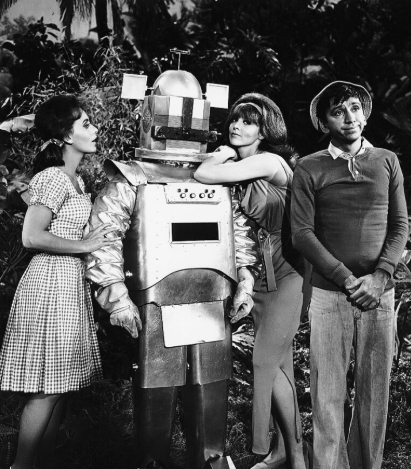
One episode that often attracts attention from fans is “The Friendly Physician.”
The episode features Vito Scotti as the eccentric Dr. Boris Balinkoff, who brings the castaways to another island and becomes involved in bizarre experiments. It is unusual within the series because the main characters actually leave their familiar island and because the storyline involves characters apparently switching bodies. Episode references commonly identify it as the only regular episode in which the entire group leaves its usual island setting.
Like many episodes, its deliberately absurd storyline required viewers to accept the rules of sitcom comedy rather than scientific reality.
That was central to the appeal of Gilligan’s Island.
The Professor could construct incredibly complicated devices out of bamboo and coconuts while somehow remaining unable to repair a small boat. Visitors repeatedly found the island and then somehow departed without rescuing the castaways. Radios worked when the plot required outside information. Costumes remained remarkably clean. Ginger somehow maintained an impressive wardrobe despite supposedly packing for only a short boat excursion.
Viewers understood the joke.
The program was not attempting documentary realism.
Its island was a theatrical playground where almost anything could happen as long as the castaways were still stranded by the closing credits.
Alan Hale Jr.’s path to becoming the Skipper contained a story almost as improbable as one of the episodes.
Hale was working in Utah on the Western Bullet for a Badman when the opportunity to test for Gilligan’s Island arose. He was filming in a remote area and had difficulty finding transportation back to Los Angeles.
According to accounts attributed to Hale and Schwartz, the actor rode out from the filming location on horseback, reached a highway, hitchhiked to Las Vegas and then caught a flight to Los Angeles so he could test with Bob Denver.
The effort paid off.
Hale became virtually inseparable from the Skipper in the public imagination.
His size, expressive reactions and affectionate relationship with Gilligan created one of the show’s central comic partnerships. The Skipper could become furious when Gilligan accidentally destroyed another escape plan, but his anger rarely lasted very long.
The phrase “little buddy” became one of his signature expressions.

Interestingly, Hale had used similar language before Gilligan’s Island. Television trivia records note that he had referred to another character as “little buddy” during an earlier appearance on The Andy Griffith Show. The phrase fit his relationship with Gilligan so naturally that it became part of the character audiences remembered.
The two actors also remained closely associated with their characters long after the original series ended.
Bob Denver continued being recognized as Gilligan for the rest of his life, while Hale enthusiastically embraced his identity as the Skipper. The actors later returned to those roles in reunion productions and appearances.
Another famous piece of Gilligan’s Island history involves the theme song.
During the first season, the lyrics introduced Gilligan, the Skipper, the millionaire and his wife, and the movie star. Russell Johnson’s Professor and Dawn Wells’s Mary Ann were then summarized simply as “the rest.”
That changed beginning with the second season.
Bob Denver pushed for Johnson and Wells to receive recognition in the opening song as well. The later version therefore ended by identifying “the Professor and Mary Ann,” giving all seven castaways a place in the lyrics.
The change seems obvious today because both characters became indispensable parts of the series.
The Professor was usually the group’s scientific problem-solver. When the castaways needed a radio repaired, electricity generated, medicine identified or a complicated gadget constructed, Professor Roy Hinkley somehow had the necessary knowledge.
Mary Ann provided a different kind of stability.
Dawn Wells portrayed her as friendly, practical and approachable. She became the classic “girl next door” counterpart to Ginger’s glamorous Hollywood persona.
That contrast eventually created one of television’s longest-running playful debates: Ginger or Mary Ann?
Tina Louise played Ginger as a glamorous movie star accustomed to attention, expensive clothes and show-business sophistication. Dawn Wells’s Mary Ann represented a more ordinary and down-to-earth personality.
The contrast became larger than the sitcom itself.
For decades, people who had not seen every episode still understood the phrase “Ginger or Mary Ann?” as shorthand for two different types of romantic appeal.
Wells herself later spoke affectionately about the contrast.
She described Tina Louise as beautiful and glamorous while explaining that Mary Ann’s appeal came from being approachable and familiar. The two characters worked precisely because they were not intended to be the same type of woman.
Claims about intense personal rivalry between Louise and Wells have often been exaggerated over the years.
The actresses had different careers and different relationships with the program, but retrospective accounts should be careful not to transform routine professional differences into invented feuds.
Louise did have a complicated relationship with the enormous fame generated by Ginger.
Before television, she had worked in theater and film and had serious dramatic ambitions. She later discussed frustration with being permanently associated with one sitcom role and chose not to participate in several later Gilligan’s Island reunion projects.
That did not mean she completely rejected what the series meant to audiences.
In later interviews, Louise acknowledged the affection generations of viewers continued to have for Ginger and the show. She remained active in public life decades afterward and was still discussing her career in interviews during the 2020s.
Dawn Wells also carried Mary Ann’s legacy throughout her life.
Unlike some performers who attempt to distance themselves from a famous television character, Wells generally embraced the lasting affection surrounding the series. She attended events, discussed the program in interviews and maintained relationships with fans.
She died in December 2020.
Her death left Tina Louise as the last surviving member of the seven principal castaways.
As of 2026, Louise remained the sole surviving member of that original central cast.
The others had died across several decades.
Jim Backus, who played Thurston Howell III, died in 1989.
Alan Hale Jr. died in 1990.
Natalie Schafer died in 1991.
Bob Denver died in 2005.
Russell Johnson died in 2014.
Dawn Wells died in 2020.
The passage of time has therefore transformed Gilligan’s Island from a living sitcom franchise into an important piece of classic television history.
Yet the performers remain remarkably recognizable.
Jim Backus’s Thurston Howell III became one of television’s classic caricatures of extreme wealth.
Howell somehow brought extravagant clothing and possessions on a short boat tour and rarely lost his upper-class mannerisms despite living in a bamboo hut.
Natalie Schafer’s Lovey Howell matched him perfectly.
Her elegant speech, jewelry and social expectations survived almost every absurd situation the island created.
Schafer was an experienced actress long before the sitcom.
One persistent behind-the-scenes detail involves the way she was photographed. Production trivia has reported that her contract limited close-ups, partly because she was older than viewers might have assumed from her appearance beside Jim Backus.
Small production quirks like that became part of the show’s mythology.
So did the props.
During the first season, for example, the cast reportedly used actual coconut shells as drinking cups. The natural shells turned out to be porous and inconvenient under studio conditions, so later versions were made from ceramic material designed to resemble coconuts.
It is exactly the kind of tiny behind-the-scenes problem viewers rarely consider.
The finished program presented island life as effortless theatrical fantasy.
Behind the camera, crews still had to solve practical questions involving costumes, water, props, weather, animals and studio equipment.
Fans have also spent years spotting continuity errors.
A character’s clothing may shift slightly between shots.
An object might appear in one camera angle and disappear in another.
A prop can change position.
Shadows sometimes reveal equipment just beyond the carefully constructed frame.
These mistakes were normal for fast television production.
Unlike feature films, weekly sitcoms operated on demanding schedules.
An episode had to be rehearsed, blocked, photographed and completed quickly enough for the production to move on to the next script.
Some supposed “mistakes” are also simply examples of viewers applying real-world logic to a deliberately unrealistic program.
The Professor’s inventions are a perfect example.
He can build complicated machines using island materials yet never seems capable of constructing a permanently seaworthy vessel.
That inconsistency is not really an accidental production error.
It is part of the basic mechanism required to keep the sitcom going.
If the Professor successfully repaired the Minnow in season one, the series would have ended.
The same applies to the enormous number of visitors who reach the island.
Actors appeared as scientists, musicians, criminals, soldiers, explorers and other outsiders.
Many somehow managed to depart.
For one reason or another, the seven regular castaways remained behind.
The absurdity became part of the joke.
Another memorable recurring element involved improbable wildlife.
The island seemed capable of producing whatever animal, plant or environmental threat the week’s plot required.
Strict ecological accuracy was clearly not the objective.
This is worth remembering when examining claims such as whether a particular bird or animal could naturally inhabit the island.
The fictional location was never defined with enough scientific precision for every wildlife appearance to be evaluated literally.
The show created an imaginary island, not an ecological case study.
One episode could require unusual insects.
Another could require a gorilla.
Another might involve a lion or different exotic animals.
The audience’s agreement was simple: accept the island’s impossible world and enjoy the characters’ reactions.
That same theatrical logic extended to costumes.
Mary Ann became famous for practical shirts, shorts and dresses.
Ginger seemed to have a much more extensive fashion collection than anyone could reasonably bring on a three-hour excursion.
The Howells had wardrobes that looked prepared for an extended luxury holiday rather than a short boat ride.
Nobody needed a realistic explanation.
The clothes helped tell viewers immediately who each character was.
Costume design functioned as character shorthand.
Ginger looked like a movie star.
The Howells looked wealthy.
Mary Ann looked practical.
The Professor looked academic.
The Skipper and Gilligan retained maritime clothing that made their occupations obvious.
Those visual identities helped the show remain understandable even to casual viewers.
Bob Denver’s Gilligan also occasionally displayed details associated with the actor rather than the supposedly unmarried character.
Fans have pointed out shots where Denver’s real-life wedding ring appears.
Such moments are typical of classic television because props and wardrobe departments did not always anticipate viewers examining individual frames decades later.
At the time, the image might appear briefly on a comparatively small television set.
Today, high-resolution transfers and pause buttons can expose everything.
That technological change has created an entirely new way of watching old television.
Fans can slow down opening sequences.
They can compare boats from different shots.
They can identify stand-ins.
They can notice microphones, studio structures and continuity changes that almost nobody would have seen during the show’s original broadcast.
The result is not necessarily that the program looks worse.
For many fans, the mistakes make it more enjoyable.
They offer a glimpse behind the production process.
A palm tree stops being just a palm tree and becomes part of a carefully arranged studio set.
A distant person aboard the Minnow becomes evidence of how exterior photography was organized.
A disappearing prop becomes evidence of separate takes being edited together.
The mistakes reveal the craftsmanship underneath the illusion.
That illusion was especially important because the familiar island did not exist in the form viewers imagined.
Different locations and sets were combined to create one fictional environment.
Hawaiian exterior footage could appear beside California studio photography.
A controlled lagoon could represent open tropical water.
Artificial foliage could hide nearby buildings.
Editing joined all of it together.
Television audiences accepted the result.
The fake island became more recognizable than many real places.
Another enduring fact about Gilligan’s Island is how quickly its cultural reputation grew after its original network run.
Three seasons is relatively short compared with sitcoms that survive for six, seven or ten years.
Yet syndication changed everything.
Episodes were repeated throughout the United States and internationally.
Children who had not been born when the original CBS broadcasts occurred grew up watching Gilligan and the others.
Then another generation did the same.
The show’s simple premise helped.
There was very little complicated continuity to understand.
A viewer could encounter almost any episode and immediately know what was happening.
Seven people were stranded.
They wanted to escape.
Something strange happened.
Gilligan usually made the situation more complicated.
By the end, they remained on the island.
That structure made the series ideal for reruns.
Its comedy also avoided depending heavily on contemporary politics or detailed current events.
Some cultural references naturally belonged to the 1960s, but the basic humor relied on personality and physical comedy.
Gilligan falling into something could still be funny decades later.
The Skipper’s exasperated reaction required no historical explanation.
Mr. Howell protecting his money remained understandable.
The Professor explaining an absurd scientific solution remained part of the show’s charm.
That accessibility helped build the cult reputation that eventually exceeded the length of the original run.
The franchise later expanded beyond the original episodes.
Reunion television movies brought several cast members back together.
Animated versions appeared.
The characters became part of advertising, parody and countless references in other television programs.
Even people who never followed the series closely could recognize the hats, costumes and theme song.
The song itself is one of the key reasons the series remained culturally memorable.
Its melody and narrative structure explain the show’s entire setup.
Instead of relying on a generic instrumental theme, Gilligan’s Island essentially begins every episode by telling a miniature story.
That story became nearly impossible for longtime viewers to forget.
The first-season lyric controversy surrounding Professor and Mary Ann therefore mattered more than a normal credit dispute.
Being named in that song meant becoming part of the show’s cultural identity.
Bob Denver’s push to include Russell Johnson and Dawn Wells ensured that later audiences heard all seven castaways identified individually.
Denver’s support also reflected relationships within the ensemble.
Although Gilligan was the title character, the series worked because every cast member had a specific comic function.
Removing any one of them changed the balance.
The Professor supplied knowledge.
Mary Ann supplied practicality and warmth.
Ginger supplied theatrical glamour.
The Howells supplied social satire.
The Skipper supplied authority and physical comedy.
Gilligan supplied chaos.
Together, those personalities allowed writers to create endless combinations.
A scientific storyline might center on the Professor.
A Hollywood-themed story could highlight Ginger.
A wealth-related plot naturally involved the Howells.
A cooking or domestic problem might place Mary Ann near the center.
Gilligan could accidentally interfere with all of them.
The formula proved remarkably flexible.
Guest stars added another layer.
Many recognizable performers appeared during the series, sometimes portraying people who somehow found the island despite its supposed isolation.
Those visitors provided temporary changes without altering the central cast permanently.
Some arrived as potential rescuers.
Others became threats.
Many offered false hope that the castaways were finally going home.
Almost inevitably, the opportunity disappeared.
That repetition became part of the audience’s expectation.
Everyone knew a permanent rescue could not happen during the regular series because it would eliminate the premise.
The pleasure came from seeing how the plan failed.
Sherwood Schwartz understood that the real subject was not survival.
The castaways rarely faced realistic starvation or exposure.
Instead, the island functioned almost like a neighborhood sitcom separated from civilization.
The characters built routines.
They cooked.
They argued.
They performed shows.
They celebrated occasions.
They created elaborate plans.
The island gradually felt like home even though every character claimed to want to leave.
That contradiction gave the series an unexpectedly comforting quality.
Viewers knew the castaways would still be together next week.
Even danger was usually temporary.
The characters would argue and then reconcile.
Gilligan would make a mistake and eventually help solve the problem.
The Skipper would yell and then call him “little buddy.”
The formula provided reliability.
That comfort became especially powerful in syndication.
Classic sitcoms often become attached to childhood memories because viewers encounter the same episodes repeatedly.
Gilligan’s Island became part of after-school and daytime television schedules for decades.
People learned the episodes almost by memory.
That familiarity is why hidden production details remain interesting.
Fans already know the stories.
Spotting something new creates a reason to watch again.
The Kennedy-era footage in the opening credits is a particularly meaningful example.
At first glance, it is simply the Minnow leaving harbor.
Knowing the pilot was being filmed when news of President Kennedy’s assassination reached the cast transforms a background flag at half-staff into a historical marker.
It connects a fictional three-hour tour with a real moment of national history.
The Alan Hale audition story does something similar.
The Skipper seems so inevitable today that it is difficult to imagine the role without Hale.
Yet his casting involved an actor working at a remote Western location and improvising a journey involving horseback travel, hitchhiking and air travel merely to reach Los Angeles for his opportunity.
Television history could easily have looked different.
Another actor might have become the Skipper.
Carroll O’Connor, who later became famous as Archie Bunker in All in the Family, has been associated with the pool of actors considered for the role.
Instead, Hale became one of the sitcom’s most recognizable faces.
The same is true for Mary Ann.
The unaired pilot did not originally contain the Mary Ann Summers familiar to audiences.
Early versions of the concept featured different characters and actors before the network series reached its final form.
The original pilot therefore provides a fascinating glimpse at how dramatically a television program can change during development.
Even the music was different.
The unaired pilot used an earlier theme associated with composer John Williams, who later became one of the most famous film composers in history.
The familiar “Ballad of Gilligan’s Isle” belonged to the revised version audiences eventually knew.
The series evolved significantly before its CBS premiere.
Once the seven-character ensemble was established, however, the chemistry became the show’s defining strength.
Some characters were stereotypes by design.
The millionaire.
The movie star.
The professor.
The farm girl.
The captain.
The first mate.
But the performers gradually gave them recognizable personalities beyond those categories.
That helped audiences become emotionally attached.
It also explains why replacing the actors in later adaptations was difficult.
Fans did not simply want a millionaire character.
They wanted Jim Backus’s Howell.
They did not simply want a Skipper.
They wanted Alan Hale Jr.
And Ginger remained permanently connected with Tina Louise.
Louise’s continued presence is now particularly poignant.
As of 2026, she is the last living member of the principal group that audiences watched stranded together week after week.
Her career stretched well beyond Ginger.
She worked in theater, cinema and television and continued discussing her artistic life well into later years.
Her feelings toward Gilligan’s Island were more nuanced than some headlines suggested.
She sometimes resisted being reduced to Ginger alone, which is understandable for an actress with broader ambitions.
At the same time, the character remained permanently significant to popular culture.
Dawn Wells faced a different relationship with fame.
Mary Ann became an identity she largely embraced.
Her warmth toward fans contributed to the continued affection surrounding the character.
Russell Johnson also became permanently identified with the Professor despite a long acting career containing many other parts.
Bob Denver had already been known from The Many Loves of Dobie Gillis before becoming Gilligan.
After 1964, however, the red shirt and white sailor hat largely defined his public image.
He returned to the role repeatedly.
Alan Hale did the same with the Skipper.
Their willingness to revisit those characters helped keep the franchise visible after the original episodes ended.
The program’s longevity is remarkable considering its network cancellation.
CBS ended Gilligan’s Island after three seasons even though the program remained familiar to viewers.
Sherwood Schwartz later discussed the circumstances surrounding its cancellation in interviews, and the series quickly proved that cancellation did not necessarily equal cultural disappearance.
In syndication, it arguably became bigger.
Repeated broadcasts exposed the sitcom to audiences for decades.
The program became a classic not because it produced hundreds of original episodes, but because the existing 98 episodes were shown again and again.
That history helps explain why bloopers still matter.
They are not simply errors.
They are hidden details inside something viewers already know extremely well.
Seeing a production stand-in or an imperfect background can make the series feel newly discovered.
The mistakes also remind audiences how television used to be produced.
There were no digital tools to remove every unwanted object from a frame.
Backgrounds could not be repaired instantly in post-production.
If a microphone shadow appeared briefly and nobody noticed during editing, it might remain forever.
If distant studio buildings were visible for a second, viewers were expected to focus on the actors.
Most did.
That makes modern blooper hunting somewhat unfair but also enormously entertaining.
A viewer can freeze a frame that originally lasted half a second.
The production crew in 1965 was not designing the show for that kind of scrutiny.
They were trying to finish a weekly sitcom.
Seen in that context, the impressive part is not that errors exist.
It is how successfully the show created its fantasy despite limited technology and production time.
Decades later, viewers still believe in that island while they are watching.
They know the lagoon is a set.
They know the huts were constructed.
They know the coconut gadgets are jokes.
They know the castaways could never realistically maintain those wardrobes.
None of it matters.
The characters make the illusion work.
The most enduring appeal of Gilligan’s Island may therefore have very little to do with whether its science or geography made sense.
The show was fundamentally about seven personalities learning to function as a strange substitute family.
The Howells had money but could not purchase rescue.
Ginger had fame but no audience.
The Professor had extraordinary knowledge but could not solve the one problem that mattered most.
Mary Ann had ordinary practical skills that regularly proved essential.
The Skipper had authority but frequently depended on Gilligan.
Gilligan caused problems but remained loved by everyone.
That balance kept the comedy warm.
Even when characters became frustrated, the show rarely became cruel.
Nobody permanently excluded Gilligan for ruining an escape attempt.
The group remained together.
That tone helped make the series family-friendly and easy to rediscover.
It also explains why people continue sharing memories of it more than sixty years after its debut.
For longtime viewers, finding a blooper is almost like revisiting an old vacation photograph and noticing something new in the background.
The discovery does not damage the memory.
It adds another layer.
Whether it is a distant stand-in on the boat, a studio structure peeking through foliage or a continuity mistake involving a prop, the imperfect details reveal the human work behind an enduring television fantasy.
There is also something charming about how seriously fans study a series built around complete absurdity.
They debate the Minnow.
They analyze the theme song.
They study Gilligan’s clothes.
They compare Ginger and Mary Ann.
They identify filming locations.
They trace guest actors.
They examine every failed escape attempt.
Few three-season sitcoms inspire that level of attention six decades later.
Gilligan’s Island does because its world remained unusually memorable.
The S.S. Minnow sailed for only a short fictional journey.
Its television voyage turned out to be far longer.
From a 1964 CBS premiere to endless reruns, reunion programs, animated versions, books, interviews and fan discussions, the castaways became part of multiple generations’ experience of television.
The people who created the show could not have known exactly how durable it would become.
Today, only Tina Louise remains from the original seven principal cast members.
But Gilligan, the Skipper, the Howells, Ginger, the Professor and Mary Ann remain together every time another episode begins.
The theme song starts.
The Minnow leaves the harbor.
The weather begins getting rough.
And another generation discovers the island.
That may be the most surprising fact of all.
A sitcom that lasted only three seasons has remained visible for more than sixty years.
Its sets occasionally betrayed the studio around them.
Its props sometimes changed.
Its fictional science rarely survived close examination.
Its rescue logic made almost no sense.
And yet almost none of that mattered.
The comedy worked.
The characters worked.
The chemistry worked.
That is why the bloopers are still fun rather than embarrassing.
They are small imperfections inside a program people continue watching because perfection was never the reason they loved it.
Gilligan’s Island succeeded by being warm, ridiculous, recognizable and endlessly replayable.
The castaways never seemed capable of getting home.
Television audiences, meanwhile, never completely left the island.

