
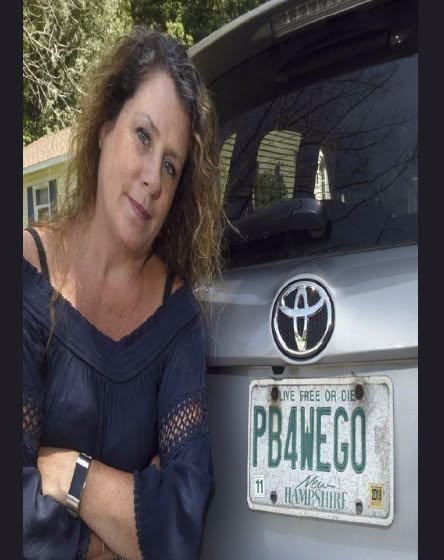
For more than fifteen years, a simple personalized license plate in Rochester, New Hampshire, quietly became a small but memorable part of one family’s daily life. The plate, “PB4WEGO,” belonged to Wendy Auger, a mother of four who chose the phrase as a humorous and practical reminder that many parents instantly recognize: “Pee before we go.” What began as a light family joke gradually turned into a signature detail on her vehicle, often catching the attention of other drivers and bringing smiles on the road.
The meaning behind the plate was never intended to be controversial or offensive. Instead, it reflected a very common parenting habit shared in households everywhere, especially when preparing children for travel. Whether it was short trips or long journeys, the reminder was part of everyday family routines. Over time, the plate became a small expression of Wendy’s personality, blending humor with real-life parenting experiences in a way that felt relatable and harmless.
For many years, the plate remained in use without any issues or complaints. Since the mid-2000s, it had been displayed on her vehicle without drawing official attention. However, after more than a decade of use, Wendy unexpectedly received a formal notice from the New Hampshire Division of Motor Vehicles (DMV). The letter informed her that her vanity plate had been reviewed and was now considered inappropriate under updated interpretation guidelines.
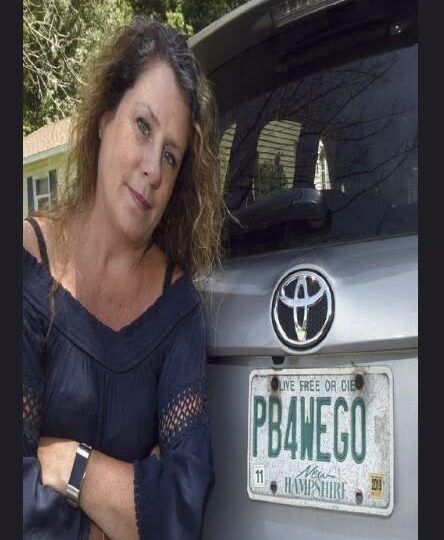
According to the DMV’s assessment, the combination “PB4WEGO” was deemed unsuitable because it could be interpreted as referring to bodily functions, which the agency categorized as potentially offensive. As a result, Wendy was instructed to surrender the plate and choose a replacement within a limited period of time. The decision surprised her, especially given the long history of the plate being approved and publicly displayed without any prior issues.
Wendy, who works professionally as a paralegal, expressed her confusion over the sudden change in interpretation. She explained that the phrase was widely understood in a family context and was never meant to carry offensive meaning. For her, the ruling felt inconsistent and difficult to understand, particularly considering how commonly parents use similar reminders with children. She also pointed out the irony of the situation in relation to New Hampshire’s well-known motto, “Live Free or Die.”
As the deadline approached for returning the plates, Wendy chose to share her experience publicly instead of quietly complying. She posted the DMV letter along with a photo of her car on social media. Her post quickly gained attention, as many people found the situation both surprising and humorous. The story began spreading rapidly online, drawing responses from individuals who related to the phrase and viewed the decision as overly strict.
Public reaction grew quickly, with many commenters expressing support for Wendy and questioning the DMV’s decision. People highlighted that the phrase was harmless, widely understood, and commonly used in everyday parenting situations. As the story continued to circulate, it began attracting attention from larger media outlets, which helped transform it from a local issue into a nationally discussed topic.
Eventually, the case reached a wider audience, including major news coverage, which increased public awareness even further. The growing attention placed the situation under greater scrutiny and sparked discussion about how bureaucratic rules are interpreted in relation to everyday language and common expressions. Many viewed the situation as an example of how administrative decisions can sometimes conflict with common sense understanding.
At a later stage, the issue came to the attention of New Hampshire Governor Chris Sununu. After reviewing the situation, he intervened and addressed the matter directly. In communication with Wendy, he acknowledged the problem and informed her that the issue had been resolved. His response indicated that the decision had been reconsidered at the state level, leading to a reversal of the DMV’s original ruling.
Following this intervention, Wendy was allowed to keep her personalized license plate. She later shared the news publicly, expressing relief and gratitude for the outcome. Her update confirmed that the situation had been resolved in her favor after widespread attention and support. For her, the result represented a return to normalcy after an unexpected and stressful administrative process.
The story soon became a widely discussed example of how public opinion and common sense can influence administrative decisions. Although the issue itself involved a relatively small detail, it sparked a broader conversation about interpretation, language, and the balance between regulation and everyday understanding. Many people saw it as a reminder that context plays an important role when evaluating meaning.
In the end, Wendy’s “PB4WEGO” plate returned to the road and continued its original purpose as a lighthearted family message. What started as a simple parenting joke evolved into a widely shared story about communication, public reaction, and bureaucratic decision-making. It demonstrated how even small personal expressions can become significant when they intersect with official rules and public attention.
Today, the case is often remembered as an example of how humor, context, and common sense can sometimes challenge formal interpretations. It remains a story that highlights the connection between everyday life and administrative systems, showing how public feedback can shape outcomes when a situation gains enough visibility and support.

