
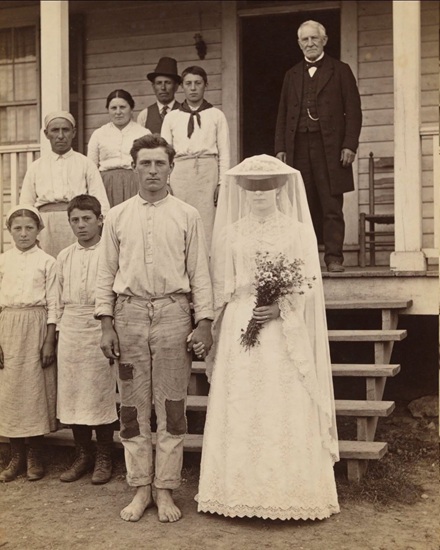
She Entered a Marriage She Never Chose — But the Life Waiting for Her Was Not What She Had Feared
Zainab had grown up learning that silence was often safer than resistance.
Her father, Malik, made most of the important decisions.
He valued obedience.
He expected agreement.
And when he believed something was best for the family, there was rarely room for discussion.
For years, Zainab learned to live inside those rules.
Then one day, Malik made the biggest decision of all.
He told her she would be married.
She had not chosen the man.
She had not agreed to the arrangement.
And by the time she understood what was happening, everyone around her seemed to believe the matter was already settled.
Her Future Had Been Decided Without Her
The man’s name was Yusha.
Zainab knew very little about him.
She knew he was a widower.
She knew he lived away from her father’s home.

And she knew that soon, she would be expected to leave everything familiar behind and begin a life with him.
That was enough to frighten her.
Malik spoke about the marriage in practical terms.
Family.
Duty.
Reputation.
What he believed was appropriate.
But Zainab heard something else.
She heard that her wishes did not matter.
And that hurt more than anything.
The Wedding Did Not Feel Like Hers
The day arrived with all the outward signs of a major family event.
Relatives gathered.
People talked.
Arrangements were made.
But Zainab felt strangely detached from it all.
She was at the center of the ceremony, yet she had been given almost no control over the decision that brought everyone together.
There was no excitement in her.
Only fear.
As she prepared to leave her father’s home, one thought kept returning.
What if Yusha was simply another version of Malik?
That possibility followed her into the marriage.
She Expected Control
Zainab had spent years associating authority with harshness.
A raised voice meant obedience was expected.
Questions were often treated like challenges.
Disagreement carried consequences.
So when she entered Yusha’s home, she prepared herself.
She watched him carefully.
She waited for rules.
For demands.
For the first reminder that she now belonged to someone else.
But the first evening passed differently.
Yusha did not order her to speak.
He did not demand that she behave as though she were happy.
He seemed to notice how uncomfortable she was.
And instead of pressing her, he gave her space.
That was the first surprise.
It would not be the last.
His Quietness Made Her Suspicious
Kindness did not immediately make Zainab feel safe.
At first, it made her cautious.
She had spent too long learning that people with power eventually used it.
So she wondered when Yusha would change.
Maybe patience was temporary.
Maybe he was waiting until she relaxed.
Maybe later he would begin making the same demands her father had made.
Zainab did not want to trust too quickly.
So she watched.
Days passed.
Then weeks.
And slowly, a pattern began to form.
He Asked Instead of Ordered
The differences appeared in ordinary moments.
Yusha asked what she preferred.
He listened to her answers.
If she disagreed with him, he did not treat it as an insult.
When something went wrong around the house, he dealt with the problem instead of looking for someone to blame.
When Zainab became quiet, he did not force an explanation.
These were not dramatic acts.
But to someone who had spent years under rigid control, they felt enormous.
For the first time, she began to see what respect looked like in practice.
And that created a new problem.
She was not sure what to do with it.
Choice Felt Unfamiliar
When Yusha asked Zainab what she wanted, she sometimes froze.
The question sounded simple.
But she had rarely been encouraged to answer it before.
What do you want to eat?
Where would you like to go?
What do you think?
Those small questions forced Zainab to confront something she had nearly forgotten.
She had preferences.
She had opinions.
She had a voice.
At first, she answered carefully.
Then a little more confidently.
And each time nothing terrible happened, the fear lost a little of its power.
Healing Was Slow
Zainab did not suddenly become fearless.
Years of control had left habits behind.
She still apologized too quickly.
She still worried about making mistakes.
A sharper tone could make her tense even when no anger was directed at her.
Sometimes she expected punishment for things Yusha did not even consider wrong.
He began noticing these reactions.
But he did not tell her to “just forget” the past.
He simply continued being consistent.
That consistency mattered more than dramatic promises.
One kind moment can be dismissed.
A hundred begin to feel real.
She Started Speaking Before Being Asked
One day, Zainab offered an opinion without waiting for Yusha to request it.
It was a small moment.
But afterward, she noticed what had happened.
She had spoken naturally.
Without fear.
No one had punished her.
No one had dismissed her.
That realization stayed with her.
Soon she began talking more openly.
About her childhood.
About the things that frustrated her.
About hopes she had kept private.
Yusha listened.
And when they disagreed, the disagreement ended without humiliation.
That may have been one of the biggest changes of all.
She Learned That Conflict Did Not Have to Mean Fear
In Malik’s home, disagreement had often felt dangerous.
With Yusha, it became something else.
Two people could want different things.
They could discuss it.
They could compromise.
Sometimes one could simply say no.
And afterward, the relationship could remain intact.
That experience slowly rewrote Zainab’s expectations.
Respect did not require silence.
Peace did not require one person to surrender every preference.
A relationship could survive honesty.
And once she understood that, something deeper began changing.
Her Father’s Voice Became Less Powerful
For years, Malik’s expectations had followed Zainab everywhere.
Even when he was not in the room, she could imagine what he would say.
What would he approve of?
What would he criticize?
What would make her a “good daughter”?
Those questions had shaped her life.
Living with Yusha gradually made room for another one.
What do I think?
It was a simple question.
But for Zainab, it was revolutionary.
Each answer gave her a little more ownership over herself.
Yusha Could Support Her, But He Could Not Heal Her for Her
It would be easy to tell the story as though Yusha rescued Zainab.
That would miss the most important part.
His kindness created safety.
His patience gave her space.
But Zainab still had to do the difficult work herself.
She had to learn to trust her own decisions.
She had to stop treating every disagreement as danger.
She had to discover boundaries.
She had to understand that respect was not something she earned by being obedient enough.
Yusha could stand beside her.
He could not replace her voice.
Only Zainab could reclaim that.
The Beginning of the Marriage Still Mattered
As life with Yusha became easier, one truth did not disappear.
Zainab had not been given a real choice about entering the marriage.
That was still wrong.
Yusha’s kindness afterward did not make the original lack of consent acceptable.
A good outcome could not retroactively justify taking away her agency.
That distinction mattered deeply.
Zainab could grow to care for Yusha.
She could choose to build a life with him.
But that later choice was different from the decision made for her at the beginning.
And slowly, she began understanding the importance of that difference.
Their Relationship Changed When Choice Entered It
At first, the marriage had been something done to Zainab.
Eventually, it became something she participated in.
That was the real shift.
She began making decisions with Yusha.
They planned together.
They disagreed.
They adjusted.
They learned what each other needed.
The relationship stopped feeling like an arrangement controlled by people outside it.
It started becoming something shaped by the two people actually living it.
And for the first time, Zainab could look at the life around her and see parts she had actively chosen.
She Was No Longer Trying to Become Smaller
For years, survival had meant taking up as little space as possible.
Do not argue.
Do not ask for too much.
Do not make anyone angry.
Now Zainab began doing the opposite.
She spoke.
She asked.
She chose.
She changed her mind.
Sometimes she said no.
Nothing dramatic happened.
The world did not collapse.
And each time, she became less like the frightened girl who had left Malik’s house.
Not because she had forgotten that girl.
Because she was finally becoming more than her.
The Most Important Change Was Not Yusha
At first, the obvious twist seemed to be that Yusha was kinder than Zainab expected.
But that was only the beginning.
The deeper change happened inside her.
She stopped measuring her value by obedience.
She stopped believing that other people automatically had the right to decide everything for her.
She began recognizing that dignity included choice.
And that love, if it was real, had to leave room for both people to exist fully.
That understanding changed the marriage.
More importantly, it changed Zainab.
The Real Payoff Came Much Later
From the outside, the story might sound like this:
A woman is forced into a marriage.
The husband turns out to be kind.
They slowly build a good life.
But that is not the most important ending.
The deeper story is about agency.
Zainab began with almost none.
Her father had controlled her future.
The marriage had been arranged without her meaningful consent.
She entered Yusha’s home expecting another life of submission.
Instead, the safety she found there gave her space to ask a question she had been denied for years.
What do I want?
And once she began answering it, everything changed.
Yusha did not become important because he “saved” her.
He became important because he did not demand that she disappear.
He listened.
He respected.
He made room.
And in that room, Zainab slowly became capable of choosing for herself.
The marriage had started as something imposed on her.
The life that followed became something she increasingly shaped.
That is the real transformation.
Not that the man she feared turned out to be gentle.
But that Zainab finally discovered she did not have to spend the rest of her life asking permission to be a person.
This is a fictional/illustrative story about autonomy, consent, dignity and rebuilding trust. It should not be read as a factual report about identifiable real people or as an endorsement of forced marriage.

