
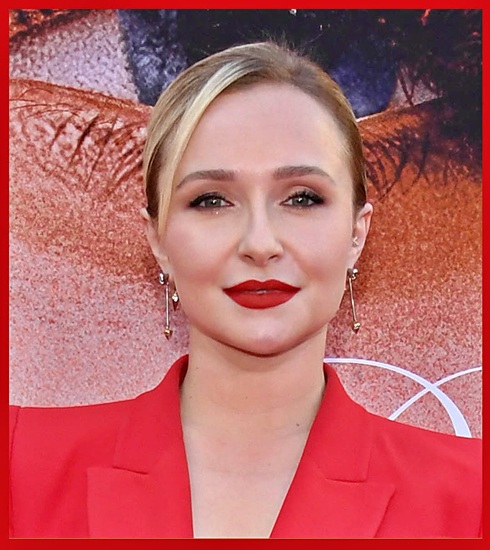
The sudden death of Hayden Panettiere at the age of 36 has brought renewed attention to the actress’s long career, her deeply personal memoir and the candid interviews she gave during the final months of her life. Known to millions for her performances in Heroes and Nashville, Panettiere had spent much of her life in the public eye, beginning her professional career when she was still a child. Panettiere died on August 16, 2026. According to information released following her death, she was found unresponsive at an apartment in Greenville, South Carolina.
Emergency personnel attempted to save her, but she was pronounced dead at the scene. Authorities said the preliminary investigation had found no indication of foul play or suspicious circumstances. The precise cause of death had not yet been publicly established and remained pending further medical examination. Her family confirmed the devastating news through her longtime representative. Her father, Skip Panettiere, remembered his daughter as an extraordinary presence who brought happiness and warmth to the people around her as well as to the audiences who followed her career.
The family also requested privacy while grieving an unexpected and painful loss. For many television viewers, Panettiere remains inseparable from Claire Bennet, the cheerleader with extraordinary regenerative abilities whom she portrayed on NBC’s Heroes. The series became a major television success following its 2006 debut, turning Panettiere into one of the most recognizable young performers of the era. By then, however, she was already an experienced actress who had been appearing professionally since childhood.
Her career eventually stretched across television, film and voice acting. Her credits included movies such as Remember the Titans, Raising Helen, Ice Princess, Scream 4 and Scream VI. She also provided the voice of Dot in Pixar’s A Bug’s Life. Her ability to transition from child performer to successful adult actress was an important part of a career that lasted more than three decades.

Another major chapter began when Panettiere joined ABC’s Nashville as Juliette Barnes, an ambitious country-music star whose professional success was accompanied by complicated personal struggles. Panettiere’s performance earned her two Golden Globe nominations and became one of the defining roles of her career.
During the later years of her life, Panettiere increasingly began speaking about experiences that audiences could never have understood simply by watching her performances. That openness reached a new level in May 2026 with the publication of her memoir, This Is Me: A Reckoning.
The book addressed difficult chapters of her life, including growing up in the entertainment industry, addiction and recovery, postpartum depression, trauma, complicated relationships, grief and the pressures associated with becoming famous at a very young age. Rather than presenting a carefully polished celebrity story, Panettiere attempted to describe the complicated reality behind the public image that had followed her for years.
She had already discussed some of these subjects publicly before publishing the memoir. Panettiere spoke candidly about addiction and seeking treatment, as well as her experience with postpartum depression following the birth of her daughter, Kaya, in 2014. She described how those periods affected her relationships, career and understanding of herself.
Motherhood was among the most emotional subjects she addressed. Panettiere discussed the difficult circumstances surrounding her daughter living with her former partner, Ukrainian boxer Wladimir Klitschko. She rejected simplistic interpretations of that decision and explained it within the broader context of what she was experiencing at the time and what she believed would be best for her daughter.
Shortly before the memoir’s publication, Panettiere appeared for an extensive conversation on Jay Shetty’s On Purpose podcast. During the interview, she discussed childhood fame, addiction, postpartum depression, motherhood, anxiety, relationships and her efforts to rebuild her life after difficult experiences.
Those interviews and memoir passages are receiving renewed attention following her death. Because they contain some of Panettiere’s most personal reflections, it is understandable that people are revisiting them. However, doing so after an unexpected death also creates a risk of interpreting past comments through information that was not known when those statements were originally made.
Some social-media users have suggested that the timing between Panettiere speaking publicly about painful experiences and her death indicates that she may have been deliberately “silenced.” At present, there is no credible evidence establishing such a connection.
That distinction matters.
The existence of questions or suspicions online does not make those claims investigative findings. Authorities said that their preliminary investigation had revealed no evidence of foul play. At the same time, the official cause of death had not yet been announced. Until additional verified information becomes available, claims alleging that another person or the entertainment industry was responsible for her death remain speculation rather than established fact.
Two events occurring relatively close together also do not automatically demonstrate a causal relationship. Panettiere released a memoir containing deeply personal revelations in May 2026 and died approximately three months later. Both events can be independently documented, but connecting them through an allegation of homicide would require evidence that has not been publicly established.
That is especially important during the early stages of reporting on an unexpected death. Autopsy and toxicology findings can require additional time, and initial information may be incomplete. Responsible coverage therefore needs to maintain a clear boundary between information confirmed by authorities and theories circulating on social media.
What is firmly established is that Panettiere had become remarkably open about difficult periods in her life. She discussed addiction, recovery, postpartum depression, grief, relationships and the pressures of growing up while being watched by millions of people. Her memoir gave her an opportunity to describe those experiences in her own words rather than allowing her life to be understood entirely through celebrity headlines.
Her final months were not solely focused on painful memories. Panettiere remained professionally active and had spoken about future projects. She starred in and produced the psychological thriller Sleepwalker, released in January 2026, and publicly expressed enthusiasm about continuing her work.
Her social-media presence continued as well. Her final Instagram post appeared on July 27, only weeks before her death, and showed her smiling alongside photographer and director Randall Slavin while celebrating friendship and good times.
That photograph, however, should not be treated as evidence of her complete physical or emotional condition. Social-media photographs capture individual moments. They cannot provide a medical or psychological assessment of someone’s life.
The same caution should apply when examining her memoir. Panettiere’s previous struggles are important because she chose to discuss them publicly, but they should not be used to determine the cause of her death before medical authorities release their findings. A documented history of personal difficulties does not establish what caused a later death.
Panettiere had also experienced enormous grief following the death of her younger brother, Jansen Panettiere, in 2023. She later spoke about how deeply his death affected her. Grief became another subject she explored while describing a life that had contained extraordinary professional success alongside profound personal challenges.
Still, Panettiere did not appear to want her story defined entirely by tragedy. One of the central themes surrounding her memoir was the idea of reclaiming her own narrative and rebuilding after difficult periods. She said that sharing her experiences could potentially help other people feel less alone.
That aspect of her story deserves to remain visible now.
Panettiere was more than the difficult experiences described in her memoir. She was an actress who began working as a child, became one of television’s most recognizable young stars, earned critical recognition for Nashville, became part of the popular Scream franchise and spent more than three decades working in entertainment.
Her death at such a young age understandably caused shock, particularly because she had recently released such a personal book and remained professionally active. Tributes following the announcement reflected how many viewers had grown up watching different stages of her career.
Yet one of the most important questions surrounding her death remained unanswered: its official cause.
Until investigators and medical authorities provide additional information, assigning a definitive explanation would go beyond what the available evidence supports. The same applies to allegations that Panettiere was harmed because she decided to speak openly about her experiences in Hollywood.
Her memoir and interviews remain meaningful without connecting them to an unsupported conspiracy theory. They document the experiences Panettiere herself wanted to discuss — childhood fame, addiction, motherhood, grief, relationships, trauma, recovery and the challenge of rebuilding a life after extremely difficult periods.
Unexpected deaths often encourage people to search backward for clues. Previous interviews can suddenly appear ominous, ordinary comments can seem like warnings, and coincidences can begin to look like evidence. But hindsight does not transform speculation into fact.
What can currently be stated with confidence is that Hayden Panettiere died on August 16, 2026, at the age of 36. Her family confirmed her passing, authorities reported no evidence of foul play in the preliminary investigation, and the precise cause of death remained pending.
Only months earlier, she had released This Is Me: A Reckoning, allowing readers to hear a more personal account of a life that had largely unfolded under public scrutiny.
The proximity of those events makes the circumstances emotionally striking, but timing alone does not prove that they were connected. Unless credible evidence emerges establishing otherwise, theories claiming that Panettiere was killed because of what she revealed should be clearly identified as speculation.
Her professional legacy extends far beyond the circumstances of her death. For longtime viewers, Claire Bennet from Heroes, Juliette Barnes from Nashville and Kirby Reed from the Scream franchise remain memorable parts of a career that reached audiences across generations.
Her memoir provided something different: an opportunity for Panettiere to speak as herself rather than through a fictional character or celebrity headline. She described experiences that were painful and complicated while expressing the hope that openness about those struggles might have value for other people.
As additional information about her death becomes available, the responsible approach remains simple: rely on verified findings, clearly distinguish confirmed information from online theories and avoid identifying a cause or responsible party without evidence.
Hayden Panettiere’s life already contained achievement, hardship, fame, grief and resilience. Those documented realities provide a substantial story on their own, without turning unanswered questions into conclusions before investigators have provided the answers.

