
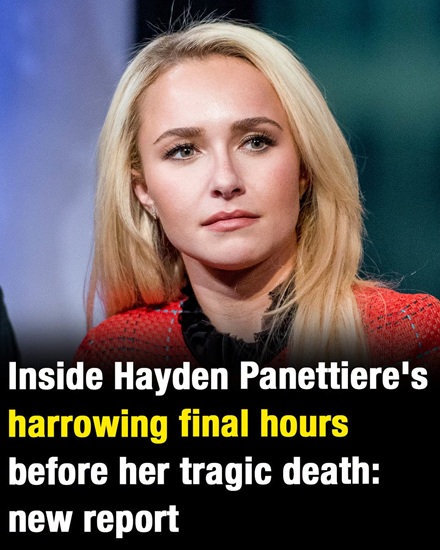
Hayden Panettiere’s death at the age of 36 has led to renewed attention on the actress’s health in the months before she died. Panettiere, known for Heroes, Nashville, Remember the Titans and the Scream franchise, was found unresponsive at a residence in Greenville, South Carolina, on Sunday, August 16, 2026. Emergency services were called in the early afternoon, and medical personnel attempted to revive her. She was ultimately pronounced dead at the scene.
Police later said their preliminary investigation had found no evidence of foul play or suspicious circumstances. The emergency call reportedly came from Judson Mill Lofts on Easley Bridge Road at around 1:51 p.m. According to police, an acquaintance of Panettiere contacted 911 after she was found unresponsive. Officers and emergency medical crews responded to the residence and immediately began providing assistance. Despite those efforts, Panettiere did not regain consciousness.
The Greenville Police Department subsequently confirmed that the case remained under investigation in cooperation with the Greenville County Coroner’s Office. Authorities emphasized that their early findings did not indicate violence or suspicious circumstances. That statement established an important boundary for reporting while the medical investigation continued.
An autopsy was later conducted, and officials said no signs of trauma contributing to Panettiere’s death were found. However, the official cause and manner of death remained undetermined pending additional testing. That means no single medical explanation has yet been formally established.
Attention has also focused on reports concerning Panettiere’s physical health before her death. TMZ reported that a source close to the actress said she had been experiencing back pain over the previous year. The report drew interest because Panettiere herself had spoken publicly just a few months earlier about a frightening episode involving unexplained lower-body symptoms.
In a May 2026 interview with Women’s Health, Panettiere said she had unexpectedly woken up with a strong pins-and-needles sensation extending from her waist downward. She also described being unable to move her toes normally or lift one of her feet.
According to Panettiere, doctors had not provided her with a definitive explanation for what caused the symptoms. She said the experience had been frightening and left her uncertain about whether her mobility would fully return.
The interview focused in part on how she had been working to rebuild her physical strength. Panettiere described a recovery process involving exercise and movement after the unexplained health episode. At the time, she did not present the symptoms as part of a known life-threatening diagnosis.
Those earlier comments have naturally been revisited following her death. However, there is currently no official evidence showing that the back pain or neurological symptoms played any role in what happened on August 16.
That distinction is essential. Panettiere had documented health concerns before her death, but having a previous medical problem does not automatically mean that problem caused a later fatal event.
The same caution applies to reports about emergency-dispatch communications. Audio from the response reportedly included references to cardiac arrest and a possible overdose. Those terms describe what emergency personnel were dealing with or considering during the crisis.
They are not the same as a final determination from a coroner.
Cardiac arrest means that the heart stops effectively pumping blood. It can occur for many reasons and is often the final event in a variety of medical emergencies.
For that reason, saying someone was in cardiac arrest does not identify the underlying cause.
Reports have also said Narcan was found at the residence. Narcan, or naloxone, is used to reverse the effects of opioids during suspected overdoses.
Its presence has contributed to public speculation about whether drugs may have been involved.
But the presence of naloxone does not prove that opioids caused Panettiere’s death.
Investigators would need toxicology testing and other medical evidence before making that determination.
The same applies to the word “overdose” reportedly used in dispatch communications.
Emergency dispatchers and paramedics operate with limited information while trying to save a person’s life.
Their terminology reflects the immediate situation, not a completed forensic investigation.
That is why the Greenville County Coroner’s Office has continued to treat the cause and manner of Panettiere’s death as pending.
Until those results are complete, it would be inaccurate to describe an overdose, back problem, neurological condition, or any other specific cause as confirmed.
Panettiere had traveled to South Carolina shortly before her death.
Reports indicated that she left Los Angeles on Saturday, August 15, one day before emergency services were called.
She reportedly traveled with Brian Hickerson.
The timing of the trip has generated questions online, but there is no evidence showing that the travel itself was connected to her death.
Police have continued to say that their preliminary investigation found no signs of foul play.
That point remains particularly important as theories circulate online.
Sudden celebrity deaths often produce speculation before official information is available.
Panettiere’s case has been no different.
Because she had previously spoken about addiction and physical health problems, people have attempted to connect those parts of her history with her death.
But speculation should not replace evidence.
Panettiere had openly discussed addiction involving alcohol and opioids in previous interviews.
She also spoke about treatment and recovery.
Those struggles were real and documented.
They are part of her life story.
They are not proof of how she died.
The same is true of her reported back pain.
It may turn out to be medically relevant.
It may prove completely unrelated.
Until the coroner provides a final conclusion, either possibility remains unconfirmed.
Panettiere’s father, Alan “Skip” Panettiere, confirmed his daughter’s death in an emotional statement.
He described Hayden as an extraordinary source of love and energy whose presence had touched both the people who knew her personally and audiences around the world.
The family also requested privacy while processing the loss.
For fans, the news was particularly shocking because Panettiere had been visible in entertainment for most of her life.
She began acting as a child and eventually built a career spanning television, film and voice work.
Her early credits included One Life to Live and Guiding Light.
She also voiced Dot in Pixar’s A Bug’s Life.
In 2000, she appeared alongside Denzel Washington in Remember the Titans.
The film became one of her best-known childhood roles and introduced her to an even wider audience.
Her major breakthrough arrived several years later.
In 2006, Panettiere was cast as Claire Bennet in NBC’s Heroes.
The character was a high-school cheerleader who discovered that she possessed extraordinary regenerative abilities.
Claire quickly became one of the most recognizable figures in the series.
The phrase “Save the cheerleader, save the world” became closely associated with the show during its early success.
The role made Panettiere internationally famous while she was still a teenager.
She became a regular presence at entertainment events and appeared extensively in television and magazine coverage.
Years later, Panettiere would reflect on the pressure of growing up under such intense public attention.
Her career continued after Heroes.
In 2011, she played Kirby Reed in Scream 4.
The character developed a loyal following among horror fans.
More than a decade later, Panettiere returned to the role in Scream VI in 2023.
Another defining chapter came with Nashville.
Beginning in 2012, Panettiere played Juliette Barnes, an ambitious country singer navigating fame, relationships and serious personal struggles.
The role allowed Panettiere to combine acting and music.
Her performance earned two Golden Globe nominations.
She remained part of the series throughout its six-season run.
At the same time, her private life became increasingly difficult.
Panettiere and former fiancé Wladimir Klitschko welcomed their daughter, Kaya, in December 2014.
After the birth, Panettiere experienced postpartum depression.
She later spoke publicly about seeking treatment.
Her struggles eventually expanded beyond postpartum depression.
Panettiere said she had developed serious problems involving alcohol and opioids.
She described periods when addiction affected her health, relationships and ability to function.
Her honesty about those experiences became an important part of her later public life.
She did not describe recovery as a simple or immediate process.
Instead, she spoke about setbacks, treatment and the long-term work required to change.
Her difficulties also affected motherhood.
In 2018, Panettiere relinquished full custody of Kaya to Klitschko while she was struggling significantly.
She later strongly rejected claims that she had simply abandoned her daughter.
Panettiere described the decision as one of the most painful experiences of her life.
She said she believed Kaya needed stability at a time when she could not consistently provide it.
Motherhood remained deeply important to her despite the physical distance.
Panettiere continued speaking about Kaya with affection and pride.
She also expressed a strong desire to protect her daughter’s privacy.
Having grown up in the entertainment industry herself, Panettiere understood how difficult it could be for a child to develop under public scrutiny.
She wanted Kaya to have choices about her own identity and future.
Another major tragedy followed in 2023.
Panettiere’s younger brother, Jansen, died at the age of 28.
His family later said the cause involved an enlarged heart and complications related to the aortic valve.
Panettiere described losing her only sibling as devastating.
She said the grief affected her both emotionally and physically.
That loss became another major subject in her later interviews.
Despite those difficulties, Panettiere continued trying to rebuild her career and personal life.
Her return to the Scream franchise was one example.
Another came through her memoir.
In 2026, she published This Is Me: A Reckoning.
The book explored childhood fame, addiction, relationships, postpartum depression, motherhood, trauma, recovery and grief.
It gave Panettiere the opportunity to present those experiences in her own words.
That context is important now.
Because Panettiere openly discussed addiction, readers may be tempted to assume her death must have been connected to it.
That conclusion has not been established.
Because she discussed unexplained mobility problems, others may assume those symptoms must have been a warning sign.
That has not been established either.
Both ideas remain speculative.
The confirmed facts are narrower.
Panettiere had experienced physical health problems.
She had a documented history of addiction and recovery.
She traveled to South Carolina shortly before her death.
She was found unresponsive on August 16.
Emergency crews attempted to revive her.
She was pronounced dead at the scene.
Police found no preliminary signs of foul play or suspicious circumstances.
An autopsy found no trauma contributing to her death.
The official cause and manner remain under investigation.
Those facts can be reported without speculation.
They also provide enough information to understand why authorities have not yet announced a definitive explanation.
Medical investigations can require time.
Toxicology testing may be necessary.
Additional laboratory work may also be needed.
Until those processes are completed, uncertainty remains part of the story.
That uncertainty should be acknowledged rather than filled with assumptions.
The same principle applies to Panettiere’s final days.
Her reported back pain may eventually become relevant.
It may not.
Her earlier neurological symptoms may eventually matter.
They may not.
No official source has connected either issue to her death.
That makes cautious language especially important.
Saying that Panettiere had been dealing with health concerns is accurate.
Saying those concerns caused her death would not be.
Likewise, it is accurate to say that dispatch audio reportedly referenced a possible overdose.
It is not accurate to describe an overdose as officially confirmed.
The difference between those statements is essential for avoiding misinformation.
It also respects the family of a real person whose death remains under investigation.
Panettiere’s daughter, parents, friends and colleagues are dealing with the loss while public interest remains intense.
For them, speculation can add another layer of difficulty.
Responsible reporting can still explore the available information.
It simply needs to separate verified facts from unanswered questions.
That standard is especially useful in celebrity coverage.
Public figures often have large amounts of personal history available online.
When they die unexpectedly, people can search backward through old interviews and reinterpret earlier events as clues.
Sometimes those connections eventually prove meaningful.
Sometimes they do not.
Only evidence can determine the difference.
Panettiere’s comments about her health in May 2026 were genuine and significant.
She described frightening lower-body symptoms and uncertainty about their cause.
Those comments deserve to be reported accurately.
They should not be transformed into a diagnosis she never received.
They also should not be described as proof that her death had been medically predictable.
At the time, Panettiere was discussing rehabilitation and efforts to regain strength.
She was not publicly saying that doctors had identified a fatal condition.
The difference matters.
The same is true of the reported back pain.
Back pain can have many causes.
Without official medical findings, there is no basis for connecting it directly to her death.
The safest conclusion is also the most accurate one.
Panettiere had been dealing with health issues before her death, but their relationship to the fatal event remains unknown.
Her death at 36 is tragic enough without additional assumptions.
She leaves behind a career that began in early childhood and continued across several generations of viewers.
Some people remember her as the young girl in Remember the Titans.
Others remember Claire Bennet.
Others know her best as Juliette Barnes.
Horror fans remember Kirby Reed.
Her work reached very different audiences across different stages of her life.
Her personal story was equally complex.
She experienced childhood fame, motherhood, postpartum depression, addiction, recovery and profound grief.
During her final years, she became increasingly willing to discuss those experiences openly.
That openness allowed audiences to see a fuller picture of the person behind the celebrity image.
Her physical health concerns became another part of that story.
She acknowledged what she was experiencing even when doctors could not provide clear answers.
Now, after her death, those comments have taken on new emotional weight.
But emotional weight is not the same as medical evidence.
Until the Greenville County Coroner’s Office releases the final findings, the cause of Hayden Panettiere’s death remains officially unresolved.
Police have found no preliminary evidence of foul play.
The autopsy found no contributing trauma.
Emergency responders treated her after she was found unresponsive.
The medical investigation continues.
That remains the clearest and most responsible account available.
If future official findings establish that her earlier health problems played a role, that information can be reported then.
If they establish a different cause, reporting should reflect that instead.
For now, the relationship between Panettiere’s back pain, neurological symptoms and death is unknown.
Her final days remain the subject of understandable public interest.
But there is no need to turn unanswered medical questions into certainty.
The documented story is already significant.
Hayden Panettiere was a 36-year-old actress, mother and former child star who had lived through extraordinary professional success and serious personal challenges.
She had recently spoken openly about her health, her recovery and her life experiences.
She then died unexpectedly after being found unresponsive in South Carolina.
Authorities continue working to determine why.
Until they do, the most accurate conclusion is straightforward: Panettiere had reported health problems before her death, but there is currently no confirmed evidence that those issues caused or contributed to it.

