
Found a Mysterious Wooden Object in an Old Drawer? Its Everyday Purpose May Surprise You
Opening an old dresser can sometimes feel like opening a small time capsule.
Among folded fabric, loose buttons, thread, old receipts or family keepsakes, there may be an object that seems completely unfamiliar.
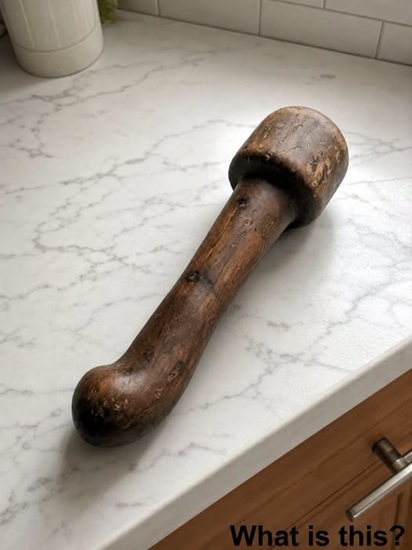
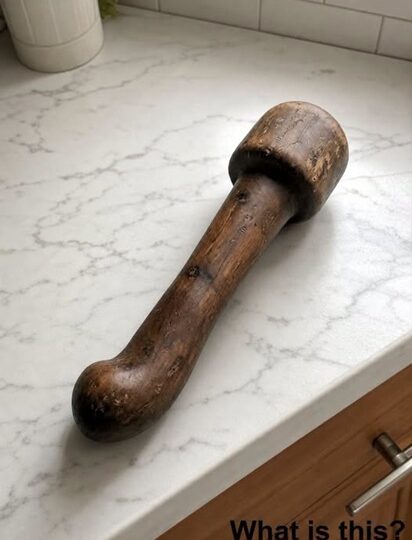
This one is made of wood.
It has a smooth rounded section.
Some examples include a handle, while others are shaped more like an egg or a mushroom.
There are no moving parts.
No blade.
No switch.
No obvious clue about what it once did.
And that is exactly why the object can seem so mysterious today.
Its real purpose, however, was extremely practical.
It was designed to help repair worn fabric.
More specifically, this type of object was commonly used when darning socks, stockings and other knitted clothing.
Depending on its shape, it may be called a darning mushroom, darning egg or sock darner.
The name sounds simple.
The reason for the unusual shape is where the story becomes more interesting.
The Shape Solved a Very Specific Problem
A damaged sock is not as easy to repair as a flat piece of cloth.
Socks curve around the foot.
The heel bends.
The toe is rounded.
The fabric is also soft enough to collapse when pressure is applied.
Trying to sew directly through a loose sock can make the material shift or bunch together.
That can make a neat repair difficult.
The wooden tool provided a solution.
The rounded portion was placed inside the garment.
The worn section of the sock was positioned over the curve.
This created a stable surface beneath the damaged area.
Now the fabric could be repaired without having to flatten it unnaturally.
That simple curved surface was the entire secret.
Why Socks Needed So Much Attention
Socks experience constant wear.
The heel repeatedly rubs against footwear.
The toes are placed under pressure.
Walking stretches the fibers again and again.
Eventually, the material becomes thin.
A small weak spot may turn into a hole.
Today, replacing an inexpensive pair of socks can be easier than repairing it.
That was not always the most practical choice.
For many households in earlier periods, clothing and textiles were worth preserving for as long as possible.
If most of a sock was still usable, a small hole did not necessarily mean the entire item was finished.
It could be repaired.
And that is when the darner came out of the sewing drawer.
Darning Was More Than Closing a Tear
A simple tear can sometimes be stitched by pulling its edges together.
Darning works differently.
When fabric has worn away, there may not be enough material left to simply close the gap.
New thread has to create support across the missing area.
The repair usually involves building stitches in one direction and then working additional threads across them.
This can form a woven structure over the damaged section.
In effect, the missing fabric is partly rebuilt with thread.
That is why the surface underneath matters.
The person sewing needs a stable form to work against.
Without one, the garment can move every time the needle passes through.
With a rounded darner inside, the process becomes much easier.
The Curve Helped Prevent Distortion
There was another benefit.
If a sock is pulled too tightly while being repaired, its shape can be distorted.
If it is left too loose, the repair may bunch up.
A rounded surface supports the natural curve of the garment.
That allows the fabric to remain closer to the shape it will have when worn.
The tool was not complicated.
But it was carefully suited to the job.
A good household design does not always require machinery.
Sometimes it only requires the right shape.
Why Wood Was So Common
Wood was a practical material for darning tools.
It could be shaped smoothly.
It was light enough to hold comfortably.
It was durable.
And it did not require complicated manufacturing.
Once polished, the surface could sit underneath knitted fabric without easily snagging threads.
Some examples were plain.
Others were more decorative.
Handles could be turned on a lathe or carved into different forms.
But even the simplest version could work effectively.
The elegance was in its simplicity.
Not Every One Looked the Same
The term “darning mushroom” often describes a version with a rounded head and a narrower handle.
A darning egg is usually more compact.
Some examples are completely oval.
Others have a handle that makes them easier to grip.
There are also darning tools made from materials other than wood.
Historical examples can vary considerably in size, design and decoration.
That is important when identifying an unknown object.
There was no single universal shape.
But the smooth curved working surface is usually the strongest clue.
These Objects Belonged to Everyday Sewing Life
Darning was part of a larger culture of household repair.
People did not only mend socks.
Buttons were replaced.
Seams were resewn.
Torn garments were patched.
Knitted clothing was repaired.
Practical sewing skills were useful because they could extend the life of clothing.
A darning tool therefore belonged naturally beside needles, thread and other mending supplies.
That is why finding one in an old dresser or sewing box makes historical sense.
The object did not belong in a workshop.
It did not require special storage.
It simply waited until the next worn garment needed attention.
A Drawer Could Preserve It for Decades
Wooden household tools can survive for a remarkably long time.
A piece of wood does not become obsolete because a battery fails.
There are no electronics to stop working.
No software has to be updated.
If the surface remains smooth and the object stays intact, the tool can continue performing its original function.
That helps explain why so many old darners are still found today.
The clothing they repaired may be long gone.
The people who used them may no longer be alive.
But the tool remains.
And once the knowledge of its purpose disappears, an ordinary object can suddenly become a mystery.
Why It Is Easy to Misidentify
Without context, the shape can suggest many possibilities.
Some people may think it is a small kitchen utensil.
Others may see a resemblance to a pestle.
Its rounded surface may suggest massage or woodworking.
Those guesses are understandable because the object has no obvious mechanism.
But one detail changes everything.
Place a sock over the rounded end.
Suddenly, the proportions make sense.
The curved head supports the fabric.
The handle gives the user something to hold.
The smooth surface gives the needleworker a stable working area.
The mystery begins to disappear.
It Could Support More Than Socks
Socks were a common use, but similar darning tools could also help with other knitted items.
Stockings are one example.
Small areas of sweaters or jumpers could also be supported during repair.
Other knitted garments with curved sections could benefit from the same principle.
The exact garment did not matter as much as the need for a firm surface beneath the fabric.
Still, socks became especially associated with the tool because they wore out frequently and were awkward to repair without support.
The design matched the problem almost perfectly.
Mending Was a Skill Worth Learning
Historical textile collections preserve evidence that darning was taught and practiced deliberately.
Darning samplers survive from earlier centuries.
These were pieces of fabric used to practice different repair structures.
They show that mending could involve real skill.
Different weaves required different approaches.
The stitches had to recreate support where the original textile had worn away.
This was not always random sewing.
A careful repair required attention to tension, structure and placement.
The darning tool made that work easier.
But the skill still belonged to the person holding the needle.
A Good Repair Could Extend a Garment’s Life
The practical advantage was obvious.
Imagine a sock with one worn section.
The rest of the fabric may still be strong.
Without repair, the hole continues growing.
Eventually, the sock becomes unusable.
With darning, the weak area can be reinforced.
That can allow the garment to be worn longer.
For households where replacing clothing was more expensive or less convenient, the benefit was significant.
A few minutes with a needle, thread and a simple wooden tool could delay replacement.
The object was small.
Its economic purpose could be larger than it looked.
That Is Why Wear Marks Can Be Interesting
Old wooden darners sometimes have scratches, discoloration or polished sections.
Age and repeated handling can alter wood.
Storage conditions can also affect the finish.
It is difficult to determine the exact cause of every mark on an unidentified object.
But signs of use can still be meaningful.
They suggest the object may not have been decorative.
It may have served its purpose repeatedly.
A well-used darner could have been taken out of the same sewing drawer many times over many years.
The exact number of repairs is unknowable.
The function is not.
Clothing Became Easier to Replace
Over time, clothing production changed dramatically.
Industrial manufacturing increased availability.
Mass production lowered the cost of many garments.
Synthetic fibers changed durability and construction.
Retail clothing became easier to obtain.
As replacement became more convenient, some household repair habits declined.
For many people, hand darning was no longer essential.
The skill did not disappear completely.
But it became less common.
And when the skill faded from everyday life, recognition of the tool faded with it.
That is how an ordinary object can become unfamiliar in only a few generations.
The Tool Did Not Become Useless
The interesting part is that the darner itself never stopped working.
Its design remained valid.
A hole in a sock still presents the same basic problem.
The fabric is curved.
The repair needs support.
A smooth rounded surface still solves that problem.
Modern darning mushrooms and eggs are still available today.
Craft suppliers continue to sell them.
People interested in traditional mending still use them.
The tool may look old-fashioned.
The principle behind it is not.
Mending Has Found a New Audience
Clothing repair has attracted renewed interest among some modern crafters.
The reasons can be different from those of earlier households.
Some people want to extend the life of favorite garments.
Some enjoy the process of hand sewing.
Others are interested in reducing textile waste.
There is also a style of repair known as visible mending.
Instead of hiding the repaired section, contrasting thread may be used intentionally.
The repair becomes part of the design.
The appearance is modern.
The basic idea is centuries old.
Keep the garment in use.
Traditional Darning Could Be Very Subtle
Older repair work was often intended to blend into the original textile.
A skilled person could choose thread that matched the garment closely.
The repair might imitate the surrounding weave.
This required patience.
The goal was not always to create a noticeable patch.
Sometimes the best repair was the one that attracted the least attention.
Historical darning samplers show how carefully these techniques could be practiced.
The wooden tool under the fabric was only one part of the process.
The real craftsmanship came from the stitches.
Could an Old Darner Be Valuable?
Most simple wooden darners are better understood as historical household objects than as automatically valuable antiques.
Age alone does not guarantee a high price.
Value can depend on several factors.
The maker may matter.
The material may matter.
Decoration may matter.
Condition and rarity may matter.
Some unusual or finely made examples may interest collectors more than ordinary household versions.
But monetary value is only one way to look at them.
For a family, an object connected to a relative’s daily life may have sentimental value that is impossible to measure.
An Object Can Preserve Ordinary History
Family history often focuses on major events.
Weddings.
Births.
Military service.
Travel.
Careers.
But daily routines are less likely to be recorded.
Nobody usually takes a photograph every time a sock is repaired.
Yet an old household tool can preserve evidence of those routines.
A darner tells us that someone maintained clothing.
Someone knew how to sew.
Someone considered a worn garment worth repairing.
That is a small piece of domestic history.
And small pieces often make the past feel more real.
It May Have Been Used Hundreds of Times — Or Only a Few
Without documentation, it is impossible to know how often a particular object was used.
That is another reason to avoid romanticizing every antique.
A tool may have belonged to one person for years.
It may have changed owners.
It may have spent decades unused.
What can be identified with confidence is the design and intended purpose.
If the object matches known darning forms, the answer is practical rather than mysterious.
It supported fabric during repair.
Anything beyond that depends on the history of the individual piece.
Why Antique Household Objects Create So Much Curiosity
Modern tools often reveal their function immediately.
A phone looks like a phone.
A remote control has buttons.
Kitchen appliances usually have recognizable parts.
Older hand tools can be more ambiguous.
Many performed tasks that are no longer common.
Once the activity disappears, the tool loses its visual context.
That is why antique-object identification can be surprisingly difficult.
The missing information is not always about the object.
Sometimes it is about the forgotten task.
The Darner Is a Perfect Example
On its own, it looks strange.
Add a sock, and everything becomes obvious.
The curve supports the heel.
The fabric stays in place.
The needle passes over a firm surface.
The handle helps control the tool.
Suddenly, every part of the design has a reason.
That is the beauty of simple functional objects.
They can look mysterious until the task is reconstructed.
Then they look inevitable.
It Also Reflects a Different Attitude Toward Possessions
A darning tool represents more than sewing.
It reflects an approach to material goods in which useful items were often maintained.
That does not mean every person in the past repaired everything.
Nor does it mean earlier life was universally less wasteful.
But textile repair was unquestionably an established household practice.
Tools and samplers survive because the skill was real and widely taught in different periods and communities.
The darner belongs to that history.
It existed because worn fabric was worth fixing.
A Small Repair Could Delay a Bigger Expense
The logic was straightforward.
If only one part of the garment was damaged, repair that part.
Do not replace the entire item immediately.
That was particularly useful for socks, where wear often concentrated in a few predictable areas.
The heel might fail first.
The toe might thin out.
A local repair could keep the rest of the sock usable.
The wooden support helped make that practical.
The result was not glamorous.
It was effective.
The Simplest Tools Often Survive the Longest
There is an interesting durability to objects like this.
No complicated mechanism means fewer things can break.
A wooden darner can survive generations because its function depends only on its shape.
As long as it remains smooth and intact, it can still be useful.
Many modern products are more technologically advanced.
Few are as mechanically simple.
That simplicity is one reason the object can still be recognized and used today.
So What Exactly Is the Wooden Object?
If it has a smooth rounded surface suited to supporting fabric and matches the known forms used in sewing, it is most likely a traditional darning tool.
It may be called a darning mushroom.
It may be called a darning egg.
Some people simply call it a sock darner.
The precise name depends on the form.
The job is the same.
Support the fabric while a hole is repaired.
That is the mystery solved.
The Final Clue Was Always the Shape
The rounded end was never ornamental.
It was the working surface.
The handle was not just decorative.
It made the tool easier to hold.
The smooth finish protected the fabric.
The size allowed it to fit inside garments.
Every feature served the repair process.
Once that is understood, the object stops looking strange.
It starts looking carefully designed.
A Forgotten Tool With a Very Practical Story
What appears to be an odd piece of wood in a dresser may once have been part of an ordinary sewing routine.
It helped hold a sock in shape.
It made darning easier.
It supported repairs that extended the useful life of clothing.
There was no hidden technology.
No unusual medical use.
No mysterious mechanism.
The tool did something very simple.
It helped people fix things.
And that may be the most interesting part of all.
Long after the original garments have disappeared, the darner can remain behind.
A small wooden reminder of a time when a hole in a sock was not necessarily the end of the sock.
Sometimes, it was only the beginning of a repair.

