
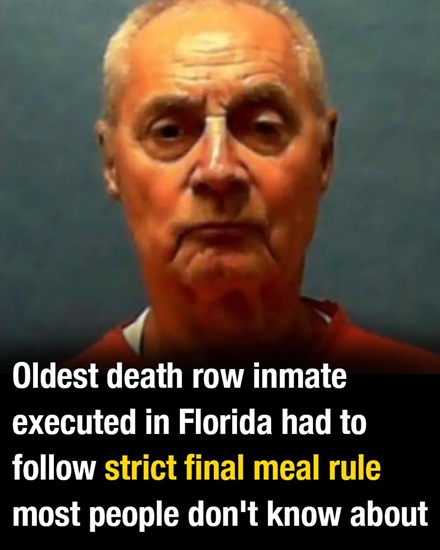
The execution of Dennis Sochor on July 15 marked the end of one of the longest-running death penalty cases in Florida’s modern history. After spending nearly four decades on death row, the 74-year-old inmate was executed by lethal injection at Florida State Prison, becoming the oldest prisoner ever put to death in the state. His execution closed a legal case that had stretched across multiple generations, involved decades of appeals, and remained connected to the disappearance and death of 18-year-old Patty Gifford, whose body has never been recovered.
The case has once again drawn attention to Florida’s capital punishment system, lengthy appeals process, and the rules that govern executions. According to Florida prison officials, Sochor was pronounced dead at 6:16 p.m. after receiving the state’s three-drug lethal injection protocol. The execution was carried out after courts denied his final legal appeals, allowing the death warrant signed by state officials to move forward as scheduled. Representatives from the victim’s family, legal teams, corrections officials, members of the media, and other authorized witnesses were present during the execution, following the procedures established under Florida law for capital punishment cases.
One aspect of Florida’s execution procedures that often attracts public interest involves an inmate’s final meal. Unlike some states that once permitted elaborate requests, Florida has maintained relatively strict limitations for decades. Since 1979, state policy has limited the cost of a final meal to no more than $40. The meal must also be prepared using ingredients that can be obtained locally, and inmates cannot request food from fast-food restaurants or specialty establishments. The policy is designed to provide a reasonable final meal while avoiding excessive costs or special accommodations.
In Sochor’s case, however, the state’s meal policy ultimately became irrelevant because he declined the opportunity altogether. According to reports from prison officials and media accounts, he informed those overseeing the execution that he did not wish to request a final meal. Instead, he explained that he intended to spend his remaining hours focusing on prayer and fasting. He reportedly stated that he wanted to devote his final day to what he described as a spiritual journey rather than eating. Officials also noted that he declined food available through the prison’s vending options before the execution.
The decision attracted attention because final meal requests have historically become one of the most widely discussed aspects of executions in the United States. Over the years, some inmates have requested simple comfort foods, while others have ordered elaborate meals that received significant media coverage. In contrast, Sochor’s decision to refuse food entirely reflected a different personal choice during his final hours. Prison officials indicated that his refusal complied fully with prison procedures and required no additional accommodations.
Dennis Sochor had spent nearly forty years on Florida’s death row following his conviction for crimes committed in connection with the disappearance of Patty Gifford during the early hours of New Year’s Day in 1982. According to prosecutors, Gifford disappeared after celebrating New Year’s Eve with friends in South Florida. Investigators alleged that Sochor sexually assaulted and killed the 18-year-old before disposing of her body. Despite extensive searches conducted by law enforcement, Gifford’s remains were never located, making the investigation particularly difficult and emotionally painful for her family.
The absence of a recovered body became one of the central issues raised throughout Sochor’s numerous appeals. His legal team argued on multiple occasions that prosecutors had failed to prove beyond reasonable doubt that Gifford had died because her remains had never been found. Courts at both the state and federal levels repeatedly rejected those arguments, ruling that prosecutors had presented sufficient evidence for a jury to conclude that Gifford had been murdered despite the absence of physical remains. Similar legal principles have been applied in other homicide cases where convictions were secured without recovering a victim’s body.
The investigation itself lasted several years before authorities identified Sochor as a suspect. Patty Gifford disappeared in January 1982, but Sochor was not arrested until May 1986 following an extensive investigation. Detectives spent years gathering witness statements, reviewing evidence, and pursuing numerous investigative leads before prosecutors ultimately filed charges. Law enforcement officials involved in the case described the investigation as one of the most challenging homicide cases they had handled because of the lack of physical evidence associated with the victim’s remains.
At the time of the investigation, Broward County investigators publicly expressed sympathy for Gifford’s family while emphasizing the tragic nature of the case. Officials noted that the young woman had simply gone out with friends to celebrate the arrival of a new year before unexpectedly disappearing. Her disappearance immediately prompted widespread concern among relatives, friends, volunteers, and investigators who participated in search efforts across South Florida. Despite repeated searches conducted over several years, no trace of her body was ever discovered.
The lengthy legal proceedings that followed reflected the complexity of capital cases in the United States. Death penalty cases routinely involve automatic appeals, post-conviction reviews, constitutional challenges, and additional legal proceedings designed to ensure that convictions and death sentences comply with both state and federal law. As a result, inmates sentenced to death often remain on death row for decades before all available legal remedies have been exhausted. Sochor’s case followed this pattern, remaining active within the court system for almost forty years before his execution was ultimately carried out.
Throughout those decades, prosecutors consistently maintained that the evidence presented during trial supported both the conviction and the sentence imposed by the jury. Multiple courts reviewed various aspects of the case over the years, including evidentiary issues, sentencing procedures, and constitutional claims raised during appeals. Ultimately, judges repeatedly upheld both the conviction and the death sentence, allowing the execution to proceed once all remaining legal challenges had been resolved.
For Patty Gifford’s family, the execution marked the end of a legal process that had lasted more than four decades, but it did not erase the pain of losing a loved one under such tragic circumstances. Throughout the years, family members repeatedly expressed that one of the most difficult aspects of the case was never being able to recover Patty’s remains or give her a proper burial. The uncertainty surrounding the location of her body remained a source of ongoing grief, leaving questions that were never fully answered despite decades of investigation and court proceedings.
Patty’s mother, Marilyn Gifford, spoke publicly several times over the years about the emotional impact of her daughter’s disappearance. In interviews given during the legal process, she said the family had lived with unimaginable heartbreak since New Year’s Day 1982. While numerous appeals delayed the final outcome of the case, she consistently expressed the hope that one day the family might finally learn what had happened to Patty and where her remains had been left. Despite the passage of time, that information was never provided.
During earlier interviews, Marilyn Gifford said that although the legal system had allowed Dennis Sochor every opportunity to appeal his conviction, her family still had not received the answers they had desperately sought. She explained that one of the greatest burdens was not knowing where Patty had been left after her death. Without that knowledge, the family was unable to experience the sense of closure that many families receive through a funeral or final resting place. Those comments reflected the long-lasting emotional consequences that unresolved homicide cases often leave behind.
Other members of the prosecution team also reflected on the case after the execution. Kelly Hancock, who served as the lead prosecutor during the trial and later retired, stated that although many years had passed, he still remembered the victims and their families more clearly than many legal details of the case itself. He explained that prosecutors often handle numerous criminal cases throughout their careers, but the stories of victims and the pain experienced by surviving relatives remain the memories that endure the longest.
Hancock also noted that the manner in which prosecutors believed Patty Gifford’s body had been disposed of added another deeply disturbing element to the case. Investigators argued throughout the prosecution that the actions demonstrated a complete disregard for the victim after her death. Those allegations became part of the evidence presented during trial and contributed to the severity with which prosecutors pursued the case. Although Patty’s remains were never located, the courts consistently ruled that sufficient evidence existed to support the conviction.
The execution has also renewed broader discussions about the administration of capital punishment in Florida. The state continues to maintain one of the largest death row populations in the United States and has carried out multiple executions in recent years. Supporters of the death penalty argue that it provides justice in the most serious criminal cases and honors victims by enforcing the sentences imposed through the legal system. Opponents, however, continue to question both the effectiveness and morality of capital punishment, advocating instead for sentences of life imprisonment without parole.
Cases such as Dennis Sochor’s also highlight the extraordinary length of time many inmates spend on death row before their executions are carried out. The appeals process in capital cases is intentionally extensive because courts carefully examine constitutional claims, trial procedures, newly presented evidence, and numerous legal issues before allowing an execution to proceed. While supporters view these safeguards as essential protections against wrongful executions, critics often point to the lengthy delays as evidence of the complexity and cost associated with administering the death penalty.
Florida’s final meal policy also became part of the public conversation following Sochor’s execution. Although the state continues to allow inmates a final meal within clearly defined limits, Sochor’s decision to decline food altogether shifted attention toward the personal choices inmates sometimes make during their final hours. His decision to spend that time in prayer and fasting reflected his own priorities before the execution rather than the meal traditions that frequently receive media attention in other capital cases.
Throughout his incarceration, Sochor pursued numerous appeals through both state and federal courts. His attorneys raised multiple legal arguments over the years, including challenges related to evidence, sentencing, and the absence of Patty Gifford’s remains. Each of those claims was reviewed by the courts under established legal procedures. Ultimately, judges consistently upheld both his conviction and death sentence, concluding that the evidence presented during trial satisfied the legal standards required for conviction.
For Patty Gifford’s loved ones, however, the conclusion of the legal proceedings does not bring back the daughter, sister, and friend they lost more than forty years ago. While the execution represents the end of one chapter in the justice system, it cannot restore the years that her family has spent coping with loss and unanswered questions. Like many families affected by violent crime, they continue living with memories of a loved one whose life ended far too soon.
The case remains one of Florida’s most well-known homicide prosecutions because it demonstrated that convictions can still be secured even when a victim’s body has never been recovered. Investigators relied on witness testimony, forensic evidence, statements, and other investigative findings presented during trial to establish the prosecution’s case. Legal experts frequently cite similar cases as examples of how homicide prosecutions may proceed when sufficient evidence exists despite the absence of physical remains.
More than four decades after Patty Gifford disappeared, her case continues to be remembered not only because of the lengthy legal proceedings but because of the profound impact the crime had on those who knew her. Family members have consistently described her as a young woman with her entire future ahead of her, making the loss even more devastating. While the legal process has now concluded, her story remains a reminder of the lasting consequences violent crime has on victims’ families, investigators, prosecutors, and communities long after court proceedings have ended.

