
The hospital corridors had a rhythm of their own. During the day, they bustled with the sounds of beeping monitors, rolling carts, and hurried footsteps of nurses and doctors.
Visitors’ voices mingled with the occasional laughter of patients trying to keep their spirits up. But after nightfall, when the shift changed and most staff retired to offices or break rooms, the corridors emptied.
The sterile lights cast long shadows against the linoleum floors, and the hum of the building became almost hypnotic. It was during these quiet hours that the orderly began to notice something unusual. At first, it was faint, easy to dismiss as the groans of an elderly patient in pain.
But soon, it became impossible to ignore. From Room No. 7—a small, corner room housing a fragile elderly woman recovering from a broken hip—she began to hear muffled screams. Not loud or frantic, but suppressed, desperate sounds that seemed to echo from deep inside the patient’s chest.
Each night, they appeared at roughly the same hour, after the evening shift had settled into routine and the rest of the hospital had drifted toward sleep.

They were urgent, deliberate, suffused with fear. A chill ran up her spine each time she heard them. Even after she walked away, the sensation clung to her, a low-level anxiety that refused to dissipate.
The Patient and the Visitor
Mrs. Evelyn Thompson, the elderly patient in Room No. 7, was generally quiet and cooperative. She kept her bed neatly made, thanked staff for their help, and rarely complained about discomfort.
Yet lately, subtle changes had begun to appear. She flinched at sudden noises, her gaze lingered on the floor instead of meeting anyone’s eyes, and she had begun clutching her sheets with unnatural tension.
It wasn’t long before a new element appeared: a visitor. Each evening, a man arrived promptly, alone, polished, confident, and calm.
He introduced himself as a relative, which reassured most staff members enough to let him in without question. But the orderly began to notice alarming details. After his visits, Mrs. Thompson’s eyes were red and puffy, her hands clammy, and on one occasion, the orderly noticed a faint bruise forming on her wrist.
Attempts to question Mrs. Thompson yielded little. Each time the orderly asked if she was alright or if someone was hurting her, the patient whispered reassurances. “It’s fine,” she would murmur.

“Everything’s fine.” But the tears in her eyes, the trembling of her hands, and the increasing frequency of the muffled screams told a different story.
Colleagues cautioned the orderly against intervening. “He’s family. Stay out of it,” they warned. “If you make a scene, you could cause more harm than good.” Despite the repeated admonitions, the crying continued, each night growing more heart-wrenching, more insistent.
Planning to Reveal the Truth
Fear began to give way to resolve. The orderly realized that if no one else was willing—or able—to act, she might have to take matters into her own hands.
She started observing patterns: the visitor arrived at exactly the same time each night, stayed for a consistent duration, and only ever left after ensuring Mrs. Thompson remained in bed.
One night, after hearing a particularly harsh whisper followed by a short scream, she lay awake, heart pounding, mind racing with scenarios. She knew something sinister was occurring, and her conscience would not allow her to remain passive.
The following evening, she devised a plan. Arriving early, she slipped into the room before the visitor could. The room was dim, lit only by the soft glow of a night lamp.
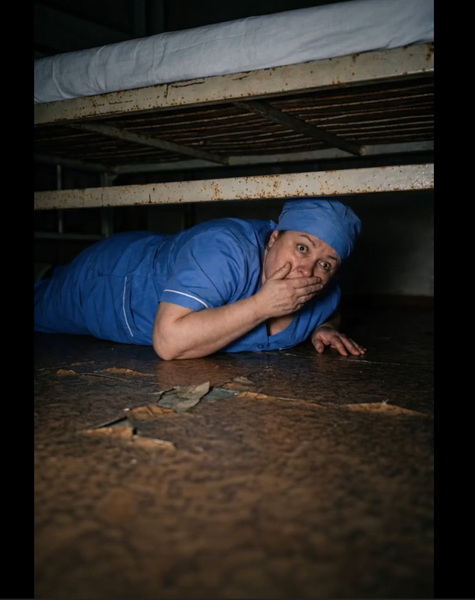
Mrs. Thompson appeared to be asleep, her breathing even but tense. The orderly positioned herself on the floor, crawling under the bed—a tight, uncomfortable space beneath dusty sheets and rusty springs. Cold linoleum pressed against her knees, but she remained motionless, waiting.
A Terrifying Discovery
Minutes felt like hours. The faint ticking of the wall clock was deafening in the silence. Then, the doorknob rattled. Footsteps approached. The door creaked open.

He entered. From her hidden vantage point, the orderly saw only his shoes, his polished leather gleaming under the dim light, and the edge of the bed.
At first, his voice was calm, almost casual, as he spoke to Mrs. Thompson about signing papers for a house she supposedly didn’t need. She refused, quiet tears forming, but he insisted, his tone growing more forceful with each passing minute.
Suddenly, the situation escalated. He pulled out a dark, unmarked syringe. The orderly’s heart stopped. The patient protested, shaking her head, pleading silently.
But he continued, threatening her, claiming that he could influence the doctors, manipulate her medications, and make her health deteriorate if she refused to comply.
The orderly held her breath, her hands trembling, trying to stay hidden and silent. She knew that any sudden movement could trigger a confrontation, possibly endangering both herself and the patient.
The syringe was raised. Mrs. Thompson’s scream pierced the air, muffled but unmistakable. Panic surged through the orderly, adrenaline spiking. She knew she had to act, even if it meant revealing herself.
Intervention and Justice
With a surge of courage, she bolted from under the bed, screaming as she flung the door open. Her voice echoed through the hallway, piercing the usual nighttime quiet.
Within moments, the hospital staff responded. Nurses and the on-duty doctor rushed in, alerted by her panicked shouts. The visitor was immediately detained.

The syringe, which was found to contain a harmful substance, was confiscated. Further investigation revealed pre-prepared documents in his bag—legal forms designed to manipulate Mrs.
Thompson into signing over property. It was confirmed that the injections were not medicinal at all but had been intended to weaken and control her.
The orderly’s bravery had stopped a dangerous plan before it could fully unfold. What might have seemed like an ordinary act—simply entering a room, listening, and paying attention—had saved a life and exposed a potential criminal scheme.
Courage That Saved a Life
Mrs. Thompson survived, her health gradually stabilizing thanks to prompt medical attention. The orderly became a quiet hero, her vigilance and moral courage ensuring that the elderly patient would not suffer further harm.
The incident rippled through the hospital, reinforcing the importance of attentiveness, vigilance, and advocacy, particularly when dealing with vulnerable populations.
Authorities praised the orderly for her decisive action. The man was charged with elder abuse, attempted coercion, and assault with a dangerous substance.
Investigations revealed that similar schemes had been attempted in other facilities, and the exposure led to wider scrutiny of hospital visitor protocols, legal documents, and patient safety measures.
The orderly herself reflected on the experience with a mixture of relief, pride, and lingering trauma. She had acted not out of desire for recognition, but from a deep moral conviction that wrong must be challenged.
Her actions proved that courage, even in the face of fear, can alter the course of events in profound ways.
The Ripple Effect
The hospital implemented new safety protocols, ensuring that patient interactions with visitors were more closely monitored.

Training programs emphasized the importance of speaking up, observing, and intervening when necessary. Staff were reminded that vigilance is not an intrusion but a responsibility—a lesson learned through a frightening, near-tragic experience.
Meanwhile, Mrs. Thompson slowly regained confidence and trust. With proper care, she resumed activities within her physical limits and found solace in the knowledge that someone had truly watched over her when she needed it most.
She often expressed gratitude privately to the orderly, acknowledging that her life might have been irrevocably altered without her intervention.
The story also served as a stark reminder of the vulnerabilities that elderly patients face.
While hospitals are designed to provide care and safety, the incident highlighted how easily manipulation, coercion, and abuse can occur, especially when perpetrators exploit both legal loopholes and the inherent trust placed in family members.
Reflection on Heroism
What stands out most is the ordinary nature of the heroism displayed. The orderly was not seeking accolades, nor did she have specialized law enforcement training.
She simply paid attention, trusted her instincts, and acted decisively when others might have hesitated. It is a testament to the impact that awareness, moral courage, and action can have, even in the most intimidating circumstances.
Her bravery reminds us all that sometimes, saving a life does not require extraordinary powers—only observation, presence, and the willingness to act when something feels wrong.
Conclusion
Thanks to the orderly’s vigilance, an innocent life was preserved, and a dangerous plan was exposed. The night that began with muffled screams ended with justice and relief. The elderly patient in Room No. 7 was safe, and the perpetrator faced accountability.
The echoes of that night continue to serve as a lesson: paying attention, questioning inconsistencies, and standing up for the vulnerable are acts of courage with the power to change outcomes in ways both immediate and far-reaching.
Sometimes, the quiet hero is not the one in the spotlight but the one who watches, listens, and intervenes when it matters most.
In the dimly lit hospital corridor, under the hum of fluorescent lights and the routine rhythm of nightly rounds, one individual’s courage became a beacon.
It reminded everyone present—and anyone who hears the story—that vigilance, compassion, and action are often the thin line between harm and safety, between despair and hope.
