
Elvis Presley was famous worldwide not only for his extraordinary musical talent and iconic voice, but also for his lifestyle, fashion and design interests, which extended even to his personal aircraft collection.
Among the many luxury items associated with the King of Rock and Roll, one of the most fascinating was his 1962 Lockheed JetStar business jet, a plane that reflected his taste for comfort, prestige and bespoke design.
Elvis purchased the JetStar on December 22, 1976, paying $840,000 — equivalent to roughly $4.4 million today — just months before his untimely death at age 42 in August 1977.
The Lockheed 1329 JetStar was a pioneering business jet for its time, built with four rear‑mounted engines, a spacious cabin and long range, making it popular with celebrities and dignitaries in the 1960s and 1970s.
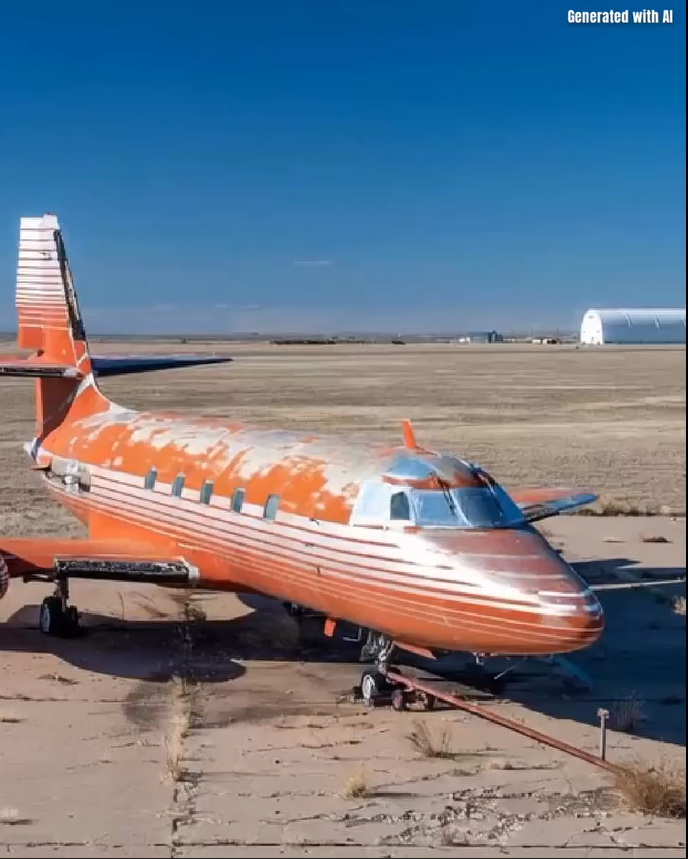
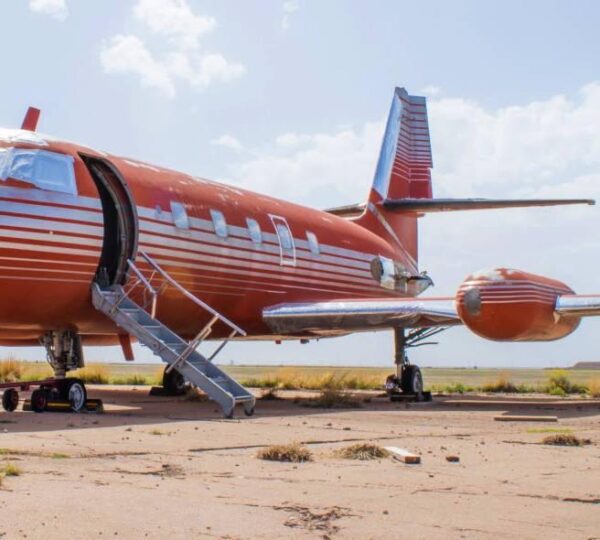
Its exterior was painted in a classic red and silver scheme, typical of private executive jets of the era, hinting at both prestige and personality on the tarmac.
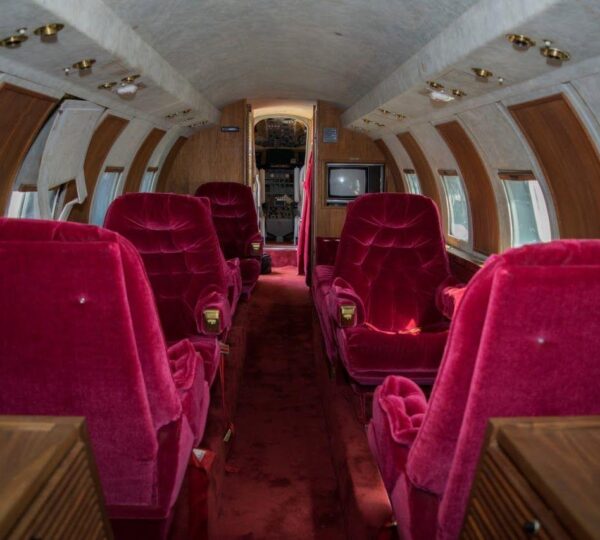
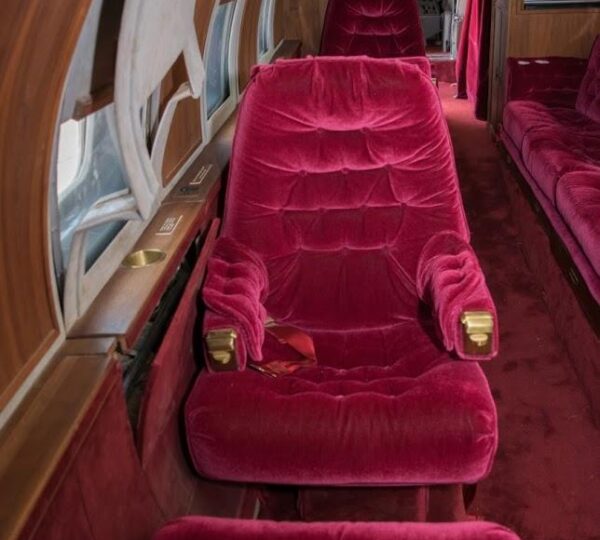
Inside the JetStar, Elvis chose interiors that mirrored his larger‑than‑life persona: wood panelled walls, plush red velvet upholstery and gold‑finish hardware throughout the cabin created a striking sense of luxury.
The seating area had space for around eight to ten passengers alongside a small crew, with swivel and recliner chairs that reflected mid‑century elegance and bespoke comfort.
In addition to comfortable seating, the interior once featured on‑board entertainment — including a television and VCR player — rare luxuries for in‑flight travel at that time.
A small galley kitchen was also installed, along with a lavatory, allowing passengers to enjoy longer flights without sacrificing convenience, even on cross‑country trips.
Elvis used the JetStar as part of his personal fleet, which also included other customised aircraft such as the Convair 880 Lisa Marie and additional JetStar models used to transport his band, entourage and staff.
Flying privately allowed Elvis to travel between concerts, personal appearances and recording sessions with greater flexibility, privacy and comfort than commercial travel could offer.
His father, Vernon Presley, was often aboard the JetStar on early flights, making the jet a symbol of family travel as much as celebrity transport during Elvis’s final months.
Following Elvis’s death in 1977, the ownership of the JetStar shifted to a Saudi Arabian company before the aircraft was eventually stored for years at the Roswell International Air Center in New Mexico.
For nearly four decades, the plane sat idle on the desert tarmac at Roswell, its exterior faded by the sun and many original components removed or deteriorated with time.
During that period, the aircraft became a curiosity for aviation enthusiasts and Elvis fans alike, representing both the glamour and fragility of celebrity memorabilia.
Because it lacked engines and many avionics parts, the JetStar was never restored to flying condition, and its status became that of a collector’s artefact rather than an operational aircraft.
In 2017, collector Jim Gagliardi purchased the jet at auction for roughly $498,000, with a plan to display it as an aviation exhibit, although that vision did not come to fruition.
Several years later, Mecum Kissimmee Collector Vehicle Auction in Florida announced that the iconic plane would again be offered for sale, drawing interest from Elvis enthusiasts worldwide.
The auction took place on January 8, a date that would have marked what would have been Elvis’s 88th birthday, adding symbolic significance to the sale event.
Priscilla Presley, Elvis’s former wife, was present at the auction and spoke about how much Elvis loved his collection of cars and private planes, highlighting the personal value these items held for him.
Bidding for the JetStar began at $100,000 and rose steadily as collectors recognised the historic and pop‑culture value associated with the King of Rock and Roll.
Eventually, a telephone bidder won the aircraft with a final bid of $260,000, a significant sum for a plane in need of restoration that had languished in the desert for decades.
With auction fees included, the total price jumped to around $286,000, a fraction of the original price Elvis paid in 1976 but a testament to the enduring allure of his legacy.
Under the terms of the sale, the new owner took possession knowing that the aircraft would need disassembly and transport from Roswell because it lacked key components necessary for flight.
Because the plane had been stripped of engines and cockpit systems, experts noted that restoration to airworthiness would be costly and complex, far beyond typical collector expenses.
Despite its condition, the interior’s original elements — the distinctive red velvet seats, wood trim, and gold touches — remain a nostalgic view into 1970s bespoke aviation.
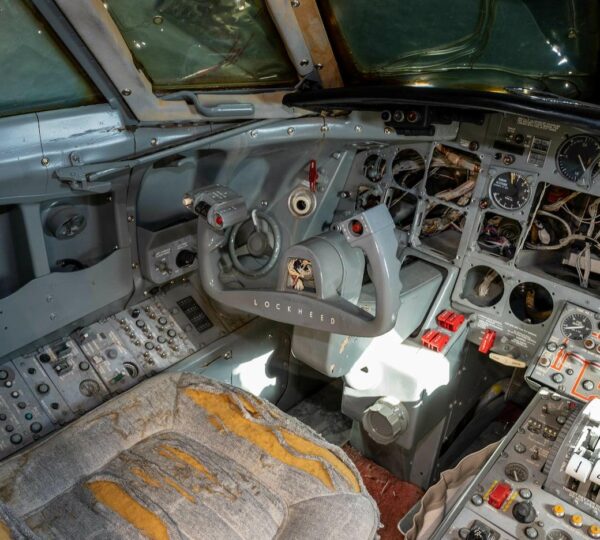
These features reflect Elvis’s own preference for bold and comfortable design, a signature of his personal style beyond music and fashion.
Images from previous auction previews show the cabin with plush chairs and a retro layout that evokes a time when private jet travel was an exclusive symbol of success.
Collectors and historians say the JetStar represents a fascinating chapter in Elvis’s life, illustrating not only his love of travel but also his fascination with technology and luxury.
Some enthusiasts have speculated about creative future uses for the aircraft, ranging from museum exhibits to themed attractions celebrating his influence on culture.
One preservationist noted its potential as an exhibit piece where fans could step inside and experience what private travel once looked like for one of the 20th century’s biggest stars.
While some collectors dream of full restoration, aviation experts remind that logging a full return to flight would require millions of dollars and adherence to modern safety standards.
Most historic aircraft that once flew regularly are either displayed in museums or preserved statically due to the cost and complexity of restoration projects.
Aircraft historians point out that the Lockheed JetStar was an important milestone in business aviation, being one of the first dedicated executive jets in history.
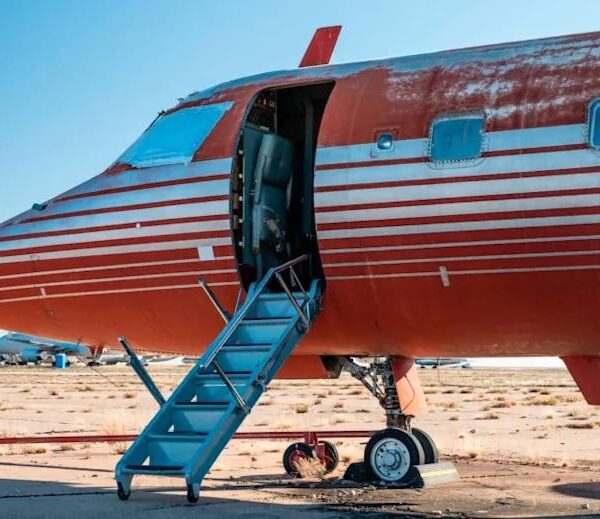
Though several JetStars were built, few examples remain, and Presley’s connection adds a unique cultural resonance to this particular airframe.
Unlike the Hound Dog II JetStar now displayed at Graceland alongside his Convair 880 Lisa Marie, this particular JetStar’s story ended in auction rather than exhibition.
The plane’s sale drew in not only private collectors but also those interested in aviation history, pop culture and the legacy of Presley’s multi‑faceted career.
For fans and historians alike, the JetStar remains a tangible link to an artist whose influence extended far beyond the recording studio into style, travel, and lifestyle.
Although parked and dismantled, the jet’s association with Presley continues to make it a notable piece of rock and roll history, preserved through ownership and public interest.
Its sale at auction on what would have been Presley’s birthday marked a poignant moment, reminding the world that even objects of metal and wood can carry memories of iconic lives.
Today, Elvis’s 1962 Lockheed JetStar stands as both a relic of aviation history and a testament to the enduring allure of his life and legacy.
