
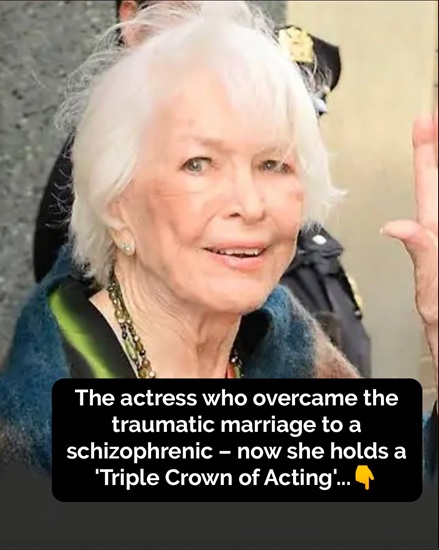
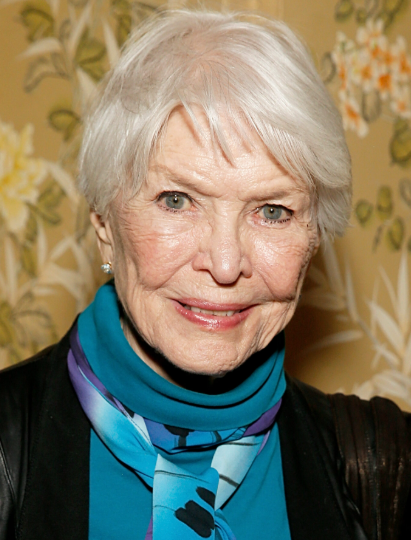
At 93, Ellen Burstyn remains one of the most respected and enduring performers in American entertainment. Her career has stretched across Broadway, television, independent cinema, major Hollywood productions, and some of the most celebrated films of the last half-century. She has played grieving mothers, determined survivors, lonely dreamers, complicated partners, spiritual seekers, and women struggling to rebuild their lives. Through all these roles, Burstyn has demonstrated a rare ability to reveal the inner life of a character without relying on theatrical exaggeration.
Her performances often feel deeply personal, as though the audience is watching a real person think, hesitate, hope, and change in front of the camera. Born Edna Rae Gillooly on December 7, 1932, in Detroit, Michigan, Burstyn grew up far from the glamour later associated with her name. Her parents were Correine Marie Hamel and John Austin Gillooly, and her family life became unstable after their marriage ended.
Burstyn has spoken publicly and written in her memoir about feeling emotionally isolated during childhood. Rather than presenting those early years as a simple story of triumph over adversity, she has described personal growth as a long and complicated process. Her later interest in therapy, meditation, spirituality, poetry, and self-examination would become central to the way she understood both her life and her acting.
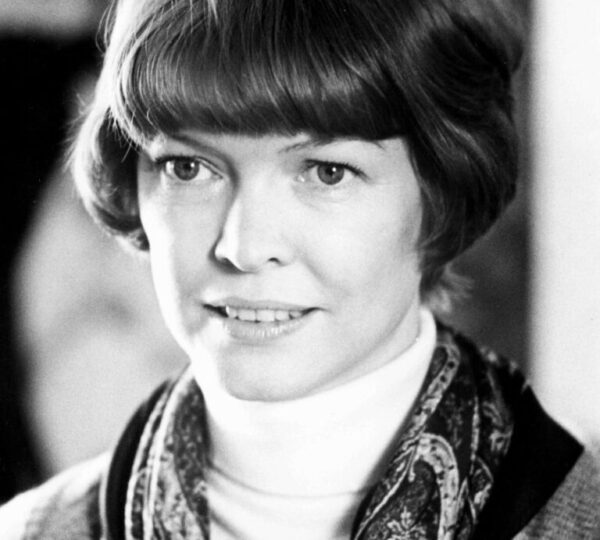
As of July 2026, Burstyn is 93 and remains professionally active. Her longevity is especially notable because her career did not depend on playing a single type of character or maintaining a particular youthful image. Instead, she built her reputation through emotional intelligence, preparation, discipline, and a willingness to portray women in different stages of life. Her professional honors include an Academy Award, a Tony Award, and two Primetime Emmy Awards, placing her among the relatively small group of performers who have achieved acting’s so-called Triple Crown.
A Childhood Marked by Instability
Burstyn’s childhood experiences played an important role in shaping her understanding of loneliness and emotional survival. After her parents separated, she and her brothers were largely raised by their mother. Burstyn later described her childhood home as strict and emotionally difficult. In interviews and in her 2006 memoir, Lessons in Becoming Myself, she wrote about feeling as though she did not fully belong in the environment into which she had been born. These memories remained significant to her, not because she wanted to be defined by pain, but because understanding them became part of her effort to understand herself.
She attended Cass Technical High School in Detroit, where she participated in activities that revealed an early interest in performance and leadership. Accounts of her youth describe her involvement in cheerleading, student government, and drama. However, her education did not follow a conventional path. She left school before completing her senior year and began supporting herself through a series of jobs. Long before she became a celebrated actress, she worked in occupations that required independence, adaptability, and the confidence to enter unfamiliar environments.
The decision to leave home was not the beginning of instant success. Like many young people entering entertainment, she experienced uncertainty and financial pressure. She worked as a dancer, model, and nightclub performer, gradually learning how to present herself professionally. During this period, she used several stage names, partly because she was still developing a public identity and partly because performers were often encouraged to adopt names considered more suitable for show business. The many names associated with her early years reflected different phases of her professional development rather than a carefully planned reinvention.
Her birth name was Edna Rae Gillooly, but she later worked under names including Kerri Flynn, Erica Dean, and Ellen McRae. She appeared as one of the dancers on The Jackie Gleason Show during the 1950s, gaining experience in television production at a time when live variety programs were an important part of American popular culture. The work did not immediately make her famous, but it placed her inside a demanding professional environment. She learned about cameras, timing, rehearsals, and the discipline required to perform consistently.
Learning to Become an Actress
Burstyn’s transition from modeling and dancing to serious acting did not happen overnight. She appeared in stage productions and television programs while steadily developing her craft. Her Broadway debut came in 1957 in the play Fair Game. During the late 1950s and 1960s, she took guest roles in numerous television series, including westerns, medical dramas, crime programs, and anthology shows. These appearances gave her practical experience, but she had not yet found the type of work that would eventually make her one of the defining actresses of the 1970s.
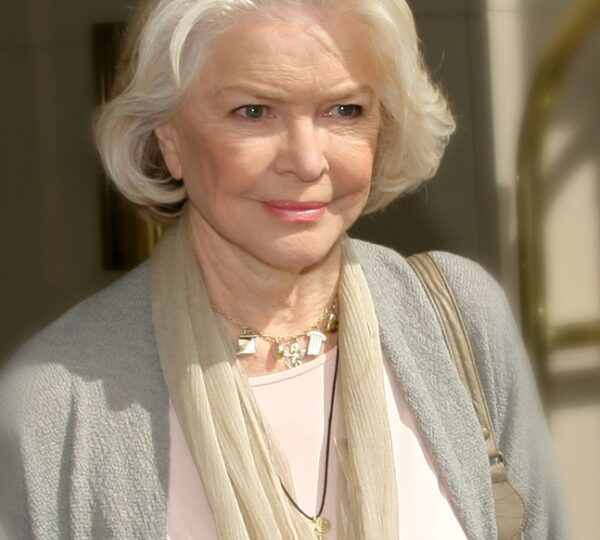
For part of her early career, she was credited as Ellen McRae. She eventually became Ellen Burstyn after her marriage to actor Neil Nephew, who also adopted the surname Burstyn. By the end of the 1960s, the name Ellen Burstyn had become her permanent professional identity. The changes in her name have sometimes been described in sensational terms, but they are more accurately understood as part of a long journey from an uncertain young performer to an actress with a clear sense of purpose.
One of the most important developments in Burstyn’s professional life was her association with the Actors Studio in New York. She studied acting with Lee Strasberg, whose approach encouraged performers to explore emotional memory, concentration, and the psychological reality of a character. Burstyn joined the Actors Studio in the 1960s and later became one of its leading figures. Her connection to the organization would extend far beyond her years as a student; she eventually became one of its co-presidents and helped support future generations of actors.
Her decision to deepen her training reflected an important realization. Physical appearance might create opportunities, but it could not guarantee a lasting career. Burstyn understood that an actress who depended exclusively on youth or beauty could find her opportunities narrowing with age. She therefore concentrated on developing the skills that would allow her to play emotionally demanding characters throughout her life. That choice became one of the foundations of her extraordinary professional longevity.
In a recent interview, Burstyn recalled an early period in Hollywood when she recognized that the career being offered to her was not the one she wanted. She chose to return to New York and pursue more serious dramatic training rather than remain limited to glamorous or decorative roles. That decision helped move her toward the complex performances for which she later became known.
The Long Road to Recognition
By the beginning of the 1970s, Burstyn had already spent many years working without becoming a major star. Her experience demonstrates that careers in entertainment are not always built through sudden discovery. She had worked in modeling, dance, theatre, live television, and episodic programs before receiving the film roles that transformed her professional life. Instead of being an overnight success, she was an experienced performer who was finally given material equal to her abilities.
She appeared in Tropic of Cancer, the 1970 film adaptation of Henry Miller’s novel, and also worked with director Paul Mazursky in Alex in Wonderland. These projects contributed to her growing visibility, but the major breakthrough came with Peter Bogdanovich’s The Last Picture Show, released in 1971. Set in a declining Texas town, the film explored loneliness, disappointment, sexuality, and the passage from youth into adulthood. Burstyn played Lois Farrow, a woman whose frustrations and compromises were revealed gradually rather than explained through simple dialogue.
Her performance in The Last Picture Show earned her an Academy Award nomination for Best Supporting Actress. The recognition marked a decisive turning point. Burstyn was no longer simply a dependable television performer or supporting actress; she had become one of the most compelling dramatic talents of her generation. The role also established a pattern that would continue throughout her career. She was particularly effective when playing women whose strength existed alongside fear, regret, vulnerability, or uncertainty.
The success of The Last Picture Show was followed by a role that would introduce Burstyn to an even larger international audience. In William Friedkin’s The Exorcist, released in 1973, she played actress and mother Chris MacNeil. The story follows Chris as she desperately seeks help for her daughter Regan, whose increasingly disturbing condition appears to have no ordinary medical explanation. Although the film became famous for its supernatural imagery, Burstyn’s performance gave the story its emotional foundation.
The Human Center of The Exorcist
Burstyn’s portrayal of Chris MacNeil is powerful because she does not initially play the character as someone living inside a horror story. Chris begins the film as a capable, affectionate, working mother. Her fear develops gradually as doctors and specialists fail to explain what is happening to her daughter. Burstyn’s performance makes the audience understand the helplessness of a parent who is willing to consider any possibility if it might save her child.
The production of The Exorcist was physically and emotionally demanding. Burstyn has discussed an incident during the filming of a scene in which her character is thrown backward. She was attached to a harness, and the force of the movement caused a painful injury. Her visible reaction in the scene was connected to real physical pain. The episode has become one of the best-known stories from the film’s production and has contributed to ongoing discussions about safety and directorial methods on movie sets.
It is important, however, not to reduce Burstyn’s contribution to the story of an injury. Her performance was carefully structured and emotionally precise. She had to guide the audience through disbelief, frustration, exhaustion, terror, and desperate hope. Without a believable performance from the actress playing Regan’s mother, the film’s most extreme events might have felt disconnected from ordinary human experience. Burstyn made the supernatural story feel painfully personal.
The Exorcist became a cultural phenomenon and received major awards recognition. Burstyn was nominated for the Academy Award for Best Actress for her performance. The nomination followed her supporting-actress nomination for The Last Picture Show, confirming that her rise was not based on a single successful role. In only a few years, she had become one of the most important actresses working in American film.
The public reaction to The Exorcist was unusually intense. Audiences reportedly screamed, fainted, left theaters, and returned to see the film again. Burstyn later recalled being surprised by the scale of the response. Yet despite the controversy and attention surrounding the film, she continued searching for roles grounded in human experience rather than trying to repeat its commercial formula.
Fighting for Alice Doesn’t Live Here Anymore
Burstyn’s next major achievement came with Alice Doesn’t Live Here Anymore, released in 1974 and directed by Martin Scorsese. The film follows Alice Hyatt, a recently widowed mother who travels with her young son while trying to rebuild her life and pursue her ambition of becoming a singer. Alice is neither an idealized heroine nor a helpless victim. She is sometimes impulsive, frightened, funny, angry, hopeful, and uncertain about what kind of future she can create.
Burstyn played an important role in bringing the project to the screen. After becoming established enough to influence the development of her films, she looked for a story centered on a woman’s life and choices. She wanted a character who could exist as a complete human being rather than merely serving as a wife, girlfriend, or supporting figure in a male character’s journey. The project gave her an opportunity to combine humor and drama while presenting the difficulties of single motherhood with unusual honesty.
Martin Scorsese was still relatively early in his directing career when he became involved. Burstyn supported the choice because she believed he could bring emotional truth and energy to the material. Their collaboration produced a film that felt different from many conventional Hollywood stories about women. Alice’s journey does not offer easy answers. Her desire for independence exists alongside her need for companionship, financial stability, and a safe environment for her son.
Burstyn’s performance earned her the Academy Award for Best Actress. At the 47th Academy Awards, she won over a field that included Diahann Carroll, Faye Dunaway, Valerie Perrine, and Gena Rowlands. The Academy’s official record confirms her victory for playing Alice Hyatt in Alice Doesn’t Live Here Anymore.
Her Oscar victory represented far more than a glamorous career milestone. It confirmed the value of the artistic choices she had made years earlier. She had refused to rely only on appearance, returned to serious study, worked through years of small roles, and fought for stories in which women were allowed to be complicated. The award recognized one performance, but it also reflected a long process of professional and personal development.
A Historic Year on Stage and Screen
The year 1975 became one of the most significant of Burstyn’s career. In addition to receiving the Academy Award for Alice Doesn’t Live Here Anymore, she won the Tony Award for Best Actress in a Play for Same Time, Next Year. The play, written by Bernard Slade, follows two people who meet once each year over several decades while continuing to live separate lives with their respective families.
Burstyn’s role required her to show the evolution of a woman across a long period of time. The character changes emotionally, socially, and physically as the years pass. Rather than portraying aging as a simple change in makeup or costume, Burstyn conveyed the accumulation of experience. Her performance demonstrated the control and consistency she had developed through years of theatre and screen work.
The official Tony Awards records list Burstyn as the 1975 winner in the category of Actress in a Leading Role in a Play for Same Time, Next Year. She became one of the relatively few performers to win both a Tony and an Oscar in the same year.
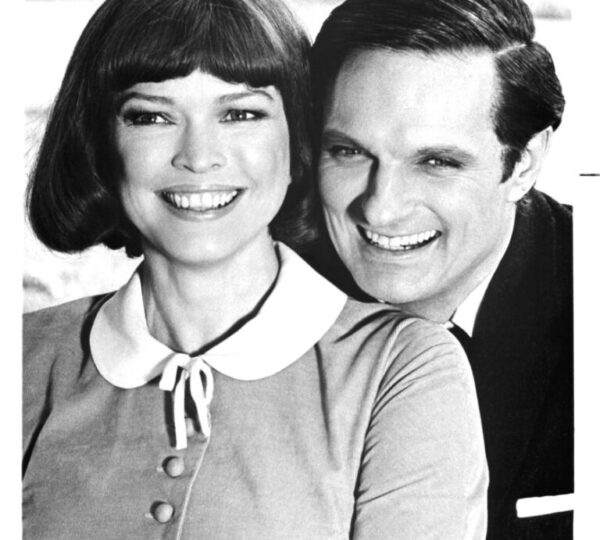
She later reprised the role in the 1978 film adaptation opposite Alan Alda. Their performances depended on chemistry, timing, humor, and an ability to suggest years of shared history. The story’s central relationship is morally and emotionally complicated, but the actors avoided reducing their characters to stereotypes. Burstyn’s work again demonstrated her ability to make imperfect people understandable without presenting every choice they make as admirable.
Success Built on Preparation
By the middle of the 1970s, Burstyn had achieved a level of recognition that would have seemed unlikely during her years as a young dancer and model. Yet the qualities that produced her success had been developing for decades. She had learned to survive uncertainty, adapt to different professional environments, study human behavior, and continue working even when recognition was slow to arrive.
Her story is sometimes presented as a dramatic transformation from a shy young woman into a fearless Hollywood star. The reality is more gradual and more meaningful. Confidence did not simply appear. It developed through work, training, difficult choices, professional disappointments, therapy, reflection, and experience. Burstyn did not erase the vulnerable parts of herself; she learned how to use emotional sensitivity as part of her craft.
That sensitivity allowed her to portray women who felt real rather than symbolic. Her characters could be strong without being invulnerable, frightened without being weak, and flawed without losing the audience’s sympathy. This complexity became one of her defining qualities as an actress.
The awards were important, but they were not the end of her development. In the decades that followed, Burstyn would deliver acclaimed performances in films such as Resurrection, Same Time, Next Year, and Requiem for a Dream. She would also build a substantial television career, win Emmy Awards, serve the acting community through leadership roles, and continue performing well into her nineties.
Behind those achievements, however, were painful personal experiences that Burstyn eventually chose to discuss in her own memoir and interviews. Her marriages, her inability to have biological children after a medical trauma she described publicly, and the violence and stalking she said she experienced during and after one marriage all formed part of her life story. Those subjects require careful language because they concern trauma, mental illness, reproductive health, and abuse.

