
For decades, Senator Mitch McConnell has been one of the most influential figures in American politics. Serving Kentucky in the United States Senate since 1985, he has played a central role in shaping Republican policy and has become one of the longest-serving senators in U.S. history. Throughout his career, McConnell has earned a reputation as a disciplined strategist and experienced legislator, leading Senate Republicans through some of the nation’s most significant political battles. However, in recent years, public attention has increasingly focused not only on his political legacy but also on his health.
The latest chapter began in mid-June 2026, when McConnell was admitted to a hospital in Washington, D.C. Although his office confirmed that he was receiving medical care, officials initially released only limited information about the circumstances surrounding his hospitalization. As days turned into weeks, questions continued to grow because no detailed explanation of his condition or treatment was made public. While his staff repeatedly emphasized that the senator was improving, the lack of additional information fueled widespread media interest and speculation.
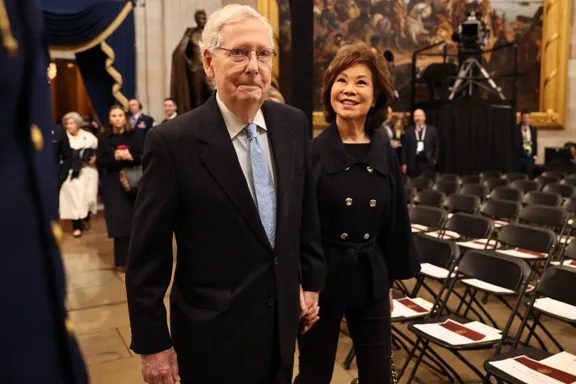
According to statements released by McConnell’s office, the senator remained actively involved in official matters despite his hospitalization. His staff said he continued communicating with aides on both Kentucky-related issues and Senate business while Congress was out of session. The office also expressed appreciation for the many messages of support received from colleagues, constituents, and members of the public. Although those updates reassured supporters that his condition was improving, they did not provide specific medical details regarding the illness that required hospitalization.
As journalists sought additional information, attention turned to emergency communications recorded on the morning of June 14. According to reporting by The New York Times, emergency dispatch records showed that medical personnel were sent to an address associated with Senator McConnell in Washington, D.C. The published timeline indicated that dispatchers received a report involving an unconscious individual before emergency responders arrived on the scene. During the following several minutes, communications referenced CPR being performed as well as a possible cardiac emergency.
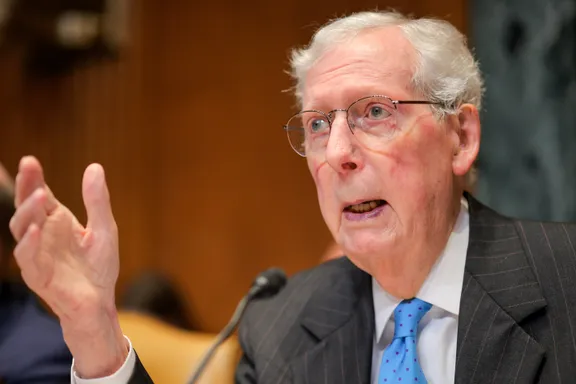
Importantly, the emergency recordings did not identify the individual by name, and no public authority confirmed that the person receiving treatment was Senator McConnell. His office declined to comment on the recordings when asked by reporters. Because of that, the published dispatch information remained only one element of the broader reporting surrounding his hospitalization rather than official confirmation of the senator’s medical condition. At the same time, several lawmakers and former advisers publicly stated that they had spoken with McConnell during his recovery, suggesting that he remained able to communicate with colleagues.
While questions surrounding McConnell’s health continued, another aspect of the story attracted increasing public attention. At the time of his hospitalization, his wife, Elaine Chao, was traveling in China on what her representatives later described as a long-planned visit connected to her family’s philanthropic activities. Chao, who previously served as U.S. Secretary of Transportation and Secretary of Labor, had departed the United States on June 12, two days before McConnell entered the hospital.
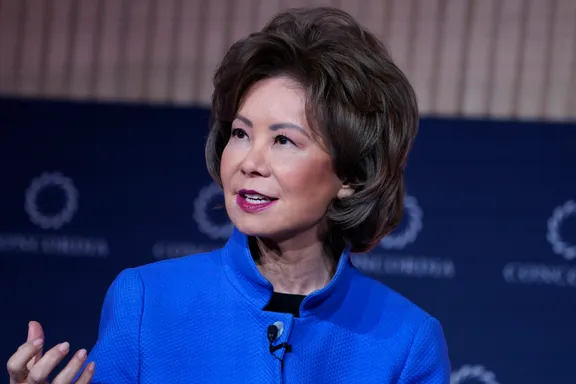
During her visit, Chao reportedly participated in meetings with several officials, including Chinese Vice President Han Zheng. According to information released following the meeting, discussions focused on maintaining stable relations between the United States and China, expanding trade cooperation, and encouraging continued cultural and educational exchanges. Chao also reportedly expressed support for practical cooperation between the two countries despite ongoing geopolitical differences. Her diplomatic experience and longstanding involvement in international affairs made such meetings consistent with her previous public roles.
However, because McConnell remained hospitalized in Washington, some observers questioned why Chao did not immediately return to the United States. As public curiosity increased, her representatives issued a statement explaining the circumstances surrounding the trip. According to the spokesperson, the visit had been scheduled well in advance and was connected to family philanthropic work rather than government business. The representative also stated that, based on the information available to Chao at the time, McConnell’s medical condition did not require her immediate return home.
The spokesperson further explained that Chao remained in communication during the trip and ultimately returned to the United States after completing her planned commitments. Her office did not publicly discuss private conversations between the couple or provide additional details regarding McConnell’s treatment. Instead, representatives emphasized that decisions surrounding the trip had been made based on medical information available during the senator’s hospitalization.
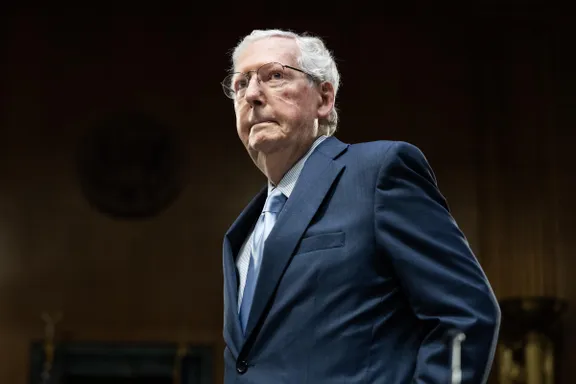
Although the circumstances surrounding the June hospitalization remained largely private, the incident occurred against the backdrop of several highly publicized health challenges McConnell has experienced over recent years. Those previous episodes had already prompted renewed public discussion about his health, his demanding responsibilities as a senior senator, and the physical challenges associated with serving in public office into one’s eighties. As a result, many observers viewed the latest hospitalization not as an isolated event but as part of a broader story that has unfolded over several years.
The June 2026 hospitalization was not the first time Mitch McConnell’s health had become the subject of national attention. Over the past several years, the Kentucky senator has experienced a series of highly publicized medical incidents that have prompted discussions about both his well-being and the demanding nature of serving in public office. While McConnell has consistently returned to work following previous health setbacks, each episode has attracted significant public interest because of his long tenure and influential position in the United States Senate.
Earlier in February 2026, McConnell was briefly hospitalized after experiencing flu-like symptoms. According to statements released by his office at the time, he sought medical evaluation “out of an abundance of caution.” His spokesperson explained that physicians expected him to make a full recovery and emphasized that the senator remained in regular contact with his staff throughout the evaluation. That hospitalization was relatively short, and McConnell soon resumed his Senate responsibilities, although it once again highlighted the close attention surrounding his health.
Public concern had already increased several years earlier following two widely reported incidents in 2023 during which McConnell briefly paused while speaking at public events. The first occurred in July during a news conference at the U.S. Capitol, when he suddenly stopped speaking for approximately twenty seconds before colleagues approached to assist him. After a short break, McConnell returned to answer reporters’ questions and later told journalists that he felt fine. Although the moment was brief, video footage quickly spread across news outlets and social media, leading to widespread discussion about his condition.
A second similar episode occurred about a month later while McConnell was speaking with reporters in Kentucky. During that appearance, he again paused unexpectedly after being asked a question about future political plans. His staff later explained that he had experienced a brief moment of lightheadedness and would consult his physician as a precaution. While his office continued to reassure the public that he remained capable of fulfilling his duties, the repeated incidents naturally generated additional questions regarding his health and future in public service.
Those episodes followed another significant medical event in March 2023, when McConnell suffered a concussion after falling during a private dinner at a Washington, D.C., hotel. The fall required hospitalization and several weeks away from the Senate while he recovered. Medical experts often note that recovery from concussions can be especially challenging for older adults, making the incident an important part of McConnell’s recent medical history. Nevertheless, after completing rehabilitation, he returned to the Senate and resumed his leadership responsibilities.
Years before that accident, McConnell also underwent surgery after fracturing his shoulder in a fall at his Kentucky home in 2019. Although the injury required an operation and rehabilitation, he recovered successfully and returned to work. These incidents illustrate the physical challenges that can accompany aging, particularly for individuals maintaining demanding schedules involving frequent travel, long working hours, and high-pressure responsibilities.
Long before entering politics, McConnell overcame another serious health challenge that shaped much of his life. At just two years old, he contracted polio, a disease that affected part of his left leg years before an effective vaccine became widely available. McConnell has spoken publicly about that experience, crediting his mother with helping him recover through an intensive physical therapy routine performed several times each day. Doctors initially warned the family that walking again might be difficult, but after years of treatment and determination, he regained his mobility. McConnell has often described that early experience as one that taught him resilience, discipline, and perseverance—qualities that later became central to his political career.
Despite the medical challenges he has faced, McConnell has continued serving in the Senate for more than four decades. Since first taking office in January 1985, he has become one of the longest-serving senators in American history. Throughout his career, he has held numerous leadership positions, including Senate Majority Leader and Senate Minority Leader, playing a significant role in judicial confirmations, legislative negotiations, budget debates, and foreign policy discussions. Supporters frequently credit him with helping shape modern Republican strategy, while critics have often challenged many of his political decisions. Regardless of political opinion, few dispute the influence he has exercised during his years in Congress.
In 2025, McConnell announced that he would not seek reelection in 2026, confirming that his current Senate term would be his last. Making the announcement on his 83rd birthday, he reflected on the trust placed in him by Kentucky voters over seven consecutive elections. He described representing the Commonwealth of Kentucky as the honor of a lifetime and expressed gratitude for the opportunity to serve for more than forty years. The announcement marked the beginning of the final chapter of one of the longest and most consequential careers in modern American politics.
For now, however, political discussions have largely taken a back seat to concerns about his recovery. McConnell’s office continues to report that he is improving while remaining engaged with staff on legislative and constituent matters. At the same time, many of the specific medical details surrounding his June hospitalization have not been publicly disclosed, leaving some questions unanswered. As he continues recovering, supporters, colleagues, and political observers alike remain focused on his health while reflecting on the remarkable career of a senator whose influence has helped shape American politics for more than four decades.
