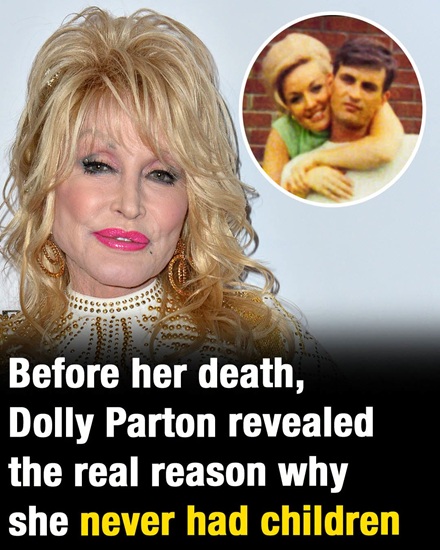
Dolly Parton, one of the most celebrated figures in country music history, died on August 25, 2026, at the age of 80. Her representatives said she died after what they described as a brief battle with cancer, although the specific type of cancer was not publicly disclosed. The announcement led to tributes from musicians, actors, friends, charitable organizations and fans around the world. Parton had spent more than six decades building a career that reached far beyond country music.
She became known as a singer, songwriter, actor, businesswoman and philanthropist. Her death came more than a year after the passing of her husband, Carl Dean, with whom she had shared nearly six decades of marriage. Parton’s career was extraordinary not simply because of her record sales or awards. She became one of those rare entertainers whose public image was recognized by people who did not necessarily follow the genre in which she began.
Her songs crossed country, pop and other musical traditions, while her personality made her a familiar presence in film, television and interviews. She sold more than 100 million records worldwide and received numerous major honors throughout her career. She was also inducted into institutions including the Country Music Hall of Fame and the Rock & Roll Hall of Fame. Yet music was only one part of the legacy she left behind. A question that followed Parton for decades concerned her personal life.
She and Carl Dean remained married for almost 60 years, but they never had biological children. Parton addressed the subject openly on several occasions and made clear that there was no single dramatic explanation. Her reflections involved career demands, independence, personal circumstances and the way she eventually interpreted the direction her life had taken. As she grew older, she came to believe that not having children of her own gave her opportunities to help other children on a much larger scale. That belief became closely connected with one of her most important charitable projects.
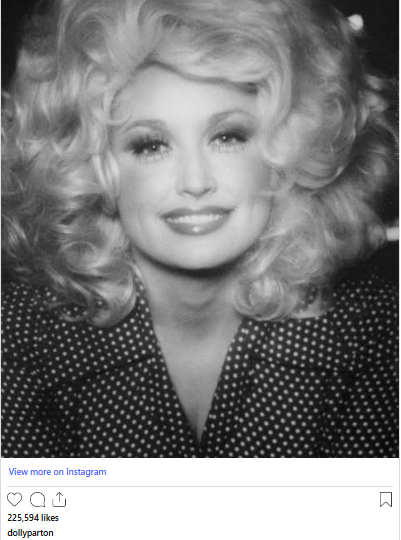
To understand Parton’s view of family, it helps to look at the environment in which she grew up. She was born on January 19, 1946, in East Tennessee and was one of 12 children. Her family had very limited financial resources, and Parton frequently spoke about the hardship of her childhood without portraying it as a life without warmth or happiness. Music, storytelling, humor and faith were all important parts of the household. Her parents became major influences on both her creative work and the values she carried into adulthood. Many of her later songs were shaped by memories of those early years.
Music appeared in Parton’s life at a very young age. Members of her extended family played instruments and sang, and she quickly became fascinated by performing. She began appearing on local radio and television while still a child and was writing songs long before she reached adulthood. By the age of 13, she had already performed at the Grand Ole Opry. Those opportunities helped reinforce her belief that music could become more than a hobby. Even before leaving school, Parton was thinking seriously about building a professional career.
After graduating from high school in 1964, Parton moved to Nashville. She was 18 years old and determined to pursue songwriting and performing. The move placed her in the center of the country music business at a time when success was far from guaranteed. Parton later described herself as someone who believed strongly that the future she imagined was possible. She brought talent, determination and an unusually strong sense of personal identity with her. Nashville eventually became the place where both her professional and personal lives changed permanently.
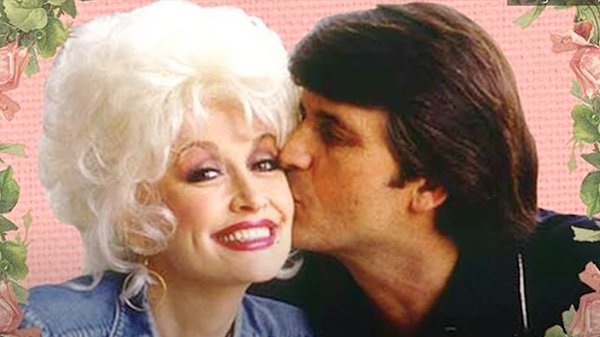
It was also there that she met Carl Dean. The two encountered each other shortly after Parton arrived in Nashville. Dean was considerably more private than the woman who would eventually become one of the most recognizable entertainers in the world. That contrast became an important part of their relationship. While Parton built a highly public career involving tours, cameras, interviews and award shows, Dean preferred a quieter life away from the entertainment industry. Parton repeatedly said that this independence helped their marriage remain strong.
The couple married in May 1966 in Ringgold, Georgia. Their wedding was small and private, particularly when compared with the enormous level of fame Parton would later achieve. Her mother was present, and the ceremony was deliberately kept away from the Nashville publicity surrounding Parton’s career. Her record label had reportedly preferred that she wait before marrying, but Parton and Dean did not want to postpone their plans. The marriage ultimately lasted until Dean’s death in March 2025.
Dean rarely accompanied Parton to major public events. Parton often joked about his dislike of red carpets, award ceremonies and celebrity attention. Rather than interpreting that attitude as a lack of support, she viewed his privacy as part of the balance between them. She could return from an enormous performance or television appearance to a relationship that remained mostly outside the entertainment business. The arrangement allowed both of them to maintain separate identities while remaining together for decades.
In 2016, Parton and Dean celebrated their 50th wedding anniversary by renewing their vows. The event reflected the importance Parton placed on their long friendship as much as the marriage itself. She often described Dean as someone with whom she could laugh and be completely herself. Despite spending long periods apart because of her work, they maintained a relationship that survived the demands of fame. Their marriage eventually lasted close to 59 years.
Children, however, never became part of their household.
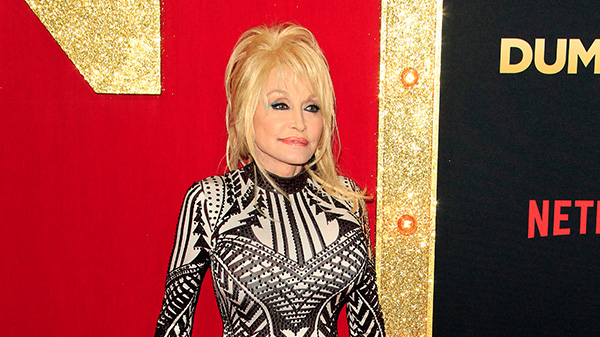
Parton did not claim that she had never imagined becoming a mother. Over the years, she spoke about wondering what children with Dean might have looked like and what their personalities might have been. The possibility existed in her mind. But life gradually moved in another direction, and parenthood did not become part of their story. Parton eventually reached a point where she looked at that outcome without describing herself as incomplete.
Her career played a major role in the way she interpreted the situation. Parton worked constantly for decades. Recording sessions, songwriting, concerts, film productions, television appearances, business projects and charitable commitments required enormous amounts of time. She later acknowledged that professional success at that level involved sacrifices. She believed that becoming a mother would likely have changed the way she approached her career because she would have wanted to give children a great deal of attention.
That was a personal conclusion, not a claim that motherhood and professional success are incompatible. Parton was speaking specifically about her own personality and the intensity with which she approached work. She often suggested that if she had become a mother, she might not have been able to pursue every opportunity that eventually became part of her career. Her schedule involved years of travel and long periods away from home. The freedom created by not raising children became part of what allowed her to continue working on such a large scale.
Parton also interpreted her childlessness through her faith. In a conversation with Oprah Winfrey, she explained that she had eventually come to believe she may not have been meant to have children of her own. Instead, she felt that she could direct her energy toward helping children more broadly. She connected that interpretation directly with charitable projects that became central to her later life. What had once been a personal question eventually became part of how she understood her larger purpose.
The strongest example was the Imagination Library.
Parton launched the program in 1995 in her home region of Tennessee. The idea was to provide young children with free books delivered directly to their homes. Families did not have to meet an income requirement in order for eligible children in participating areas to receive them. Parton wanted children to have access to books before starting school and believed early reading opportunities could make a lasting difference. The program quickly grew beyond its original community.
Her father was one of the primary inspirations behind the project. He had not learned to read and write, and Parton saw how that limitation affected his life. She wanted the program to honor him while creating opportunities for children that he had not received. Parton later said that her father became extremely proud of the project. She recalled that he especially enjoyed hearing children refer to her as the “Book Lady.”
That title meant something different from the awards associated with her music career.
The Imagination Library eventually expanded dramatically. By 2026, more than 300 million books had been distributed through the program. It reached children far beyond Tennessee and became an international literacy initiative. Participating children could receive age-appropriate books from birth until age five, depending on the program available in their area. What began as one regional idea eventually became one of the most recognizable literacy programs associated with a major entertainer.
This expansion helps explain Parton’s comments about seeing children more broadly as part of her life. She never suggested that donating books made her the literal mother of the children receiving them. Instead, she believed the absence of biological children gave her time and freedom to create something that could benefit children in many families. Her words reflected a sense of responsibility rather than a claim to replace parenthood.
Her charitable work did not stop with literacy.
Parton contributed to healthcare, disaster relief, scholarships and community programs. During the COVID-19 pandemic, she donated $1 million to Vanderbilt University Medical Center for research connected with the development of the Moderna vaccine. The donation received international attention, although Parton herself remained careful not to present herself as a scientist or medical expert. She provided financial support while researchers performed the scientific work.
Her philanthropy was also especially visible in Tennessee. Parton continued to maintain a strong connection with the region where she grew up even after becoming internationally famous. Through the Dollywood Foundation and related projects, she supported communities affected by disasters and offered assistance through educational and charitable initiatives. Her success became tied to the area rather than replacing her connection with it.
Parton’s business career also created another connection with East Tennessee. Dollywood developed into a major tourism destination after Parton became involved with the existing attraction in the 1980s. The park expanded over time and became part of a larger entertainment and hospitality business. Parton frequently spoke about the jobs and economic activity connected with the project. She seemed particularly proud that success allowed her to invest in the area that shaped her childhood.
Before any of that, however, songwriting remained the foundation of her career.
Parton initially established herself in Nashville partly through her ability to write songs. Her career grew significantly after she joined The Porter Wagoner Show. Porter Wagoner was already a successful country performer, and appearing beside him introduced Parton to a much wider television audience. They recorded successful duets together, and Parton became increasingly recognizable. The partnership played a major role in her rise, even though she eventually wanted to build a career independent from Wagoner.
That decision led to one of her most famous songs.
Parton wrote “I Will Always Love You” while ending her professional partnership with Wagoner. The song expressed affection and gratitude while making clear that she needed to move in a different direction. Her own recording became successful, but the composition later achieved enormous worldwide recognition when Whitney Houston recorded it for The Bodyguard. The song demonstrated the lasting value of Parton’s writing beyond her own performances.
“Jolene” became another defining composition.
The name came from a young fan Parton met while signing autographs. She liked the sound of the name and repeated it until she realized it could become a song. The emotional idea behind the lyrics came from Parton’s joking concern about a woman who appeared particularly interested in Carl Dean. Parton transformed that situation into a song built around vulnerability rather than anger.
The result became one of the most enduring songs in country music.
Artists from numerous genres later recorded “Jolene.” The song continued reaching new audiences long after its original release. Its simple story and emotional directness allowed performers with very different musical styles to reinterpret it. That longevity became characteristic of many of Parton’s best-known compositions.
Parton wrote thousands of songs throughout her life. She often said titles or melodies came to her during ordinary moments, and songwriting remained a constant habit even when she was busy with other projects. Her material ranged from romantic songs to humorous compositions, spiritual music and stories about poverty or family. Her childhood in the Tennessee mountains repeatedly provided inspiration.
“Coat of Many Colors” became one of the clearest examples. The song was based on a childhood memory involving a coat her mother made from pieces of fabric. Parton used the story to explore poverty, family love and dignity. Rather than hiding the difficult financial circumstances of her childhood, she turned them into material that listeners could understand emotionally. That ability helped distinguish her as a songwriter rather than simply a performer.
Her chart success eventually became enormous.
Parton achieved 25 No. 1 country singles and numerous Top 10 albums. Her career stretched across decades in which the music industry changed repeatedly. She adapted without completely abandoning the characteristics that made her recognizable in the first place. This allowed her to maintain a country identity while reaching audiences far outside traditional country music.
Songs such as “Here You Come Again” helped broaden her pop audience. “9 to 5” became another major crossover hit and was connected to the film in which Parton starred alongside Jane Fonda and Lily Tomlin. The movie gave her acting career a major boost, while the song became one of her best-known recordings. It also demonstrated that Parton could move comfortably between songwriting, performance and film.
Additional acting roles followed.
She appeared in Steel Magnolias, The Best Little Whorehouse in Texas, Rhinestone and other projects. Acting never replaced music as the center of her career, but it added another dimension to her public identity. Her natural humor and distinctive personality worked well on screen. Audiences who knew her from records began encountering her in completely different settings.
Parton’s appearance became part of that public identity as well. Large hair, bright clothing, rhinestones and elaborate makeup were deliberately exaggerated features of the image she created. She frequently joked about them herself. Rather than becoming defensive when people discussed her style, Parton often turned the conversation into comedy. That self-awareness allowed her to control much of the way her image was discussed.
Behind the humor was a particularly careful businesswoman.
Parton understood the importance of ownership and publishing rights. One famous example involved Elvis Presley wanting to record “I Will Always Love You.” Parton ultimately declined the arrangement after learning that it would require giving up a substantial part of the publishing rights. She later acknowledged how difficult the decision had been because she admired Presley. Financially, however, retaining ownership became extremely important when Whitney Houston’s recording became a massive international success.
The story became one of many examples demonstrating that Parton understood the business side of creativity. Her songs were not simply performances. They were intellectual property capable of remaining valuable for decades. Protecting that ownership helped create wealth that Parton later used in business ventures and charitable projects.
Her awards reflected the scale of her career. Parton earned 10 Grammy Awards and received a Lifetime Achievement Award from the Recording Academy. She accumulated dozens of Grammy nominations and numerous additional honors from the country music industry and other organizations. Her induction into the Country Music Hall of Fame recognized her central place in the genre, while her later induction into the Rock & Roll Hall of Fame demonstrated the wider reach of her influence.
Parton’s popularity was never explained only by statistics.
Her humor became almost as important as her voice.
She was comfortable making jokes about herself and frequently appeared uninterested in presenting a carefully serious celebrity persona. That warmth helped audiences feel that the enormous success had not separated her completely from the personality associated with her Tennessee upbringing. She could discuss major business deals and then make a joke about her hair moments later.
Parton also generally avoided turning herself into a partisan political figure. She spoke about kindness, equality and helping people but frequently resisted pressure to become involved in political arguments. That approach allowed people with widely different backgrounds to feel connected with her. Her music and philanthropy often became spaces where those differences mattered less.
The question of children therefore belongs within a much larger story about the life she chose to build.
Parton gave much of her time to work.
She traveled constantly.
She wrote and recorded music.
She performed internationally.
She acted.
She managed businesses.
She supported charitable projects.
Eventually, she looked back and believed that becoming a parent might have changed the scale of many of those commitments.
She did not describe one life as morally superior to another.
She simply acknowledged the tradeoffs involved.
Her relationship with Carl Dean also gave her freedom that worked unusually well for both of them. Dean maintained his independence while Parton pursued an extremely demanding career. Neither appeared interested in forcing the other into a lifestyle that did not suit them. That dynamic may have been especially important in a marriage where one partner became internationally famous.
Parton had many younger relatives and often spoke warmly about nieces and nephews. She was also famously the godmother of Miley Cyrus. Her relationship with Cyrus developed into a combination of family connection, mentorship and friendship. Cyrus repeatedly described Parton as an important influence on her life and career. Their bond became another example of Parton occupying a nurturing role without being a biological mother.
After Parton’s death, Cyrus publicly remembered her with great affection.
The relationship had existed long before Cyrus built her own successful career. Parton offered advice about maintaining individuality and surviving the pressures associated with fame. She could therefore provide a type of guidance that came from decades of experience in the entertainment industry. That mentorship became another part of the broader way Parton influenced younger generations.
Carl Dean’s death in March 2025 marked one of the most difficult periods of Parton’s later life.
She had known him since she was 18.
Their marriage had lasted almost six decades.
Dean had known Dolly before the awards, films, theme parks and international fame.
His death removed the person connected with nearly every stage of her adult life.
Parton later spoke about the grief and acknowledged that caring for Dean had led her to pay less attention to some of her own health concerns. In the months before her death, she experienced health problems that affected some planned appearances and projects. She continued working, but it became clear that her health had become more difficult. Her representatives ultimately announced after her death that she had faced a brief battle with cancer.
The specific type of cancer remained private.
That distinction matters because it would be inaccurate to speculate about her diagnosis, treatment or symptoms. Parton had discussed other health problems publicly in the past, and not every issue should automatically be connected to the cancer mentioned after her death. Responsible reporting requires separating confirmed information from assumptions.
Even during her final period, Parton continued looking toward future projects.
That was consistent with the personality people had seen for decades.
She rarely seemed interested in retirement.
Creative work remained part of her daily life long after she had already achieved enough success to stop working entirely.
Her death therefore felt especially sudden to many fans.
For generations of listeners, Dolly Parton had simply always been present.
Her career had begun before many current fans were born.
Parents introduced her songs to children.
Older recordings continued reaching new listeners.
Artists kept covering her compositions.
The Imagination Library continued sending books.
Dollywood continued welcoming visitors.
Her influence appeared in several parts of culture simultaneously.
That is why her legacy cannot be summarized through one song or one accomplishment.
There is the songwriter behind “Jolene,” “I Will Always Love You,” “Coat of Many Colors” and countless other compositions.
There is the performer who became one of country music’s biggest stars.
There is the actor audiences saw in films such as 9 to 5 and Steel Magnolias.
There is the businesswoman associated with Dollywood.
There is also the philanthropist responsible for a literacy program that distributed more than 300 million books.
For many families, the Imagination Library may ultimately become the most personal part of that legacy. Children can receive books from the program without knowing anything about Parton’s recording career. A family may remember her first as the person whose organization mailed books into their home. That impact operates differently from fame.
It also makes Parton’s comments about not having children especially meaningful.
She did not become a biological mother.
She did not pretend that philanthropy was the same thing.
But she believed the life she was given allowed her to help children in another way.
That understanding gave her peace with a path that could have been very different.
There was no single moment when Dolly Parton simply chose fame instead of motherhood.
Life was more complicated than that.
She and Dean considered children.
Her career expanded rapidly.
The demands of work grew.
Circumstances changed.
Years passed.
Parton eventually looked back and understood that not raising children had given her unusual freedom.
She used that freedom extensively.
It allowed her to travel.
It allowed her to spend extraordinary amounts of time writing and recording.
It allowed her to take on business and film opportunities.
It later allowed her to direct attention toward large-scale charitable efforts.
In Parton’s own interpretation, all those elements became connected.
She came from a family with 12 children and never lacked experience with large families.
She remained close with relatives and younger people in her life.
She supported literacy projects specifically designed for children.
She mentored younger performers.
The absence of biological children did not mean children were absent from her world.
This is why the question “Why did Dolly Parton never have children?” does not have a dramatic hidden answer.
Her own explanations are already sufficient.
She recognized the sacrifices required by her career.
She valued the independence she and Carl Dean shared.
She eventually accepted the life she had instead of dwelling endlessly on the life she might have had.
And she believed that perhaps not having children of her own allowed her to help many others.
Her father’s reaction to the Imagination Library may have made that realization even more meaningful.
He had struggled with literacy.
His daughter became one of the world’s biggest entertainers.
Yet Parton remembered that he was especially proud when children called her the “Book Lady.”
For her, that pride connected her enormous public success back to the family and childhood from which she came.
The little girl raised in the Tennessee mountains eventually created a program that sent hundreds of millions of books to children.
That achievement outlived the original question of whether she would ever become a mother herself.
It gave her another way to express the affection and responsibility she associated with children.
Parton never suggested that everyone should interpret childlessness the same way.
Her experience belonged to her.
Other people have different reasons for not becoming parents and different emotions surrounding those decisions or circumstances.
Parton simply explained how she came to understand her own life.
By the end of that life, she had accumulated an extraordinary number of achievements.
She had been married to the same man for almost six decades.
She had created songs that crossed generations.
She had built businesses.
She had acted in successful films.
She had donated millions of dollars to charitable causes.
She had helped create a literacy program serving children around the world.
Her death at 80 ended the life behind those accomplishments, but it did not end their impact.
Her recordings remain.
Her songs continue to be performed by other artists.
Dollywood continues operating.
The Imagination Library continues distributing books.
People she mentored continue working.
Those forms of continuation matter because they explain why Parton’s legacy reaches beyond the normal boundaries of a music career.
She did not leave behind biological sons or daughters.
She left behind something much broader.
Songs.
Stories.
Businesses.
Charitable institutions.
Mentorship.
And a literacy project capable of continuing to reach children long after her death.
For Dolly Parton, that became the way she ultimately made sense of the family life she did not have.
She once imagined what children of her own might have looked like.
Later, she looked at the life she had created and decided not to define herself by that absence.
Instead, she focused on what she was able to do.
That perspective remained consistent with much of her public philosophy.
Parton rarely spent long periods publicly regretting roads not taken.
She preferred to focus on opportunities still available.
The same attitude appeared in her approach to songwriting, business, aging and philanthropy.
She kept creating.
She kept working.
She kept giving.
And when she spoke about not having children, she eventually framed the subject through gratitude rather than loss.
Dolly Parton’s death closes an extraordinary chapter in entertainment history.
She lived from January 19, 1946, until August 25, 2026.
Between those dates, she went from a financially struggling childhood in Tennessee to becoming one of the most recognizable entertainers in the world.
The journey involved talent, determination, careful business choices, a long marriage and an enormous amount of work.
It also involved sacrifices.
Parton acknowledged those sacrifices openly.
Time with family and friends was sometimes limited.
Vacations were sacrificed.
Work schedules were relentless.
Motherhood never became part of her life.
But Parton did not allow that one absence to define everything else.
Instead, she built a life in which millions of children encountered her generosity even though none called her their biological mother.
For that reason, the explanation she offered later in life may be the clearest way to understand her perspective.
She believed she had been given freedom to work.
She used that freedom to create.
She used success to give back.
And among the things she was proudest of was a program that placed books into children’s hands.
Dolly Parton never had children of her own.
But by the end of her life, the question was no longer simply about what she had missed.
It was also about what that life allowed her to build.
And in her own telling, helping children through programs such as the Imagination Library became one of the most meaningful answers she ever found.
