
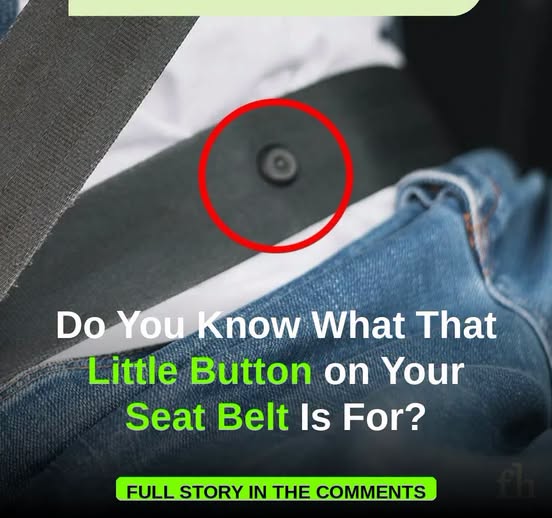
The small plastic piece located on a seat belt strap, often overlooked by drivers and passengers, serves a surprisingly important function in everyday vehicle use. While it may appear to be a minor design detail, this small component plays a key role in ensuring convenience, consistency, and ease of use whenever a seat belt is fastened. Many people only notice it when it breaks or becomes loose, at which point its importance becomes much more obvious. This small part is commonly referred to as a seat belt stop button.
Its main purpose is to hold the metal latch plate, also known as the buckle tongue, in a fixed position on the seat belt webbing. By keeping the latch plate in place, the stop button ensures that it does not slide all the way down toward the floor or seat edge when the belt is not in use. This simple function makes it much easier for drivers and passengers to locate and grab the buckle quickly.
When the stop button is missing or damaged, the seat belt latch plate can slide freely along the strap. This often causes it to fall into inconvenient positions between the seat and the center console or door area. As a result, users may need to search for it each time they buckle up, which can be frustrating and time-consuming, especially during busy or rushed situations.
Beyond inconvenience, a missing stop button can also affect safety behavior indirectly. Seat belts are one of the most important safety systems in any vehicle, designed to reduce injury risk during sudden stops or collisions. Anything that discourages or delays proper seat belt use, even slightly, can have an impact on overall safety compliance. While the stop button itself does not affect the mechanical function of the belt, it supports consistent and easy usage.
For children, elderly passengers, or individuals with limited mobility, a properly positioned latch plate can make a significant difference. When the buckle is always within reach, it reduces difficulty and frustration when fastening the seat belt. This encourages more consistent use, which is essential for maintaining safety for all passengers in a vehicle.
In many cases, replacing a broken seat belt stop button is a simple and inexpensive repair. These small components are widely available as universal replacement parts and are designed to be installed without specialized tools. Most versions are either snap-on or clamp-style, allowing them to be attached directly to the seat belt webbing in a short amount of time.
The installation process typically involves positioning the stop button at the correct height on the seat belt strap so that it holds the latch plate in a convenient location. Once secured, it prevents the buckle from sliding down further while still allowing smooth movement when the seat belt is extended or retracted. This restores the original functionality of the system in a practical and effective way.
Automotive maintenance professionals often recommend addressing small issues like a missing stop button early, rather than ignoring them. Although it may seem like a minor inconvenience, small components in a vehicle contribute to overall usability and driver comfort. Over time, ignoring such details can lead to reduced convenience and a less efficient driving experience.
The seat belt system itself is designed with multiple components working together, including retractors, latch plates, webbing, and anchoring points. Each part has a specific role in ensuring both comfort and safety. The stop button is part of this system’s usability design, helping maintain order and accessibility rather than contributing to crash protection directly.
In addition to convenience, a properly functioning seat belt setup helps reduce distraction while driving. When drivers do not need to search for the buckle, they can focus more quickly on starting their journey. Reducing even small distractions contributes to safer driving habits overall, particularly in busy traffic conditions or when multiple passengers are present.
Manufacturers design seat belts to last for many years under normal use, but small components like stop buttons can wear out or break over time due to repeated handling or pressure. Exposure to heat, sunlight, and general wear can also weaken plastic parts. Because of this, minor repairs or replacements are occasionally necessary to maintain proper function.
Although it is a small component, the seat belt stop button represents an important example of how minor design elements in vehicles contribute to overall user experience. It shows how even the simplest parts of a system are designed with purpose, supporting both safety and practicality in everyday driving.
In conclusion, while often ignored, the seat belt stop button plays a valuable role in keeping the seat belt latch plate in a consistent and accessible position. Its function improves ease of use, supports consistent seat belt wear, and helps reduce small frustrations that can affect daily driving. Replacing a broken or missing stop button is a quick and effective way to restore convenience and maintain proper seat belt usability in any vehicle.

