
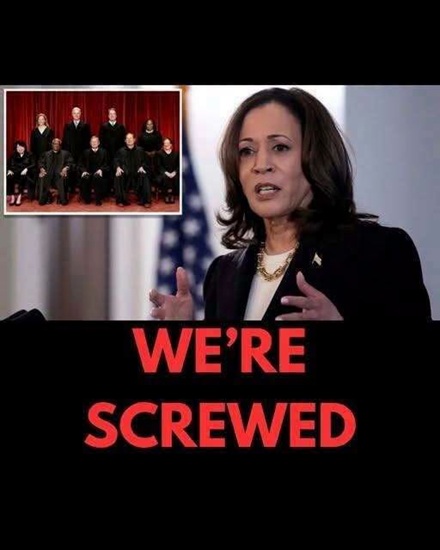
Former Vice President Kamala Harris has recently faced strong political reactions after suggesting that Democrats should consider significant institutional reforms, including the possibility of expanding the Supreme Court and re-evaluating the Electoral College system if they return to power. During a call with the progressive group Emerge, Harris discussed several policy directions. Among them were ideas related to Supreme Court reform, including increasing the number of justices.
She also encouraged continued discussion about broader structural changes within the U.S. political system. In addition, she mentioned the idea of statehood for Puerto Rico and Washington, D.C., as well as renewed debate about how the Electoral College operates in modern elections. Political Strategy and Election System Discussions. In her remarks, Harris emphasized the importance of strategic political planning in response to what she described as aggressive tactics from the opposing side.
She suggested that Democrats should remain active and competitive in an increasingly polarized political landscape. She also referenced ongoing redistricting efforts across several U.S. states. In recent years, both major parties have engaged in drawing and adjusting congressional district maps, often resulting in legal disputes and accusations of partisan advantage. Several Republican-led states have recently updated their maps in ways that could strengthen their position in Congress, while Democratic-led states have also pursued similar efforts where possible.
Harris criticized certain redistricting practices, arguing that they can distort representation and weaken voter influence. Her comments reflect a wider national debate over how electoral districts should be drawn and how fair representation can be ensured.
Republican Reaction to Harris’s Remarks
Her statements quickly prompted strong criticism from Republican leaders, who argued that the proposals were extreme and potentially harmful to democratic institutions. House Speaker Mike Johnson described such ideas as a risky approach that could undermine public trust in the political system.
Other Republican figures also voiced opposition, stating that structural changes to institutions like the Supreme Court should not be used as a response to political disagreement or election outcomes. They warned that such moves could further deepen political divisions in the country.
This response highlights the long-standing disagreement between the two parties over key institutional questions, including judicial structure and electoral systems.
Responses Within the Democratic Party
Not all Democrats supported the focus on institutional reform. Some lawmakers expressed concern that discussions about restructuring government systems may distract from more immediate public priorities.
Certain representatives emphasized that voters are currently more focused on everyday issues such as inflation, healthcare costs, job security, and public services rather than constitutional changes.
This difference in priorities reflects an ongoing internal debate within the Democratic Party about strategy, messaging, and policy focus ahead of future elections.
Wider Context: Redistricting Across the United States
The discussion surrounding Harris’s remarks comes amid continued redistricting activity across the United States. Following census updates and court rulings, many states have revised their congressional district boundaries.
Republican-led states have made adjustments that may improve their electoral performance in upcoming elections, while Democratic-led states have also made changes where legally and politically feasible. These efforts have contributed to ongoing disputes over fairness, representation, and political balance.
Court rulings at both state and federal levels continue to play a significant role in shaping how district maps are drawn and implemented.
Ongoing National Debate Over Political Structure
Beyond the immediate political reactions, the broader issue remains part of a larger national conversation about representation and institutional design. Questions about the Electoral College, congressional districting, and the structure of the Supreme Court continue to generate debate across the political spectrum.
Supporters of reform argue that updates are necessary to reflect modern population distribution and improve democratic fairness. Critics, however, warn that major structural changes could create instability and weaken long-standing constitutional frameworks.
Kamala Harris’s comments have added renewed attention to ongoing debates about political reform in the United States. While some view her remarks as part of a broader discussion on modernization and electoral fairness, others see them as controversial and potentially divisive.
The differing reactions underscore deep political divisions over how American institutions should evolve. As these debates continue, they are likely to remain a central issue in the broader conversation about the future of U.S. democracy.

