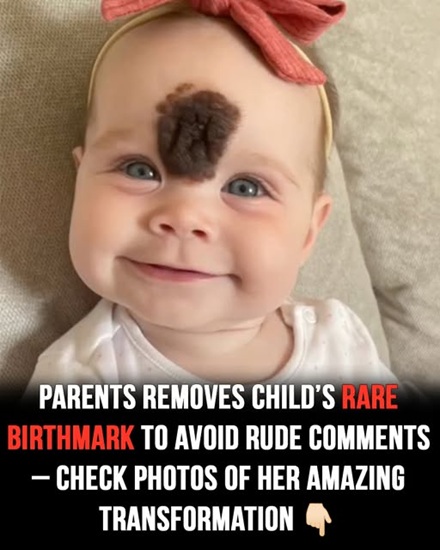
When baby Vienna Brookshaw was born in April 2021 in the United Kingdom, her parents experienced the overwhelming joy that many families feel when welcoming a new child into the world. The moment was filled with excitement, emotion, and relief after months of anticipation. However, shortly after meeting their daughter for the first time, they noticed something unexpected on her tiny face. Vienna had a dark birthmark located in the center of her forehead, positioned directly between her eyebrows.
Although the mark was immediately noticeable, doctors reassured the family that it was not considered dangerous to her physical health. Even with that comforting news, her parents quickly realized that the visible birthmark could bring emotional and social challenges as Vienna grew older. The birthmark was later identified as congenital melanocytic nevus, often shortened to CMN, which is a rare skin condition that develops before birth.
CMN occurs when pigment-producing skin cells grow in clusters, creating darker patches on the skin that can vary greatly in appearance. Some birthmarks caused by CMN are small and barely visible, while others can cover much larger areas of the body. According to medical experts, the condition is relatively uncommon and affects approximately one in every 20,000 newborn babies. In Vienna’s situation, the mark was placed in a very visible area of her face, making it difficult for people not to notice it immediately during everyday interactions.
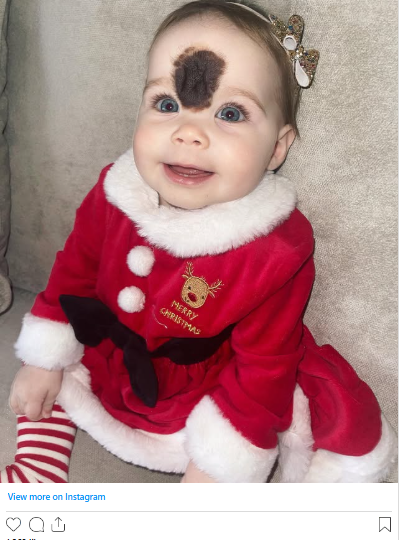
As the family adjusted to life with their newborn daughter, they began to experience reactions from strangers that deeply affected them emotionally. People would often stare at Vienna while the family was out in public, and some individuals asked uncomfortable or insensitive questions about the mark on her forehead. Her mother, Celine Casey, later spoke openly about how painful those experiences could sometimes feel, especially as a new parent trying to protect her child from judgment.
Although many people were simply curious and did not intend harm, the constant attention reminded the family that visible differences often attract public reactions. Those moments strengthened their concerns about how Vienna might eventually feel once she became old enough to understand the comments herself.
Celine explained in interviews that her love for Vienna was never connected to appearance. She repeatedly emphasized that her daughter was beautiful exactly as she was and that the family adored her completely. However, like many parents, she worried about the possibility of bullying, teasing, or emotional pain during childhood. Childhood can sometimes be difficult for children who appear visibly different from their peers, and her parents feared that the birthmark could affect Vienna’s confidence during school years and social situations. Those fears became one of the main reasons the family began researching treatment options, even though the condition itself was medically harmless.
Doctors reportedly informed the family that removing the birthmark would likely be considered a cosmetic procedure rather than a medically necessary surgery. Because of that classification, the National Health Service in the United Kingdom was reportedly unable to provide funding for the operation. While the family understood the medical reasoning behind the decision, they still struggled emotionally with the situation. To them, the concern was not vanity or appearance in a superficial sense. Instead, they believed they were trying to protect their daughter from possible emotional hardship in the future. The decision placed the family in a difficult position because private treatment costs were extremely expensive.
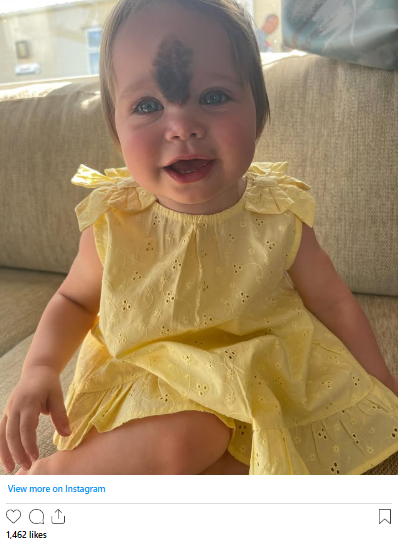
Determined to explore every available option, Vienna’s parents began consulting specialists and surgeons who had experience treating congenital melanocytic nevus. Medical professionals explained that removing the birthmark safely would likely require multiple procedures over an extended period of time. Because the mark was located on a delicate area of the face, surgeons needed to proceed carefully to minimize scarring and protect healthy skin tissue. The family learned that the process would not be quick or simple, but they remained committed to finding the best possible path forward for their daughter.
Despite the emotional and financial pressure, they continued searching for solutions. As they researched treatment possibilities, the family also faced the financial realities associated with private medical care. The cost of surgery was reportedly very high, especially during a period when many healthcare systems were still recovering from the effects of the COVID-19 pandemic.
Like countless other families around the world, Vienna’s parents had already experienced financial stress connected to medical expenses and everyday responsibilities. Nevertheless, they felt strongly that they needed to at least attempt to pursue treatment if it could help their daughter avoid emotional pain later in life. Eventually, they decided to seek support through crowdfunding platforms.
The family’s story quickly began attracting public attention after it was shared online. Many people sympathized with the difficult position Vienna’s parents faced and understood the emotional complexity behind their decision. Supporters from different countries donated money to help cover the costs of the surgeries and medical appointments. Messages of encouragement poured in from parents, medical professionals, and individuals who had experienced visible differences themselves. For many supporters, the story was not simply about appearance. Instead, it reflected the universal desire parents often have to protect their children from unnecessary suffering whenever possible.
As public attention increased, discussions surrounding the story became more complex and emotional. Some people fully supported the family’s decision to remove the birthmark, believing that the procedure could help Vienna avoid future bullying or self-esteem struggles. Others argued that visible differences should be embraced rather than surgically changed, especially in young children. The conversations highlighted larger social questions about beauty standards, childhood confidence, public reactions to physical differences, and the difficult choices parents must sometimes make. Despite differing opinions, most people agreed that Vienna’s parents were acting out of love and concern for their daughter’s future.
Celine continued speaking honestly about the emotional side of the journey throughout the process. She explained that strangers sometimes made assumptions about her parenting without fully understanding the situation. According to her statements, the family never viewed Vienna as flawed or imperfect. Instead, they were focused on reducing the likelihood that their daughter would one day face emotional pain because of how others reacted to her appearance. She acknowledged that every parent makes deeply personal decisions differently and that there is rarely a perfect answer in situations involving children’s futures and emotional well-being.
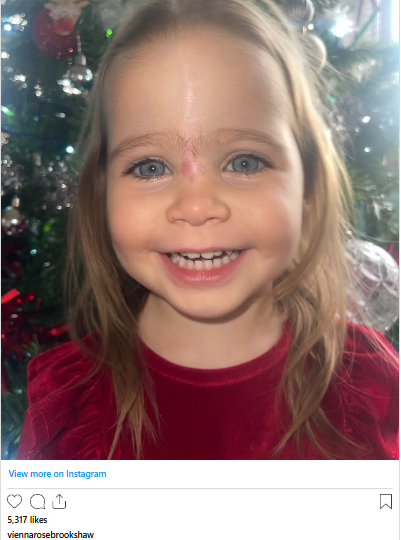
Over time, Vienna underwent several procedures designed to gradually remove the birthmark from her forehead. Reports indicated that the surgeries were successful, although the recovery process required patience and careful monitoring from doctors. Because facial skin is extremely sensitive, medical teams closely supervised healing to reduce complications and ensure the best possible outcome. Vienna’s parents regularly shared updates about her progress and thanked supporters who had followed the journey from the beginning. Each stage of treatment represented both emotional relief and physical healing for the family.
Eventually, much of the birthmark was successfully removed, leaving behind only a small scar that became far less noticeable than the original mark. According to updates shared by her mother, Vienna recovered well from the procedures and continued growing into a healthy and energetic child. Photographs shared online showed a smiling little girl surrounded by love and support from her family. For many people who followed the story, the updates represented hope and resilience rather than simply cosmetic change. The family expressed enormous gratitude toward the medical professionals and supporters who helped them throughout the difficult process.
The story of Vienna Brookshaw resonated with many parents around the world because it touched on universal fears and responsibilities connected to raising children. Parents naturally want to shield their children from pain, rejection, and emotional suffering whenever possible. However, deciding how best to do that is often extremely complicated. Some families choose medical treatment, while others focus on teaching children confidence and self-acceptance without surgical intervention. Vienna’s story became a reminder that parenting decisions are rarely simple and that every family approaches difficult situations based on their own experiences, beliefs, and hopes for the future.
The public conversation surrounding congenital melanocytic nevus also helped raise awareness about the condition itself. Before Vienna’s story became widely discussed online, many people had never heard of CMN or understood how birthmarks can affect families emotionally and socially. Medical experts explain that most cases of CMN are harmless, although some larger forms may require monitoring depending on their size and location. Increased awareness encouraged broader discussions about skin conditions, visible differences, childhood bullying, and the importance of empathy when interacting with strangers who may look different from what society considers typical.
Many individuals with visible birthmarks or skin conditions also shared their own experiences after hearing Vienna’s story. Some spoke about painful childhood memories involving teasing and social isolation, while others described learning to embrace their appearance confidently over time. These personal stories demonstrated that experiences with visible differences can vary greatly from person to person. While some individuals prefer medical treatment when possible, others strongly advocate for self-acceptance and representation. The conversations highlighted the fact that there is no single correct response to conditions like CMN and that each person’s emotional experience is unique.
Throughout the entire journey, Vienna remained at the center of every decision made by her parents. Celine frequently explained that the goal was always to support her daughter’s happiness and confidence, regardless of what path they ultimately followed. She expressed appreciation for respectful discussions, even when opinions differed from her own. Many observers noted that the story reflected the enormous emotional responsibility parents carry when making decisions for children who are still too young to make those choices independently. The situation required balancing medical advice, emotional concerns, financial realities, and public scrutiny all at once.
Today, Vienna Brookshaw is described as a happy and thriving child who continues to grow surrounded by love from her family. Her mother occasionally shares updates about her life and recovery while also expressing gratitude toward the thousands of people who offered support during difficult moments. Although the surgeries helped reduce the visibility of the birthmark, many supporters believe the deeper impact of the story came from the conversations it inspired about compassion, understanding, and parenting. The family’s openness encouraged people to think more carefully about how society reacts to visible differences in children and adults alike.
In the end, Vienna’s story became far more than a discussion about a birthmark or cosmetic surgery. It evolved into a broader reflection on love, protection, empathy, and the difficult decisions many parents face while trying to secure the best possible future for their children. The story also reminded people that behind every visible condition is a real family navigating emotional challenges that outsiders may not fully understand. Whether people agreed or disagreed with the decision to remove the birthmark, most recognized the deep care and concern that motivated Vienna’s parents throughout the journey.
The lasting impact of the story lies not only in the medical procedures themselves but also in the conversations they inspired across social media, parenting communities, and public discussions. Many people were reminded of the importance of kindness when interacting with children who may look different from others. Others reflected on the pressure families sometimes feel because of public reactions and beauty expectations within society. Vienna’s journey encouraged empathy from multiple perspectives and highlighted how deeply personal parenting choices can become when emotional well-being is involved.
For Vienna’s family, the experience was filled with uncertainty, emotional strain, and difficult decisions, but it also brought moments of hope and overwhelming support from strangers around the world. The family’s willingness to speak openly about their experiences helped educate many people about congenital melanocytic nevus while also showing the emotional realities parents can face when their child attracts public attention. Ultimately, Vienna’s story remains a powerful example of parental devotion and the lengths many families are willing to go to in order to protect and support the children they love most.
