
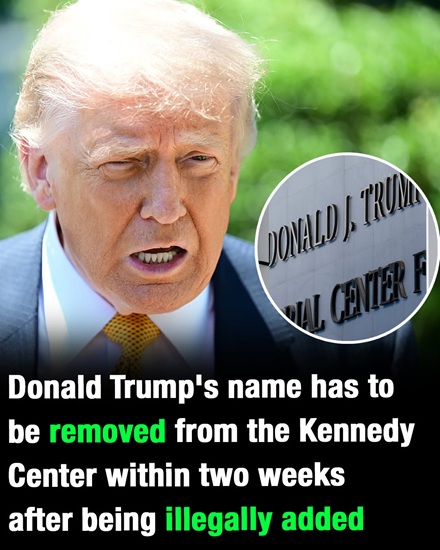
Donald Trump’s attempt to rename the Kennedy Center in Washington, D.C., has suffered a major legal setback after a federal judge ruled the decision violated long-standing federal law governing the naming of the landmark. The controversy began in December 2025, when the Kennedy Center board, largely composed of Trump appointees, voted to rename the center as “The Donald J. Trump and John F. Kennedy Memorial Center for the Performing Arts,” sparking widespread public backlash.
Critics argued that renaming a federally chartered institution without congressional approval overstepped the board’s authority, as the law explicitly grants Congress sole power to alter the names of federally recognized landmarks like the Kennedy Center. Democrats, Kennedy family members, and legal experts swiftly condemned the decision, arguing it politicized a national institution intended to honor the legacy of John F. Kennedy and promote arts and culture in America.
US District Judge Christopher Cooper ruled on Friday that the board had acted outside its legal authority, emphasizing that “Congress gave the Kennedy Center its name, and only Congress can change it.” The judge ordered that all references to “Trump Kennedy Center” be removed within 14 days, including exterior signage, official publications, and online references, ensuring the landmark reverts to its original designation immediately…
Congressional oversight is critical in this case, as the Kennedy Center was created by an act of Congress in 1958, and its name carries official federal recognition that cannot be modified unilaterally by board action. The legal challenge was spearheaded by Democratic Representative Joyce Beatty of Ohio, who alleged that her attempts to voice opposition during the board’s renaming vote were actively suppressed, undermining proper democratic procedure.
Beatty claimed that microphones had been muted during the vote, preventing some members from expressing dissent and creating the false appearance of unanimous consent, a key point in the lawsuit against the Trump-appointed board.
Her claims were later corroborated by Jack Schlossberg, John F. Kennedy’s grandson, who publicly stated on social media that the vote was not unanimous, and that the process had been manipulated to favor the renaming initiative.
Judge Cooper’s decision also blocked the Kennedy Center’s plans to close for two years for extensive renovations, finding the board had failed to consider its legal responsibilities and the broader implications of such an extended closure.
Roma Daravi, the Kennedy Center’s vice president, responded to the ruling by emphasizing that the organization remains confident an appeal could overturn the decision, indicating the legal battle is likely far from over…
“We remain committed to pursuing every lawful avenue,” Daravi said, underscoring the board’s determination to maintain the renaming despite the federal court’s injunction, reflecting ongoing tension between legal authority and board actions. The Kennedy Center has long served as a symbol of artistic excellence, hosting performances across music, dance, theater, and more, while also functioning as a living memorial to President Kennedy’s enduring cultural and political legacy.
Renaming the center to include Donald Trump’s name sparked controversy because it appeared to insert a political figure into a federally recognized monument without the express consent of Congress, which oversees such decisions. Historically, changes to federally chartered institutions, including naming rights, have required legislative action to ensure transparency, public accountability, and preservation of the original intent behind the institution’s creation.
The Trump-appointed board had argued that including the former president’s name recognized his contributions to the Kennedy Center, though critics maintained this rationale had little legal grounding and risked politicizing a nonpartisan institution. Opponents warned that setting a precedent allowing a board to rename a federally recognized landmark could erode congressional authority and blur the separation between executive influence and federal oversight.
Judge Cooper’s ruling reinforced the principle that Congress retains sole authority over the naming of such institutions, citing legislative intent and historical precedent as key factors in his decision. The ruling has broader implications for other federally chartered organizations where boards might attempt to act independently without seeking congressional approval, ensuring that federal law remains the ultimate authority.
The Kennedy Center’s renaming process had included public announcements and extensive media coverage, which intensified public scrutiny and amplified legal and political debates surrounding the appropriateness of such a unilateral decision. Several Democrats called the renaming an act of political overreach, asserting that the inclusion of Trump’s name undermined the nonpartisan mission of the Kennedy Center and disrespected the legacy of John F. Kennedy.
Public reaction was immediate, with advocacy groups, arts organizations, and historians emphasizing that the Kennedy Center represents cultural heritage, not an opportunity to honor contemporary political figures without legislative approval. Legal experts explained that the board’s actions violated federal statutes and charter provisions that explicitly grant Congress authority to approve naming, funding, and major structural decisions for federally recognized arts institutions.
Some Trump supporters argued that the renaming was merely symbolic, honoring a former president’s support for the arts, though these arguments were dismissed by the court as lacking sufficient legal foundation for altering the center’s official name. The ruling also highlighted issues of procedural fairness, as the alleged muting of dissenting board members suggested irregularities in the voting process, further undermining the legitimacy of the attempted renaming.
Jack Schlossberg’s public statements underscored family concerns, emphasizing that the Kennedy family had not been consulted and that the unilateral addition of Trump’s name disregarded decades of historical and familial legacy. Judge Cooper’s injunction not only required removal of Trump’s name but also reaffirmed the board’s obligation to comply with congressional oversight, ensuring future actions adhere to established legal standards.
The decision is seen as a victory for advocates of federal procedural integrity, reinforcing that boards cannot unilaterally make decisions that alter federally recognized landmarks or memorials without proper legislative authorization. Legal analysts predict that while the ruling is clear, the Trump-appointed board may appeal, potentially prolonging the legal battle and creating continued uncertainty regarding the Kennedy Center’s official name in the near term.
Roma Daravi’s statement suggests the board intends to exhaust all legal avenues, signaling that appeals could continue to challenge Judge Cooper’s ruling, potentially reaching higher federal courts before a final resolution is reached. The case has sparked broader conversations about political influence in cultural institutions, emphasizing the importance of maintaining neutrality and adherence to federal law when overseeing national landmarks.
The controversy also raised questions about transparency, as critics argued that board members’ votes were not properly documented or publicly verified, creating suspicion about the legitimacy of the decision-making process. Congressional members have reiterated that any future attempts to rename the Kennedy Center must undergo legislative review, preserving historical integrity and protecting the center’s status as a symbol of national culture.
The Kennedy Center itself remains operational during this legal dispute, continuing to host performances, educational programs, and community events, demonstrating its ongoing role as a national cultural institution despite the controversy. Advocates for the arts have highlighted that preserving the Kennedy Center’s nonpartisan identity is crucial for ensuring it serves diverse audiences without favoritism or political influence, maintaining public trust and credibility.
Judge Cooper’s ruling has set an important legal precedent, reinforcing that federally chartered institutions operate under congressional oversight and cannot bypass legislative authority through internal board decisions alone. The court’s decision also reaffirms the principle that procedural fairness is essential, particularly when board actions have long-term implications for national heritage and cultural landmarks recognized by the federal government.
Future attempts to rename the Kennedy Center, whether for political or commemorative purposes, will now require explicit congressional approval, ensuring that such decisions are transparent, lawful, and consistent with historical precedent. The case demonstrates the balance between honoring contemporary figures and preserving historical integrity, emphasizing that federal law must guide any decisions impacting nationally recognized institutions.
While the ruling mandates removal of Trump’s name, public debates continue about the role of political figures in cultural spaces, highlighting tensions between private influence and federal authority in managing national landmarks. Ultimately, the decision underscores the enduring principle that Congress retains final authority over federally recognized institutions, ensuring that historical legacy and cultural mission remain intact for future generations.
The Kennedy Center’s management and board are now tasked with compliance, removing all references to Trump, reviewing governance procedures, and ensuring future decisions adhere to federal statutes and congressional oversight requirements. This ruling also encourages other federally chartered institutions to review their policies, ensuring naming and major structural decisions strictly follow legislative authorization to avoid similar legal challenges.
The Kennedy Center case serves as a cautionary tale about the limits of board authority, the necessity of congressional approval, and the importance of procedural transparency in managing nationally significant cultural landmarks. In summary, the Trump-appointed Kennedy Center board’s attempt to rename the institution violated federal law, prompting a decisive ruling that emphasizes congressional authority, procedural integrity, and the preservation of historical and cultural legacy in the United States.

