
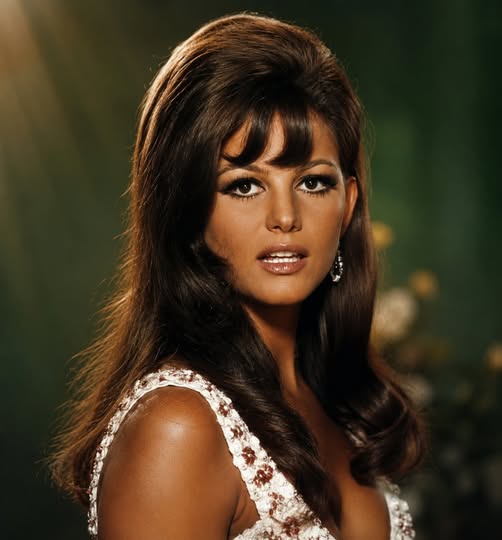
Claudia Cardinale’s cinematic journey spans over six decades, during which she became a symbol of elegance, talent, and resilience. Her extraordinary presence on screen captivated audiences in both Italian and international cinema. Born in Tunis, Tunisia, in 1938, Cardinale initially aspired to become a teacher. She had no plans to enter the world of acting until an unexpected opportunity at a local Italian film festival changed her trajectory forever.
At 18, Cardinale was crowned the Most Beautiful Italian Girl in Tunisia, an honor that drew attention from filmmakers and provided her with a ticket to the prestigious Venice Film Festival. Despite early offers, she initially refused most film contracts, citing her pregnancy and personal circumstances. She understood that hesitation could sometimes increase opportunity, as she later described in interviews with Italian journalists.
-Franco Cristaldi, a prominent Italian producer, convinced her to sign an 18-year contract. Cristaldi would go on to exercise significant control over her career, dictating roles, social appearances, and even her physical appearance. Under Cristaldi’s management, Cardinale appeared in several minor Italian films before her breakout in the 1958 romantic comedy, Three Strangers in Rome. She worked while concealing her pregnancy, a decision orchestrated by Cristaldi../
Cardinale described her early career under Cristaldi as oppressive, calling herself “a subordinate paid for films,” and revealing that her personal desires and autonomy were often ignored by her manager-husband.
In 1975, Cardinale gave birth to her son, Patrick, who was fathered by a man she said had assaulted her. For years, the details of Patrick’s birth remained private, and he was publicly presented as her younger brother.
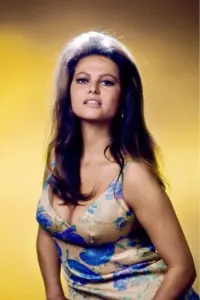
Cardinale spoke openly in 2017 about the trauma she endured, describing the violence that led to Patrick’s conception. She emphasized her choice to embrace motherhood despite the difficult circumstances surrounding her pregnancy. Despite personal hardships, Cardinale’s talent shone through. Her natural beauty, expressive eyes, and compelling performances quickly established her as one of Italy’s most beloved actresses and earned her international recognition.
She starred in Goha alongside Omar Sharif, marking her cinematic debut. Critics and audiences took notice, praising her ability to balance charm, depth, and nuanced performances in both Italian and international productions.
Her role in Rocco and His Brothers (1960) further solidified her reputation, showcasing her dramatic range and emotional intensity, and earning her accolades for a performance that many considered groundbreaking at the time.
In 1963, Cardinale appeared in Federico Fellini’s Oscar-winning 8½ and Luchino Visconti’s The Leopard, sharing the screen with Marcello Mastroianni and Burt Lancaster. Both films became timeless classics, praised for their artistry and her magnetic performances. Acclaimed director Martin Scorsese cited these two films among his top twelve favorites, highlighting Cardinale’s unique ability to embody complex characters with subtlety, grace, and realism that transcended cultural and linguistic boundaries.
Cardinale earned the moniker “Italian Brigitte Bardot” in part due to her beauty and style, but she insisted her approach to onscreen eroticism differed. She maintained that suggestion, not exposure, was the most powerful form of allure. Her Hollywood career included appearances in The Pink Panther with David Niven and Circus World with John Wayne and Rita Hayworth. These roles demonstrated her versatility in both American and European cinema.
She gained further acclaim in Sergio Leone’s Once Upon a Time in the West (1968), where her portrayal of a strong, resilient woman cemented her reputation as a capable, internationally recognized actress in leading roles. In 1971, she starred alongside Brigitte Bardot in The Legend of Frenchie King, a collaboration that emphasized their contrasting approaches: Cardinale favored subtlety and character depth over overt sensationalism or nudity.
Despite her success, Cardinale often found Hollywood’s patriarchal system challenging. She openly criticized the pressures and inequalities she faced, advocating for autonomy over financial gain or superficial fame. Cardinale’s personal life was marked by challenges as well as triumphs. She married director Pasquale Squitieri in 1975, remaining with him until his death in 2017. The couple had one daughter, Claudia, continuing her family legacy.
In interviews, Cardinale described her decision to avoid nudity in films as an assertion of control over her image and a deliberate choice to focus on talent, craft, and storytelling rather than exploitation. Later in life, she stepped away from the intense spotlight of sexualized fame, emphasizing her desire for personal authenticity, creative fulfillment, and the opportunity to travel and experience life beyond cinema.
Cardinale faced rumors in 2022 regarding involuntary hospitalization. She clarified that she was in good health, living near family in France, and wished everyone well, demonstrating her resilience and commitment to privacy. Currently, she dedicates significant efforts to advocacy through UNESCO as a goodwill ambassador, focusing on the defense of women’s rights and empowering the next generation through education and cultural initiatives.
Cardinale’s story is one of extraordinary talent and perseverance. She overcame personal trauma, industry pressures, and societal expectations while leaving an indelible mark on international cinema. Her life exemplifies the intersection of art and personal strength, showing how creativity and resilience can coexist, producing performances that endure well beyond an actor’s active career.
Even at 86, Cardinale continues to inspire audiences and fellow artists, emphasizing that cinema saved her life and that meaningful work can be both empowering and healing, regardless of fame or recognition. Her legacy is defined not only by iconic roles but by her ability to navigate complex social and professional dynamics with dignity, forging a path for women in cinema globally.
Cardinale’s contribution to film remains influential, with scholars and fans studying her performances, style, and approach to character, ensuring that her work is celebrated in cinematic history for generations to come. In interviews, she reflects on the importance of maintaining authenticity, asserting that refusing to compromise her values allowed her to thrive creatively and personally, inspiring others to do the same.
Her story resonates as a lesson in resilience, illustrating that overcoming adversity, pursuing passion, and advocating for oneself can coexist with professional achievement and personal fulfillment. Claudia Cardinale’s films continue to be celebrated at retrospectives, festivals, and academic studies, showcasing her enduring appeal and demonstrating the timelessness of her artistic contributions.
From Goha to Once Upon a Time in the West, Cardinale’s roles reveal a consistent commitment to portraying strong, multidimensional characters, proving her versatility and unwavering dedication to cinematic craft. Her influence reaches beyond acting. Through public speaking and advocacy, she addresses social issues, supports women’s empowerment, and encourages young artists to pursue their careers with integrity and courage.
Cardinale’s story also highlights the importance of personal agency in an industry historically dominated by male decision-makers, showing that artistic success need not come at the cost of autonomy. Through decades of both triumph and struggle, Cardinale has become an emblem of elegance, intelligence, and determination, earning admiration not only for her films but also for her unwavering personal principles.
Her experiences reveal how early trauma, complex relationships, and industry pressures can shape an actor’s journey, while also underscoring the power of resilience, self-advocacy, and artistic dedication. Even today, Cardinale’s work continues to inspire actors, filmmakers, and audiences worldwide, reinforcing her status as one of the most accomplished and respected actresses of Italian and global cinema. Claudia Cardinale’s life reminds us that perseverance, authenticity, and passion can coexist, allowing an individual to achieve greatness while maintaining personal integrity and using influence to empower others.

