

Christina Applegate has been famous for most of her life, but some of the stories she now shares date back to a time when many future Hollywood stars were still trying to establish themselves. In her memoir You with the Sad Eyes, Applegate revisits her childhood, teenage fame, relationships, struggles with body image, and later health challenges. One of the lighter stories from those years involves Brad Pitt, who was part of her social circle before becoming an international movie star.
Applegate recalls attending the 1989 MTV Video Music Awards with Pitt and making an unexpected decision before the evening was over. Applegate’s reflections come during a period when her daily life is considerably different from the fast-paced career she once knew. She revealed publicly in 2021 that she had been diagnosed with multiple sclerosis, or MS, a disease affecting the central nervous system. Since then, she has spoken openly about significant mobility difficulties and other ways the condition has changed her life.
Her diagnosis also affected her experience filming the final season of Netflix’s Dead to Me. Applegate has discussed these challenges candidly rather than presenting her circumstances as easier than they have actually been. Looking through memories from decades earlier also brought Applegate back to the beginning of her career. She had worked as a child performer before achieving widespread recognition as Kelly Bundy on Married… with Children.
The Fox sitcom premiered in 1987, when Applegate was still a teenager, and its popularity quickly made her recognizable to millions of viewers. Kelly’s appearance and confident personality became an important part of the character. Away from the television cameras, however, Applegate’s feelings about herself were considerably more complicated.
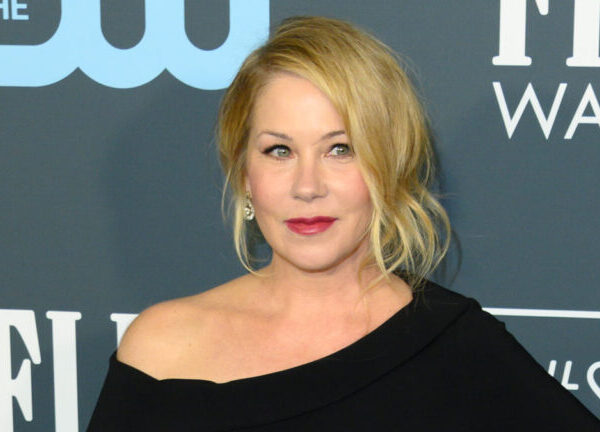
In her memoir, Applegate describes struggling to recognize the beauty that other people apparently saw in her. Although television audiences viewed her as an attractive young star, she remembers criticizing her own appearance and believing she was too ordinary. Those insecurities influenced the way she treated her body. Applegate has described periods when she exercised intensely, moving from one demanding workout to another while pursuing a physical standard that never seemed sufficient. With decades of perspective, she now describes that pursuit of perfection as damaging rather than healthy.
The contradiction was striking. Professionally, Applegate had a role that made her one of television’s most recognizable young performers. Personally, she was struggling with expectations she felt unable to satisfy. Her recollections provide a reminder that public admiration does not necessarily reflect how someone feels privately. The confidence audiences associated with Kelly Bundy was a performance, while Applegate herself was navigating adolescence, fame and insecurity at the same time.
Growing up around Los Angeles and working in entertainment also brought Applegate into contact with other young actors and musicians. She has recalled having a longtime crush on Johnny Depp, who was becoming widely known through 21 Jump Street. Brad Pitt was another young actor she knew socially. Applegate remembers Pitt as a platonic friend for a significant period before their relationship briefly appeared capable of becoming something more.
Pitt’s career in 1989 looked very different from the one audiences recognize today. His breakthrough appearance in Thelma & Louise would not arrive until 1991, and many of the films that later established him as one of Hollywood’s biggest stars were still years away. To Applegate, he was not yet a global celebrity. He was a young actor she already knew personally, and their existing friendship eventually developed enough chemistry for Applegate to invite him to an important entertainment-industry event.

That event was the 1989 MTV Video Music Awards.
Applegate was 17 at the time and was scheduled to participate in the ceremony as a presenter. Pitt, then 25, accompanied her to the event. Because Applegate needed to arrive earlier for her professional responsibilities, her recollection also involves her mother, actress and singer Nancy Priddy. Pitt helped with transportation arrangements so that Priddy could attend as well.
For Applegate, the evening initially felt special for another reason. She remembers wearing a Ceil Chapman dress that made her feel particularly confident. Given the insecurities about appearance that she describes elsewhere in her memoir, feeling genuinely comfortable with herself was meaningful. She arrived at the ceremony feeling unusually self-assured and ready to enjoy the evening.
Then she noticed Sebastian Bach.
Bach was the lead singer of Skid Row, a rock band experiencing major commercial success during that period. With his distinctive long blond hair and rock-star appearance, Bach caught Applegate’s attention during the event. She has described noticing him throughout the evening, and whatever romantic interest had recently developed between her and Pitt suddenly had competition.
By the end of the awards show, Applegate made a spontaneous choice that would eventually become a frequently repeated piece of celebrity history. Instead of leaving the ceremony with Pitt, she left with Bach.
Applegate has acknowledged the decision herself and has now provided considerably more context about it. She remembers feeling confident enough that evening to follow her attraction to Bach without thinking very carefully about what that meant for Pitt. From the perspective of adulthood, she recognizes that leaving the person who had accompanied her to the event was not particularly considerate.
The story becomes especially striking because of what happened to Pitt’s career afterward. At the time, Applegate could not have known that the young actor she left behind would soon become one of the world’s most recognizable movie stars. Following Thelma & Louise, Pitt’s career expanded dramatically, eventually including major roles in films such as A River Runs Through It, Legends of the Fall, Se7en, Fight Club, Ocean’s Eleven and numerous other productions.
Applegate has humorously acknowledged that the situation looks very different in hindsight. The Brad Pitt of 1989 was still establishing himself professionally. He was not yet the celebrity whose name would eventually become synonymous with Hollywood stardom. Applegate’s decision therefore was not a teenager deliberately rejecting one of the world’s biggest stars. She was making a spontaneous choice involving people she knew at a particular moment in their lives.
According to Applegate’s own recollection, Pitt was unhappy with how the evening ended. After she departed with Bach, Pitt was left to drive Nancy Priddy home. Applegate also recounts that Pitt nearly became involved in a confrontation during that journey and was angry with her afterward. Those details should be understood specifically as Applegate’s recollection of events rather than as independently verified descriptions of Pitt’s private emotions or intentions.
Whatever happened that night, the friendship between Applegate and Pitt apparently became distant afterward. Applegate writes that they did not speak for years. She has also shared an unusual detail suggesting that Pitt continued to remember the episode. According to her memoir, two women who later dated Pitt separately asked Applegate whether she really was the young woman who had left him at the MTV Video Music Awards.
Applegate understood from those conversations that Pitt had apparently told the story himself. Her account does not require speculation about exactly how long he remained upset or how seriously he viewed the incident later. What can be said is that, according to Applegate, the story was memorable enough to resurface years after the original awards show.
The identity of the man Applegate left with had also remained something of a celebrity mystery for years. Applegate previously confirmed publicly that she had left Pitt during their awards-show outing, but she did not always reveal who the other man was. Her memoir provides the fuller version of the story and identifies Sebastian Bach as the person who captured her attention that evening.
With the benefit of adulthood, Applegate does not attempt to defend her teenage behavior as perfectly reasonable. Instead, she recognizes that Pitt deserved better treatment while also remembering how young she was. She was 17 years old, already navigating fame, personal insecurities and an entertainment industry filled with people whose careers were changing rapidly.
According to her account, she and Pitt eventually reached a point where the incident could be left in the past. They acknowledged that Applegate had been a teenager when it happened and that decades had passed since that uncomfortable evening. The story therefore should not be presented as evidence of a continuing feud between them. Applegate’s own telling ultimately describes an old disagreement that the two were able to put into perspective.
There is also an obvious element of humor in how their lives developed afterward. Pitt became an Academy Award-winning actor and producer and one of the most recognizable figures in international cinema. Bach remained associated with Skid Row’s successful early years and continued his career as a musician and performer. Applegate built her own long career across television and film.
After Married… with Children, Applegate continued taking prominent roles rather than remaining defined by Kelly Bundy. Her later work included projects such as Anchorman: The Legend of Ron Burgundy, Samantha Who?, Bad Moms and Dead to Me. She earned acclaim for both comedy and dramatic performances, demonstrating a range considerably broader than the teenage character that initially made her famous.
Her memoir, however, places those professional accomplishments alongside experiences audiences could not necessarily see. Applegate discusses the pressures she placed on her appearance, difficult personal experiences and the complicated reality of growing up while being watched by millions of television viewers. The celebrity anecdotes are only one part of a larger reflection on the difference between a public image and a private life.
Her multiple sclerosis diagnosis has also changed the perspective from which she now examines those memories. Applegate announced the diagnosis in 2021 and has subsequently spoken publicly about its substantial effect on her mobility and everyday activities. She has described the challenges without minimizing their seriousness, while continuing to communicate with audiences through interviews, public appearances and other projects.
That makes her reflections on the extreme physical standards of her youth especially poignant. The teenager who once pushed herself through demanding exercise routines because she believed her appearance was never good enough eventually found herself confronting circumstances that fundamentally changed her relationship with her body. Her present perspective allows her to examine those earlier expectations differently.
The story involving Pitt is consequently best understood as a personal memory rather than a dramatic Hollywood rivalry. According to Applegate’s account, she attended the 1989 MTV Video Music Awards with Pitt, became interested in Bach during the evening and ultimately left with the singer. Pitt was unhappy about the situation, their friendship became distant, and the story resurfaced years later.
Eventually, enough time passed for Applegate and Pitt to move beyond what happened.
More than three decades later, the episode is memorable partly because the names involved became so famous. A teenage television star, a young actor still awaiting his major breakthrough and the frontman of a successful rock band happened to cross paths during one awards-show evening. None of them could have known exactly where their careers or personal lives would lead.
For Applegate, the memory now belongs to a much larger story about growing older and reconsidering the person she once was. She can acknowledge that leaving Pitt was inconsiderate without pretending that her teenage decision defines either of them today. She can also recognize the humor created by hindsight without rewriting what actually happened based on Pitt’s later fame.
That distinction matters. Applegate did not leave behind the fully established global superstar audiences know today. She left a young actor she knew personally at a time when both were still building their careers. What makes the anecdote remarkable is everything that happened afterward.
Today, the episode offers a small window into a period when Applegate, Pitt and Bach were young entertainers whose futures remained largely unwritten. Applegate’s account preserves the awkwardness and humor of that night while placing it alongside more serious reflections about fame, self-image, health and personal growth.
Ultimately, the 1989 MTV Video Music Awards story is not simply about Christina Applegate leaving Brad Pitt for Sebastian Bach. It is also about how dramatically an ordinary youthful decision can look when viewed through decades of fame and hindsight. Applegate can now revisit that teenage moment knowing something her 17-year-old self could never have predicted: all three of them still had extraordinary chapters of their lives ahead.

