
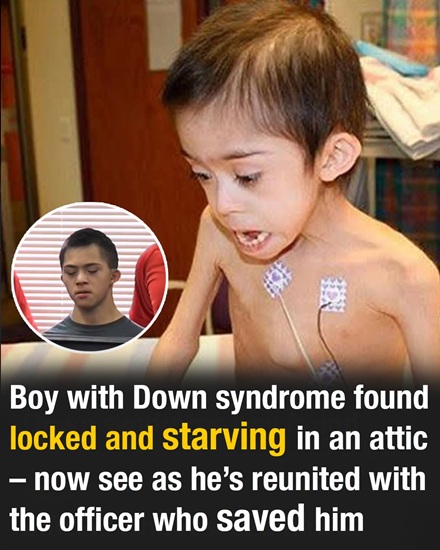
In 2010, a child abuse case in Kansas, United States, shocked both local communities and people across the country after authorities discovered six-year-old Giovanni “Govi” Eastwood, a boy with Down syndrome, living in extremely poor conditions inside the attic of his family’s home. According to law enforcement officials and court records reported by several news organizations, the child had been severely neglected and required immediate medical attention after being found.
The case later became an example of both the devastating effects of child neglect and the remarkable recovery that can occur when vulnerable children receive proper care, protection, and long-term family support. The events leading to Govi’s rescue began when police officers went to the family’s residence to arrest his mother, Rachel Perez, on outstanding warrants.
During the initial investigation, officers located several children in the home and arranged for their safety. However, questions soon arose regarding Govi’s whereabouts. According to statements later given by investigators, explanations provided during the initial search did not fully account for the missing child, prompting officers to remain concerned that he might still be somewhere inside the residence.
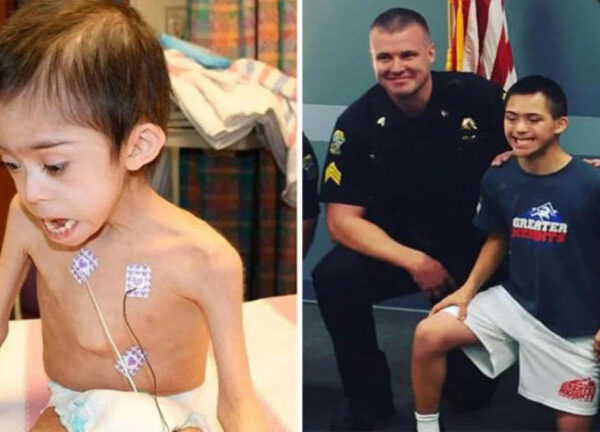
Among the responding officers was Sergeant John Klingele, who later described how investigators decided to return and conduct another search of the home. Rather than accepting the original explanation, officers continued checking areas that had not been fully examined. During that second search, they called out Govi’s name while moving through different parts of the house. Eventually, they realized that the sound they heard was coming from the attic, leading them to the place where the young boy had been hidden.
When officers reached the attic, they encountered a scene that deeply affected everyone present. Sergeant Klingele later recalled publicly that Govi appeared extremely underweight and physically fragile. According to his description, the child’s appearance suggested severe malnutrition and prolonged neglect. Officers immediately recognized that the situation required urgent medical assistance and requested emergency responders without delay.
Medical evaluations conducted after the rescue revealed the seriousness of Govi’s condition. Public reports indicated that although he was six years old, he weighed approximately 17 pounds (about 7.7 kilograms), far below the expected weight for a child his age. Healthcare professionals determined that he was suffering from severe malnutrition along with multiple medical complications associated with prolonged neglect. Doctors later explained that his condition required immediate treatment and long-term rehabilitation under specialized medical supervision.
According to reports published at the time, Govi had experienced significant nutritional deficiencies that affected both his physical growth and overall health. Medical professionals reported that he showed signs consistent with prolonged inadequate nutrition, including weakened bones and developmental complications. Physicians involved in his treatment emphasized that children with complex medical needs require consistent medical care, adequate nutrition, and supportive family environments to promote healthy development.
Investigators also reported that the attic contained very few of the basic items typically expected in a child’s living environment. Public statements indicated that there were no toys, very limited comfort items, and conditions that authorities considered unsafe for a young child. These findings later became important elements during the criminal investigation and subsequent legal proceedings involving Govi’s care.
Following the rescue, Govi was transported to a hospital where doctors began intensive treatment aimed at stabilizing his condition. Medical staff worked carefully to address both his immediate health concerns and the long-term effects of prolonged neglect. According to later reporting by the Kansas City Star, healthcare professionals believed that without timely intervention, the child’s condition could have become even more life-threatening. Their work marked the beginning of what would become a long but remarkable recovery.
As the investigation continued, prosecutors reviewed evidence gathered by law enforcement and medical professionals. Court proceedings eventually resulted in criminal charges related to Govi’s treatment. Public court records later showed that Rachel Perez received a prison sentence connected to the abuse of her son. The legal process underscored the seriousness with which child abuse and neglect cases are addressed by the criminal justice system.
Although the circumstances surrounding Govi’s rescue were heartbreaking, the story did not end with the criminal case. Instead, it marked the beginning of a completely different chapter centered on healing, family support, and hope. After leaving the hospital, Govi and two of his sisters were welcomed into the home of relatives who committed themselves to providing the stability, care, and encouragement that every child deserves. Their dedication would eventually transform not only Govi’s physical health but also his confidence, emotional well-being, and quality of life.
The story of Giovanni “Govi” Eastwood serves as a reminder of the critical role played by attentive law enforcement officers, medical professionals, child protection agencies, and extended family members in protecting vulnerable children. It also demonstrates how early intervention, compassionate care, and a safe home environment can help children recover from extraordinarily difficult circumstances when they receive consistent love and support.
After receiving emergency medical treatment, Giovanni “Govi” Eastwood began what would become a long process of physical and emotional recovery. Medical professionals worked closely with caregivers to address the effects of prolonged malnutrition while developing a treatment plan suited to his individual needs. Recovery from severe neglect is often gradual, requiring not only medical care but also patience, consistency, rehabilitation services, and a stable family environment. Every small improvement represented meaningful progress after the difficult circumstances from which he had been rescued.
Following his hospitalization, Govi and two of his sisters were welcomed into the home of their great-aunt and great-uncle, Stacy and Joe Eastwood, who later became their adoptive parents. Public reports describe how the family dedicated themselves to providing a safe, supportive, and loving home where the children could begin rebuilding their lives. Rather than focusing only on medical recovery, they also emphasized creating daily routines, encouragement, and emotional security—important elements that child development experts often identify as essential for children who have experienced trauma.
According to interviews given by the Eastwood family, Govi initially displayed behaviors commonly associated with children adjusting to a completely new environment after prolonged neglect. Reports indicated that he sometimes preferred sleeping on the floor instead of a bed and appeared uncertain when others attempted friendly gestures such as high-fives. His adoptive family explained that these reactions gradually changed as he became more comfortable, developed trust, and learned that he was living in a safe environment where he would be cared for with patience and kindness.
Over time, consistent medical treatment, improved nutrition, educational support, and family encouragement contributed to remarkable progress. Public reports described steady improvements in Govi’s overall health, physical development, communication skills, and confidence. His family frequently spoke about celebrating even the smallest milestones, recognizing that recovery from severe neglect often occurs through many individual achievements rather than dramatic overnight changes.
Several years after the rescue, an emotional reunion brought together Govi and many of the law enforcement officers who had participated in saving him. In 2016, approximately six years after the original rescue, he visited the local sheriff’s department, where officers had an opportunity to see firsthand how much he had grown. For many of those present, the reunion represented a powerful reminder that the work performed by first responders can have lasting effects that extend far beyond the initial emergency.
During the visit, Govi was recognized as an honorary deputy and received a commemorative plaque acknowledging his remarkable journey and the courage he had shown throughout his recovery. The event was intended not only to celebrate his progress but also to strengthen the positive relationship between the young boy and the officers whose actions had helped change the course of his life. According to public reports, the ceremony became an emotional occasion for everyone involved.
Sergeant John Klingele, one of the officers who had discovered Govi in 2010, later reflected on the reunion in interviews with local media. He remarked that seeing Govi smiling, interacting confidently with others, and expressing gratitude demonstrated how dramatically his life had changed. Klingele reportedly described the young boy as the true hero of the story, emphasizing the resilience he had shown during years of recovery and rehabilitation.
Members of the Eastwood family also shared how meaningful the recognition had been for Govi. According to public interviews, he proudly accepted the plaque presented by the sheriff’s department and later slept with it beside him that night. The simple gesture reflected how much the recognition meant to a child who had overcome extraordinary challenges and now found himself surrounded by people who cared deeply about his well-being and future.
Joe and Stacy Eastwood have publicly described Govi as someone whose positive attitude leaves a lasting impression on those around him. In interviews, they spoke about his joyful personality, determination, and ability to bring happiness to family members, friends, and strangers alike. Their comments illustrate how a supportive environment can help children develop confidence and resilience even after experiencing severe adversity early in life.
Child welfare professionals frequently note that stories like Govi’s highlight both the devastating effects of neglect and the extraordinary capacity children have for recovery when provided with appropriate medical care, emotional support, educational opportunities, and stable family relationships. Although every child’s experience is unique, experts consistently emphasize that early intervention and long-term support can significantly improve outcomes for vulnerable children.
Today, Giovanni “Govi” Eastwood’s story is remembered not only because of the tragic circumstances surrounding his rescue but also because of the hope that followed. His recovery demonstrates the combined efforts of dedicated law enforcement officers, healthcare professionals, child protection workers, and family members who worked together to provide him with safety and opportunities for a better future. While the events of 2010 remain a painful chapter in his life, the years that followed have become a testament to resilience, compassion, and the life-changing impact of people willing to protect and care for a child in need.

