
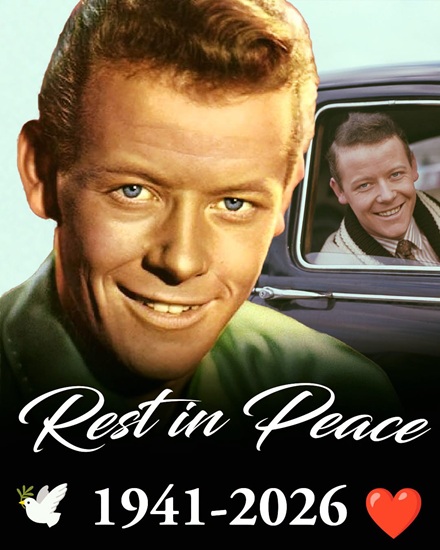
Some voices become inseparable from a certain era. For people who grew up listening to pop music in the late 1950s and early 1960s, Craig Douglas was one of them.
His songs belonged to a time of radio programs, treasured vinyl records and young singers who could seemingly become household names overnight.
Now, that chapter has come to an end.
Craig Douglas, the British singer best remembered for his chart-topping version of “Only Sixteen,” has died at the age of 85.
His death brought renewed attention to a career that began in unusually modest circumstances.
Long before he became a recording star, Douglas was known by another name.
He was born Terence Perkins.
And music was not yet his profession.
From an ordinary beginning to an unexpected opportunity
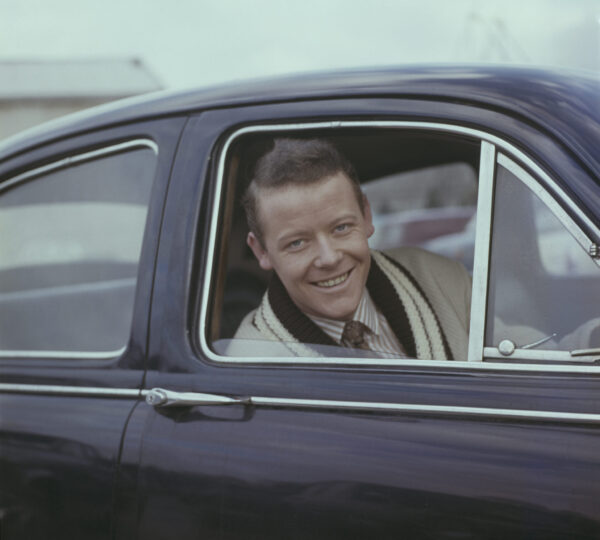
Douglas was born in Newport on the Isle of Wight in 1941 and grew up in a large family.
He was a twin and one of nine children.
As a teenager, he worked as a milkman and also spent time doing farm work.
That early job later helped inspire the nickname that remained associated with him for decades: the “Singing Milkman.”
At that stage, however, fame was still a long way off.
Then came a talent competition.
Encouraged to perform while still young, Douglas entered a local contest and made an impression with his singing.
That small opportunity helped open a much larger door.
Before long, he was moving toward a professional music career.
But first, something else had to change.
His name.
Manager Bunny Lewis gave Terence Perkins the stage name Craig Douglas, reportedly after seeing the name outside a house in Scotland.
The logic was practical.
There were already many entertainers named Terry.
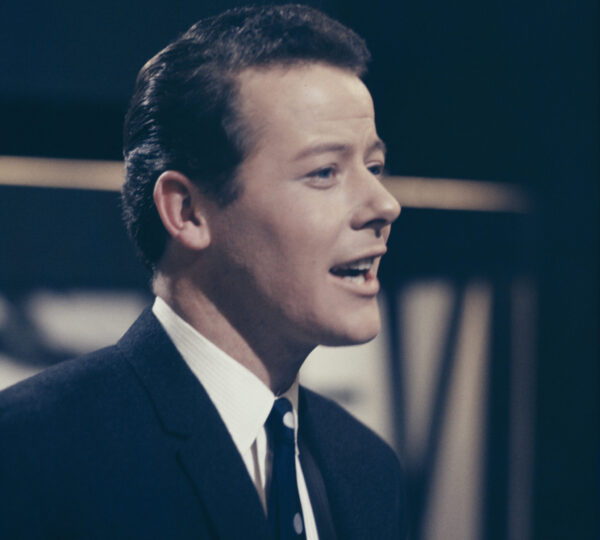
Craig stood out more.
Soon, the new name would be appearing on record labels and music charts.
Still, one thing was missing.
A breakthrough song.
That arrived in 1959.
The record that made him famous
“Only Sixteen” had originally been recorded by American singer Sam Cooke.
Douglas recorded his own version for the British market.
It proved to be the defining moment of his career.
Recorded at Abbey Road Studios, his version quickly gained popularity and eventually reached No. 1 on the UK singles chart.
It remained there for four weeks.
For a young man who had once been delivering milk, the transformation was extraordinary.
Douglas was suddenly one of Britain’s most recognizable young singers.
The same year brought another major sign of his growing popularity.
He was voted Best New Singer by readers of NME in 1959.
But his success did not end with one song.
There was more to come.
A run of chart success
During the next few years, Douglas became a regular presence on the British charts.
He scored nine UK Top 40 singles.
Among them were songs such as “A Teenager in Love,” “Pretty Blue Eyes,” “The Heart of a Teenage Girl” and “When My Little Girl Is Smiling.”
One unusual detail stood out in his chart history.
Four of his singles in a row peaked at No. 9.
Douglas also attempted to represent Britain at the Eurovision Song Contest in 1961 with “The Girl Next Door.”
He was not selected, but the appearance reflected how visible he had become in British pop music at the time.
His final UK chart hit arrived in 1963 with “Town Crier.”
By then, popular music was beginning to change rapidly.
And a new sound was about to dominate.
When British pop entered a new era
The early 1960s brought dramatic changes to the music industry.
Groups were becoming more prominent, and among the young bands beginning to attract attention were the Beatles.
Douglas was already an established performer during their early rise.
In fact, he appeared above the Beatles on the bill at one of their early major performances.
It is a small but revealing detail.
At that moment, Craig Douglas was the bigger name.
Soon, however, Beatlemania and the wider British beat movement would transform popular music.
The style of solo pop singers who had been major stars just a few years earlier began to lose some of its dominance.
Douglas’s chart career gradually slowed.
But his working life in entertainment continued for many years.
He never completely left the stage
Unlike some performers whose careers end when their chart success fades, Douglas continued to sing live.

He performed in clubs, theatres, on cruise ships and at other venues across Britain and beyond.
He also appeared in the 1962 musical film “It’s Trad, Dad!”
As the decades passed, his audience changed.
Some listeners came to hear the songs they remembered from their youth.
Others discovered a performer from an earlier chapter of British pop history.
Douglas remained active for many years, continuing to perform long after his biggest records had stopped appearing in the charts.
That longevity became an important part of his story.
He had survived not just one musical era, but several.
Eventually, though, he stepped away from regular performing and returned to a quieter life.
Back where the story began
In later years, Douglas once again lived on the Isle of Wight.
It was the same place where his life had started decades earlier.
By then, his journey had included far more than he could have expected as a teenage milkman.
He had recorded at one of the world’s most famous studios.
He had reached the top of the UK chart.
He had appeared on television, in film and on stages across the country.
He had also watched the music industry change repeatedly around him.
Yet one song remained closely connected to his name.
“Only Sixteen.”
For many listeners, it became the recording that preserved his voice.
And that is where the story becomes more personal.
Music has a way of keeping people present
A record does something unusual with time.
The person singing may grow older.
Decades may pass.
The world outside may change completely.
But the voice on the recording remains exactly as it was.
When “Only Sixteen” plays today, Craig Douglas still sounds like the young singer who recorded it in 1959.
That is why news of his death carries particular meaning for people who grew up with his music.
It marks the loss of a performer.
But it also reminds listeners of their own memories.
Old songs often become connected to moments far beyond the music itself.
A family home.
A first romance.
A dance hall.
A radio playing somewhere in the background.
Those memories can return unexpectedly.
Sometimes all it takes is the first few seconds of a familiar song.
A place in British pop history
Craig Douglas belonged to a generation of performers who helped define British popular music before the explosion of the Beatles and the groups that followed them.
His peak years were brief compared with the long careers of some later stars.
But impact is not always measured by time.
He had a No. 1 record.
He built a string of chart hits.
He performed throughout changing decades.
And he remained associated with a song that never disappeared completely from public memory.
Douglas died at 85, leaving behind recordings from an era that now feels very distant.
Yet music has a way of closing that distance.
The young milkman from the Isle of Wight became a national pop star.
The national pop star eventually stepped away from the spotlight.
And now, after his death, the recordings remain.
Craig Douglas is gone.
But for anyone who still remembers hearing “Only Sixteen” for the first time, one part of him is still there.
Waiting inside the song.

