
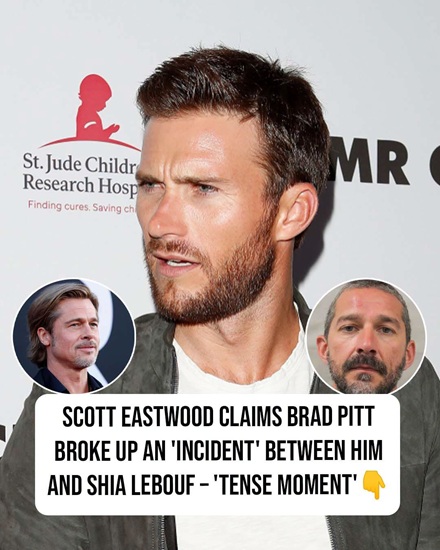
Scott Eastwood has revisited a tense encounter that occurred while making the 2014 World War II film Fury. Appearing on Armchair Expert with Dax Shepard, Eastwood discussed his experience working alongside Brad Pitt, Shia LaBeouf and the rest of the ensemble cast. One memory stood out in particular: a disagreement with LaBeouf that became heated enough for other people on set, including Pitt, to intervene. The incident itself has been discussed publicly before, including by Pitt, although Eastwood’s newer comments provide his own perspective on what happened.
Directed by David Ayer, Fury follows an American Sherman tank crew fighting in Germany during the final weeks of World War II. Pitt starred as Don “Wardaddy” Collier, while LaBeouf played gunner Boyd “Bible” Swan. Logan Lerman, Michael Peña and Jon Bernthal completed the central tank crew, with Eastwood appearing in a supporting role as Sergeant Miles. The production became known for demanding preparation intended to help the performers develop the closeness and intensity expected from soldiers who had spent considerable time together.
Eastwood recalled being particularly struck by LaBeouf’s intense approach to preparing for his role. During his podcast appearance, he described LaBeouf as highly committed to method-style acting and referred to stories surrounding the physical lengths the actor reportedly went to for Fury. Eastwood said that LaBeouf removed one of his teeth before filming and also recalled him deliberately cutting himself. Eastwood explained that this approach was very different from his own and said he preferred to keep some distance rather than participate in that type of preparation.

Those comments eventually led Eastwood to discuss the confrontation for which their time together has become particularly well known. During one scene, Eastwood’s character was supposed to chew tobacco and spit onto the Sherman tank. It sounds like a minor detail, but the cast had developed an unusually strong attachment to the vehicle during their preparation. Pitt has explained that, after everything the actors had experienced together during training and filming, they had begun treating the tank almost like their home.
Consequently, Eastwood spitting on it did not initially look like an ordinary scripted action to his colleagues. Pitt recalled seeing Eastwood doing it and becoming genuinely irritated because he interpreted the behavior as disrespectful. LaBeouf apparently reacted similarly. Neither man realized at that moment that Eastwood was simply performing an action specifically included in the screenplay. That misunderstanding transformed what should have been an ordinary piece of acting into a genuine disagreement between the performers.
Eastwood said LaBeouf challenged him over the spitting, and the exchange became increasingly confrontational. Eastwood recalled eventually responding angrily and threatening to fight his co-star. According to his version of events, LaBeouf also appeared ready to continue the confrontation, prompting people nearby to intervene. Pitt was among those who stepped in, and Eastwood said the actor helped break up the tense encounter before it could progress into a physical fight.
The important detail is that this is not a story based solely on Eastwood’s recent recollection. Pitt independently discussed the incident years earlier in an interview with British GQ. His version confirmed the basic circumstances while also adding an interesting complication: Pitt admitted that he himself had initially been angry with Eastwood. Pitt said that he confronted Eastwood about spitting on the tank, and LaBeouf subsequently became involved because he shared Pitt’s reaction.
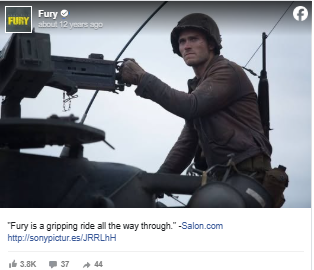
Pitt explained that the cast’s demanding preparation contributed significantly to their response. After going through intensive training and spending so much time together inside the Sherman tank, the actors had developed a strong sense of ownership over the vehicle. In the fictional world they were creating, it represented the crew’s home and potentially their protection on the battlefield. When Eastwood repeatedly spat tobacco onto it, Pitt and LaBeouf interpreted the action through that emotionally charged perspective rather than simply seeing another actor performing his role.
Only later did the misunderstanding become clear. Pitt recalled returning at the end of the day and looking at the screenplay. There, the instructions explicitly described Eastwood’s character chewing tobacco and spitting on the back of the tank. In other words, Eastwood had not decided on his own to disrespect the vehicle. He had been following what was written for his character. Pitt acknowledged the irony and joked that he and LaBeouf were ultimately the ones who had misunderstood what was happening.
That admission provides useful context when discussing the confrontation today. The episode was not simply a spontaneous argument between Eastwood and LaBeouf without explanation. It grew from the unusual intensity surrounding the production, combined with a misunderstanding about a scripted action. Eastwood was doing what the screenplay required, while Pitt and LaBeouf believed in the moment that he was behaving disrespectfully toward something the actors had come to regard as their shared home.
Eastwood nevertheless made clear in his newer interview that working with LaBeouf could be difficult from his perspective. He used strongly critical language while describing his former co-star and characterized LaBeouf as “clearly tormented.” Eastwood also made broader comments about personalities attracted to the entertainment industry. Those statements are Eastwood’s personal opinions and observations, however, rather than independently established psychological conclusions about LaBeouf, so they should be presented specifically as his characterization.
At the same time, Eastwood did not dismiss LaBeouf’s abilities as an actor. Quite the opposite: he acknowledged that LaBeouf could produce a remarkably compelling performance. Eastwood described watching his work and recognizing a magnetic quality on screen. His comments therefore reveal a complicated assessment of his former colleague. He strongly disagreed with aspects of LaBeouf’s behavior and working methods while simultaneously recognizing the effectiveness and intensity of his performance in the finished film.
LaBeouf’s portrayal of Boyd “Bible” Swan became an important component of Fury. The character is the tank crew’s deeply religious gunner, and LaBeouf brought considerable emotional intensity to the role. Whatever happened among the performers away from the finished scenes, the movie ultimately presented the five central crew members as men whose survival depended on their ability to operate together under extraordinarily dangerous circumstances.
Eastwood’s recollection also illustrates an important distinction between what audiences see in a finished movie and what can happen during production. Actors may spend months preparing for roles, working under difficult conditions and repeatedly performing emotionally intense scenes. Methods that help one performer may be uncomfortable or unnecessary for another. In the case of Fury, the cast’s immersive preparation appears to have strengthened the chemistry visible on screen, but it also contributed to heightened emotions behind the scenes.
Pitt’s account is particularly valuable because he accepted responsibility for his own role in the misunderstanding. Rather than describing himself merely as the person who eventually stopped the dispute, he acknowledged that he had initially shared LaBeouf’s frustration with Eastwood. Once he discovered the relevant direction in the screenplay, however, he understood that their anger had been misplaced. That detail gives the story considerably more nuance than portraying it simply as Pitt rescuing one actor from another.
Eastwood had also discussed tensions with LaBeouf around the period when Fury was released, meaning the central confrontation has been publicly known for years. His more recent podcast appearance brought the episode back into discussion and provided additional details about how he remembers LaBeouf’s behavior during production. As with any recollection of an event more than a decade later, individual descriptions reflect the perspective of the person telling the story.
What remains particularly interesting is how something as small as chewing tobacco became the source of such a serious misunderstanding. For Eastwood, it was simply an action his character was instructed to perform. For Pitt and LaBeouf in that moment, however, seeing someone spit on the tank represented disrespect toward the vehicle they had spent weeks treating as their home. Both interpretations existed simultaneously until someone eventually checked what had actually been written in the script.
Years later, Pitt could recognize the humor in the situation. Eastwood, meanwhile, remembers the encounter as one example of the challenging atmosphere he experienced while working with LaBeouf. Their perspectives are not identical, but the central facts of the confrontation broadly align: Eastwood spat tobacco on the tank as required by the screenplay, LaBeouf objected, tensions escalated, and Pitt became involved before the situation could go further.
The story has endured partly because all three actors went on to remain recognizable figures in Hollywood. Yet it also provides an unusual behind-the-scenes example of how deeply performers can become immersed in a production. The cast of Fury was trying to portray men who depended on one another and considered their Sherman tank essential to their survival. For a brief moment, that fictional attachment became strong enough to produce genuine anger when Pitt and LaBeouf mistakenly believed their co-star was disrespecting it.
Ultimately, Eastwood’s latest account does not change the central explanation Pitt provided years earlier. A tense confrontation really did develop on the Fury set, and Pitt really did become involved. But the argument began with a misunderstanding rather than Eastwood deliberately trying to provoke his colleagues. Once the screenplay was checked, the situation became clear: Eastwood had simply been performing the action written for Sergeant Miles.
More than a decade after Fury reached theaters, the incident remains a memorable piece of the movie’s production history. It combines demanding preparation, conflicting acting styles, genuine frustration and an unexpectedly simple explanation. Eastwood continues to have strong opinions about his experience with LaBeouf, while also recognizing his former co-star’s talent. Pitt’s earlier recollection adds another perspective and, perhaps most importantly, confirms the ironic ending: the behavior that caused so much tension had been in the script from the beginning.

