
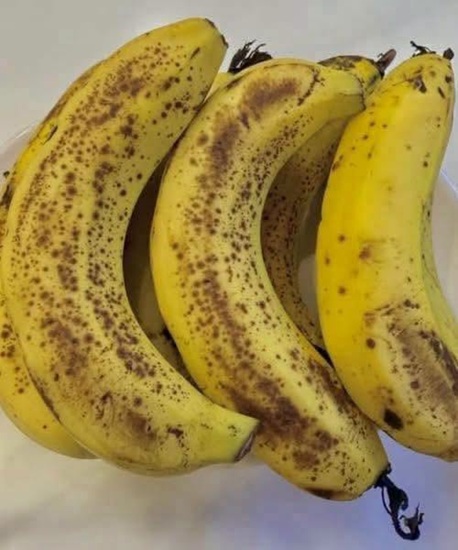
Bananas are among the easiest fruits to recognize, yet the same banana can look and taste remarkably different depending on when you eat it. A newly purchased banana may still have green around its peel and feel firm when touched. Several days later, the same fruit may become bright yellow, noticeably sweeter, and much softer. Leave it longer and brown spots begin appearing across the peel. These visible changes are accompanied by genuine biochemical changes inside the fruit, particularly involving starch and naturally occurring sugars.
The most important point is also one of the simplest. As a banana ripens, much of its starch is progressively converted into sugars. Unripe bananas therefore contain considerably more starch, including resistant starch, while ripe bananas generally contain less resistant starch and more readily available sugars. This process explains much of the change in sweetness and texture that people notice as bananas move from green to yellow and eventually become heavily spotted.
That does not mean a green banana is automatically “healthy” while a spotted banana is unhealthy. It also does not mean that eating a ripe banana will secretly ruin someone’s blood sugar or weight-management efforts. Those claims oversimplify nutrition science. Ripeness can influence carbohydrate digestion, but the effect of eating a banana also depends on portion size, the rest of the meal, activity, individual metabolism, and any relevant medical conditions.
Start with a green or slightly underripe banana.
At this stage, the fruit is firmer and generally less sweet.
Its carbohydrate profile contains substantially more starch than that of a fully ripe banana.
Some of this is resistant starch, a type of starch that resists digestion in the small intestine.
Because resistant starch is not rapidly broken down into glucose in the same way as fully digestible starch, it behaves in some respects similarly to fermentable dietary fiber.
Some of it eventually reaches the large intestine, where gut microorganisms can ferment it.
This characteristic has made resistant starch an interesting subject in nutrition research.
Scientists have studied it in relation to digestion, post-meal glucose responses, satiety, and the gut microbiome.
That research helps explain why slightly underripe bananas are sometimes recommended to people who prefer slower-digesting carbohydrate sources.
However, resistant starch should not be treated as a miracle ingredient.
Eating one green banana does not guarantee stable blood sugar for an entire day.
It does not automatically cause weight loss.
And it cannot single-handedly create a healthy gut microbiome.
Human nutrition is far more complicated than that.
What can reasonably be said is that greener bananas generally contain more resistant starch than ripe ones.
For someone who enjoys the flavor and texture, that can be a useful nutritional characteristic.
Some people also find slightly green bananas more filling.
The firmer texture and resistant-starch content may contribute to a different eating experience from a very soft, ripe banana.
But responses vary.
Another person may find an underripe banana uncomfortable to digest.
That is not unusual either.
Fermentable carbohydrates can sometimes contribute to bloating or gas in susceptible individuals, particularly when dietary intake changes suddenly.
Personal tolerance therefore matters alongside theoretical nutritional benefits.
As the banana continues ripening, enzymes inside the fruit gradually transform its carbohydrate composition.
Starch declines.
Sugars increase.
The flesh becomes softer.
The flavor becomes sweeter.
The characteristic banana aroma also becomes more noticeable.
This is a normal part of fruit ripening rather than evidence that the banana has suddenly become unhealthy.
A fully yellow banana is often the stage many people prefer for everyday eating.
It is sweet without necessarily being extremely soft.
It remains portable and easy to peel.
And it still provides nutrients including carbohydrate, fiber, potassium, vitamin B6, and other micronutrients.
Allow the fruit to ripen longer and brown speckles begin appearing.
At this stage, more of the starch has been converted into sugars.
That is why a spotted banana can taste considerably sweeter than a green one even though nobody added table sugar to it.
The sweetness developed naturally during ripening.
This difference matters when discussing blood glucose.
A greener banana with more resistant starch may produce a different glycemic response from a very ripe banana containing more readily digestible carbohydrate.
For some people trying to manage post-meal glucose levels, choosing a slightly underripe banana may therefore be useful.
But “may be useful” is very different from saying ripe bananas are dangerous.
A person without a medical reason to restrict carbohydrate does not generally need to fear a yellow or spotted banana.
Even for someone with diabetes, whether and how much banana fits into an eating plan depends on individual circumstances.
Carbohydrate amount matters.
Medication matters.
The rest of the meal matters.
And personal glucose responses can differ.
This is why generalized internet charts cannot replace individualized medical or nutritional guidance.
The size of the banana also deserves attention.
A very large banana naturally provides more carbohydrate than a small one.
Discussions that focus exclusively on peel color sometimes overlook this simple fact.
Portion size can be at least as relevant as ripeness when someone is tracking carbohydrate intake.
The food eaten alongside the banana matters too.
Imagine eating a ripe banana by itself.
Now imagine eating the same banana alongside plain yogurt and a handful of nuts.
Those are different meals.
Protein, fat, fiber, and the physical structure of foods can influence digestion and the overall metabolic response.
For someone interested in a more substantial snack, combining fruit with another nutrient-rich food can be practical.
Examples might include banana with unsweetened yogurt, nuts, seeds, or nut butter.
The exact choice depends on preference and dietary needs.
There is no requirement to combine bananas with another food every time.
The point is simply that a person’s physiological response cannot be predicted accurately by looking at the banana peel alone.
This is especially relevant to viral claims about blood sugar.
A headline might say that “the wrong banana is secretly spiking your glucose.”
That language makes normal food sound dangerous.
The scientific reality is more measured.
Ripeness changes the proportions of starch and sugars, which can influence carbohydrate availability.
That information can help someone make an informed choice without turning fruit into something frightening.
Ripe bananas also have practical advantages.
Their softer texture makes them easier to mash.
Their increased sweetness makes them useful in cooking.
A heavily spotted banana can work particularly well in oatmeal, pancakes, smoothies, muffins, and banana bread.
Using naturally sweet ripe fruit can sometimes allow a recipe to achieve the desired flavor with less added sweetener, depending on the recipe.
That does not automatically make every banana-based dessert healthy.
A loaf containing bananas can still contain substantial amounts of added sugar, butter, oil, or refined flour.
The nutritional properties of a finished recipe depend on all its ingredients and the portion consumed.
The banana’s ripeness is only one component.
Smoothies provide another good example.
A smoothie made with one banana, plain yogurt, berries, and other whole-food ingredients is different from a large drink containing multiple bananas, sweetened juice, syrups, and ice cream.
Calling both drinks “banana smoothies” does not make them nutritionally identical.
Context matters.
Exercise is another area where ripe bananas can be convenient.
Carbohydrate is an important fuel source during many forms of physical activity.
Because ripe bananas contain more readily available sugars than green bananas, some people find them useful before or after exercise.
They are portable, require no cooking, and are generally easy to carry.
Still, no single food is the perfect pre-workout choice for everyone.
A runner may tolerate a ripe banana shortly before training.
Another person may experience digestive discomfort and prefer eating earlier.
Someone participating in a long endurance event may require substantially more carbohydrate than one banana can provide.
Exercise nutrition depends on duration, intensity, timing, body size, and individual tolerance.
The banana can be useful without being described as the “ultimate” exercise food.
Claims about digestion also need balance.
Ripe bananas are softer and contain less resistant starch, which some people may find easier to tolerate.
Others may have gastrointestinal conditions that affect how they respond to different fruits.
There is no universal rule saying that spotted bananas will fix a sensitive stomach.
Persistent digestive symptoms deserve appropriate professional evaluation rather than treatment through a banana-ripeness chart.
The gut-health benefits associated with greener bananas are similarly easy to exaggerate.
Resistant starch that reaches the colon can be fermented by gut microorganisms.
This fermentation can produce compounds such as short-chain fatty acids.
That is one reason resistant starch is of interest in research on gastrointestinal health.
But one food cannot independently determine the health of someone’s entire microbiome.
The microbial community in the digestive system is influenced by the broader dietary pattern, medications, age, environment, health status, and many other factors.
Eating a green banana can contribute resistant starch.
It cannot guarantee a particular microbiome.
The same caution applies to claims about immunity and mood.
The gut interacts with many systems in the body, and researchers continue investigating those relationships.
However, it would be misleading to promise that eating a slightly green banana will directly strengthen immunity or improve someone’s mood.
Mechanistic research should not be transformed into guaranteed clinical outcomes.
Antioxidants are another area where online claims frequently become exaggerated.
Bananas contain various plant compounds, including phenolic compounds.
Their levels and measured antioxidant activity can change during ripening.
However, the pattern is influenced by banana variety, growing conditions, storage, ripening stage, and the scientific method used for measurement.
It is therefore too simplistic to say that every additional brown spot makes a banana dramatically more powerful as an antioxidant food.
Laboratory antioxidant activity also does not automatically translate into a large health effect in a person.
Food compounds must be digested, absorbed, metabolized, and used within a complex biological system.
A banana can contribute to a nutritious diet without being described as medicine.
Statements that spotted bananas “fight systemic inflammation” or prevent cellular aging go beyond what can responsibly be promised from eating the fruit.
There is also no evidence-based reason to throw away a banana merely because the peel has developed brown spots.
Normal ripening causes the peel to darken.
If the flesh inside still looks and smells normal, the banana may remain perfectly useful.
Very ripe fruit is often especially suitable for baking or freezing.
Spoilage is different from ripeness.
Visible mold, unusual fermentation odors, leaking material, or severely deteriorated flesh may indicate that a banana should be discarded.
A brown-spotted peel by itself does not necessarily indicate spoilage.
Understanding this difference can also reduce food waste.
Many households throw away bananas when they become softer than preferred for eating directly.
Instead, ripe bananas can be peeled and frozen.
Frozen banana pieces can later be added to smoothies or used in recipes.
This gives the fruit another purpose without requiring anyone to eat it at a stage they dislike.
Storage affects ripening as well.
Bananas are climacteric fruits, meaning their ripening process is associated with increased production and action of the plant hormone ethylene.
Ethylene contributes to changes in texture, color, aroma, and carbohydrate metabolism.
Other ethylene-producing fruits stored nearby can influence ripening conditions too.
Temperature also affects the process.
Once bananas reach the preferred ripeness, refrigeration can slow further changes in the flesh.
The peel may become dark in the refrigerator, sometimes very quickly.
That dark peel can look alarming.
Yet the edible interior may remain suitable for longer than someone expects.
Appearance alone is therefore not always the best indicator of quality.
Different banana varieties can behave differently as well.
The Cavendish banana dominates many supermarkets, but it is only one of numerous banana and plantain cultivars grown around the world.
Different varieties can vary in starch composition, sweetness, texture, size, and culinary use.
Some are commonly eaten raw.
Others are typically cooked.
Some remain starchier even when they appear relatively mature.
This diversity is another reason universal banana charts should be interpreted as broad guides rather than exact scientific rules.
Cultural food practices also demonstrate how flexible bananas can be.
Green bananas may be cooked as a starchy food in some cuisines.
Ripe bananas may be eaten fresh or used in desserts.
Plantains can be fried, boiled, baked, or mashed at different stages of ripeness.
There is no single correct way to consume these fruits.
The ideal stage depends partly on what someone wants to prepare.
For everyday nutrition, the most useful distinction is therefore straightforward.
Greener banana: firmer, less sweet, and generally higher in resistant starch.
Yellow banana: softer and sweeter as starch continues converting to sugars.
Spotted ripe banana: softer still, sweeter, and lower in resistant starch.
Those differences are real.
What should be avoided are unsupported conclusions attached to them.
Green does not mean “weight-loss banana.”
Yellow does not mean “blood-sugar danger.”
Brown spots do not mean “super-antioxidant medicine.”
Food rarely fits into categories that simple.
For weight management, overall dietary patterns matter far more than choosing one banana color.
Body weight is influenced by energy intake and expenditure over time along with numerous behavioral, environmental, and biological factors.
Eating a ripe banana does not automatically cause weight gain.
Eating a green banana does not automatically cause weight loss.
Satiety can still be relevant.
Someone may find a firmer, starchier banana keeps them satisfied longer.
If that helps them construct an eating pattern they enjoy and can maintain, it may be useful.
Another person may prefer a ripe banana and find it equally satisfying when combined with yogurt or nuts.
Both approaches can be reasonable.
The goal does not need to be finding the one perfect banana.
There probably isn’t one.
The better goal is understanding what ripeness changes and selecting fruit according to preference, intended use, and individual nutritional needs.
If someone wants more resistant starch, choosing a greener banana makes sense.
If someone wants greater sweetness and softness, choosing a ripe banana makes sense.
If someone wants an ingredient for banana bread, a heavily spotted banana may be ideal.
If someone wants easily consumed carbohydrate around exercise, ripe fruit may be convenient.
None of these choices requires fear of the alternatives.
People managing specific medical conditions need additional context.
For diabetes, carbohydrate quantity and individual glucose response are important.
For kidney disease, potassium intake may need individualized management depending on the person’s condition and medical guidance.
For gastrointestinal disorders, tolerance can vary.
These situations are reasons to seek personalized advice rather than follow generalized social-media claims.
For most healthy people, bananas can simply be one component of a varied diet containing fruits, vegetables, whole grains, protein sources, healthy fats, and other nutrient-rich foods.
Variety matters.
No individual fruit needs to carry the responsibility of creating perfect health.
That perspective also makes nutrition easier.
Food does not have to be classified as either a miracle or a threat.
A banana is not a medication.
It is not a detox treatment.
It does not melt fat.
It does not destroy metabolism.
It is a fruit whose composition naturally changes as it matures.
That transformation is scientifically interesting enough on its own.
Starch is progressively broken down.
Sugars become more prominent.
Texture softens.
Flavor becomes sweeter.
Aroma develops.
The peel changes color.
Those processes explain why the banana you bought on Monday may provide a noticeably different eating experience by Friday.
They also explain why different stages work better for different culinary purposes.
A greenish banana may be too firm for a smoothie someone wants to taste sweet.
A heavily spotted banana may be too soft for someone who prefers carrying fruit in a lunch bag.
Neither is nutritionally “wrong.”
The choice depends on the situation.
So the next time you reach toward the fruit bowl, there is no need to worry that choosing the wrong color will secretly sabotage your health.
You can instead make a practical decision.
Want something firmer and less sweet with more resistant starch?
Choose a banana with some green remaining.
Want a balanced ripe texture and familiar sweetness?
Choose yellow.
Want a naturally sweet, soft fruit for blending or baking?
Those brown spots can be useful.
Understanding the science gives you options rather than rules.
That is the most accurate lesson behind banana ripeness.
Different colors reflect different stages of a natural biological process.
Those stages alter carbohydrate composition and can influence digestion and glycemic response.
But they do not divide bananas into healthy and unhealthy categories.
There is no universally perfect banana.
There is simply a range of ripeness stages with somewhat different characteristics.
Choose according to your preferences and needs.
Consider the rest of your diet.
Follow individualized medical guidance when necessary.
And enjoy the fruit without turning every brown spot into either a health warning or a miracle cure.

