
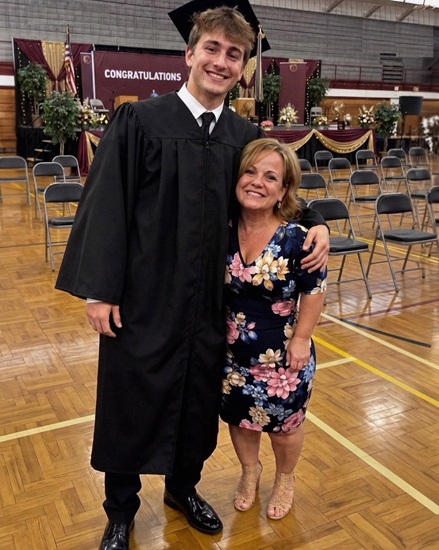
For most of my life, I believed I had a clear understanding of my identity and personal history. My name is Evan, I am 22 years old, and I recently completed my university studies. Graduation was meant to be one of the most important milestones of my life, a moment of pride and celebration. However, it unexpectedly became the day when everything I thought I knew about my past began to change in ways I never imagined. I was raised by my mother, Laura, who took full responsibility for me from the moment I was born.
She worked hard every day, managed all aspects of our life, and ensured that I never felt neglected or alone. Throughout my childhood, she was my only constant source of support. Because of her strength and dedication, I never questioned the version of our family story that she shared with me. According to what she told me, she became a mother at a young age while still studying in college.
She often described that period as challenging but manageable, saying she balanced education and motherhood at the same time. When she spoke about my father, her explanations were always brief and calm, usually suggesting that he was not ready for responsibility or that their relationship ended before I was born. Over time, I accepted this as the complete truth.
As I grew older, I occasionally wondered about my father, but I never deeply questioned the situation. My mother never spoke with anger or sadness about the past, which made her version of events feel stable and final. Eventually, I stopped asking altogether and focused on building my own future with the life I had.
My upbringing was simple but stable. My mother worked long hours to provide for us, handled all financial responsibilities, and supported my education. She taught me independence, discipline, and respect for hard work. I grew up believing that our small family was complete, and I never felt that something essential was missing from my life.
When I reached college, I began experiencing independence in a new way. I worked hard to complete my degree, facing academic pressure and personal growth challenges along the way. Graduation day felt like the reward for years of effort and dedication. My mother arrived early, as she always did for important events, and her presence made the day feel even more meaningful.
The ceremony passed quickly, filled with speeches, applause, and moments of celebration. When my name was called, I walked across the stage and looked into the audience until I found her. She was standing, smiling, and visibly emotional, proudly watching every step I took. At that moment, I felt grateful for everything she had done for me throughout my life.
After the ceremony, families gathered outside to take photos and celebrate. My mother, full of joy, insisted on capturing every moment. She adjusted my graduation cap, fixed my gown, and kept saying we should take “just one more picture.” Everything felt normal and happy, as if the day was simply the conclusion of a long journey.
However, that sense of peace changed when I noticed a man standing alone at a distance. He was observing me quietly, without interacting with anyone around him. He did not appear threatening, but there was something serious in the way he looked at me that immediately caught my attention.
A few moments later, he approached me and addressed me by name. He introduced himself as Mark and claimed that he had something important to tell me. In front of my mother and surrounded by people celebrating, he said that he believed he was my biological father. The words shocked me instantly, and I struggled to process what I had just heard.
My first reaction was disbelief. I laughed nervously, thinking it might be a misunderstanding or a mistake. However, his expression remained serious. My mother immediately became quiet, and her reaction suggested that she was equally unprepared for this moment. The atmosphere changed completely as confusion replaced the celebration around us.
The man insisted that I deserved to know the truth. He explained that he had been searching for me and that he had only recently learned I was alive. According to him, he had been told years ago that the pregnancy had ended in a miscarriage. He said he had accepted that information at the time and had no idea that I had actually been born and raised.
My mother responded emotionally, stating that the situation was not as simple as he described. She explained that she had been under pressure during that period of her life and had made difficult decisions based on fear and uncertainty. The conversation became intense, and it was clear that the full truth was far more complicated than either of us expected.
To avoid drawing attention from the crowd, we moved to a quieter area nearby. There, both sides began to share their memories and perspectives. Mark explained that he had been young and unprepared for fatherhood, but insisted he did not intentionally abandon me. He said he had been led to believe that I was no longer alive, which changed everything he thought he knew.
My mother, in turn, explained that she had been overwhelmed at the time and felt pressured by external circumstances. She described fear of losing control over the situation and concerns about what might happen if others became involved. Her decision, as she explained, was made in a moment of emotional distress rather than clarity.
As the conversation continued, it became clear that misunderstandings, fear, and miscommunication had shaped the entire story. There was no simple version of events, only different perspectives formed under difficult circumstances. The truth was not straightforward, but layered and emotionally complex.
Before leaving, Mark handed me his contact information and told me I could reach out whenever I felt ready. He did not demand anything or try to force a relationship. Instead, he simply stepped away, leaving the decision in my hands. The moment felt heavy, as if an entire part of my life had been opened without warning.
That evening, my mother and I returned home in silence. The celebration of graduation felt distant, almost disconnected from what had happened earlier in the day. We sat together for a long time without speaking, both trying to understand the situation in our own way.
Eventually, my mother began to explain more about her past decisions. She spoke honestly about fear, pressure, and the emotional burden she carried for many years. Hearing her perspective helped me understand that her actions were not simple or careless, but shaped by circumstances she felt she could not control at the time.
In the days and weeks that followed, I found myself reflecting deeply on everything that had been revealed. I did not rush into any decisions or immediate changes. Instead, I took time to process my emotions and understand what this new information meant for me personally.
Eventually, I decided to contact Mark. Our communication began slowly, with simple conversations that gradually became more open and detailed. He shared parts of his life story, while I shared my own experiences growing up. Over time, I began to understand that this situation was not about replacing anything, but about discovering a part of my history that had been hidden from me.
At the same time, my relationship with my mother also evolved. We began communicating more openly, discussing emotions and past events with greater honesty than before. While the situation was not easy for either of us, it created an opportunity for deeper understanding and reflection.
In the end, I realized that identity is shaped not only by the past we are told, but also by the truths we eventually discover. Life does not always follow a clear or simple narrative. Sometimes, it unfolds in unexpected ways that challenge everything we believed to be certain.
My story did not suddenly become perfect or resolved. Instead, it became more honest, more complex, and more real. And in that truth, I began to understand both my past and my future in a completely new way.

