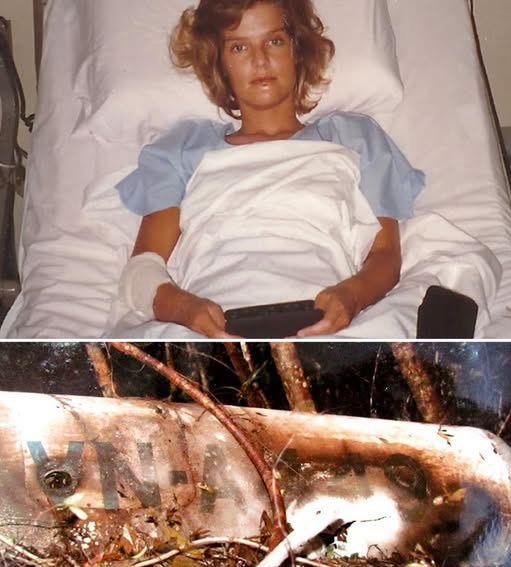
In November 1992, Annette Herfkens believed she was beginning a short romantic trip with the man she had loved for many years. Instead, the journey became one of the most extraordinary survival stories connected with a commercial plane crash. Herfkens was traveling in Vietnam with her longtime partner, Willem van der Pas, whom she affectionately called Pasje. They had spent months working in different countries and were finally taking time away together. Their destination was the coastal city of Nha Trang, where they expected to relax after a demanding period in their professional lives.
Herfkens was 31 and had already built a successful career in international banking. She was Dutch and had studied at Leiden University, where she met Van der Pas. Their relationship had lasted for roughly 13 years by the time of the accident. Their careers often required them to live or work in different countries, and this trip was meant to give them time together after another long separation. Nothing about the holiday suggested that it would become the event that permanently divided Herfkens’ life into a before and an after.
On November 14, 1992, the couple boarded Vietnam Airlines Flight 474 from Ho Chi Minh City to Nha Trang. The aircraft was a Yakovlev Yak-40, a relatively small Soviet-built passenger jet. Herfkens later recalled that she already felt uncomfortable before departure because she had claustrophobia and disliked the size of the aircraft. Van der Pas tried to reassure her and encouraged her to board. She eventually took her seat beside him, believing the discomfort would last only for the duration of a short domestic flight.
There were 31 people aboard Flight 474, including 25 passengers and six crew members. The weather conditions were difficult as the aircraft approached Nha Trang. Tropical Storm Forrest was affecting the region, and visibility and terrain presented significant challenges. The flight eventually descended too low while approaching its destination and struck mountainous terrain. The aircraft crashed in a remote area surrounded by dense jungle.
Herfkens later remembered the aircraft dropping suddenly during the final part of the flight. Van der Pas appeared increasingly concerned. Another drop followed, and passengers reacted with fear. Her memories of the final seconds before impact were fragmented. She remembered darkness and then the violent collision. When she regained consciousness, the comfortable vacation she had imagined had completely disappeared.
She woke inside the damaged aircraft with the body of another passenger lying partly over her. Van der Pas remained nearby in his seat. He had died. The person she had expected to spend the holiday with, and much of her future with, was suddenly gone. Herfkens was also badly injured and initially unable to understand the full extent of what had happened around her.
Her injuries were severe. She suffered numerous fractures in her hip and knee, serious damage to her jaw, and a collapsed lung. Moving was extremely painful. She later said that she did not clearly remember exactly how she managed to escape from the wreckage. Her best reconstruction was that she crawled from the aircraft and then moved some distance away despite the damage to her body.
The pain involved in those movements would have been considerable. Her lower body was badly injured, and normal walking was impossible. Yet remaining inside the wreckage also presented risks. Somehow, she succeeded in getting outside and positioning herself away from the aircraft. That small distance would become the place where she spent much of the next eight days.
At first, Herfkens was not the only person who had survived the initial crash. She heard other injured passengers making sounds. There were cries and groans from people who were still alive but badly hurt. For a brief period, the site contained several survivors. Herfkens was not completely alone.
As the hours passed, however, those sounds gradually disappeared. The other passengers who had survived the impact succumbed to their injuries. Eventually, the jungle became quiet except for its natural sounds. Herfkens realized that she was surrounded by people who had died and that she might now be the only person still alive.
The psychological impact was enormous. She was severely injured, grieving the death of her partner, and trapped in an unfamiliar jungle without medical help. Panic could easily have consumed whatever strength remained. Her collapsed lung made breathing especially difficult, and fear made that problem worse.
Herfkens began focusing deliberately on her breathing. She concentrated on one breath at a time rather than allowing her thoughts to move continuously toward the scale of the disaster. Decades later, she described the technique as something similar to what people now call mindfulness. At the time, she was simply trying to keep herself calm enough to continue breathing.
The natural environment around her became another source of focus. She later remembered looking closely at the leaves surrounding her. Their colors, moisture, and movement gave her something alive to observe. The wreckage behind her represented loss and death. The jungle in front of her still contained movement, water, vegetation, and signs of life.
That contrast gradually shaped the philosophy Herfkens later developed from the experience. She could not change the fact that Van der Pas had died. She could not transform the crash site into the beach holiday she had planned. She could not instantly repair her broken body. What she could do was acknowledge those realities and focus on the resources that were still available.
Water quickly became the most urgent practical problem. Herfkens knew that surviving without adequate hydration would be impossible for very long. She had no normal water supply, no bottle, and no ability to walk through the jungle searching for a stream. She needed to use whatever she could find near the wreckage.
She noticed insulation material from the damaged aircraft and realized that it might absorb rainwater. Reaching it required movement despite her injuries. Because she could not use her legs normally, she dragged herself using her arms and elbows. The effort caused severe damage to her skin, and her elbows later required medical treatment and skin grafts.
The pain did not prevent her from reaching the material. She gathered pieces and formed them into small makeshift collectors. The plan depended entirely on rain. If enough water fell, the insulation could absorb moisture that she could later squeeze or drink.
Eventually, rain arrived. The improvised method worked. Herfkens now had access to small amounts of water, although the supply was limited and uncertain. She rationed it carefully rather than drinking everything at once.
She later remembered taking a small sip approximately every two hours. After each one, she deliberately congratulated herself. The act may sound simple, but it divided an impossible situation into manageable intervals. Instead of asking whether she could survive eight days, she only needed to reach the next sip.
This way of thinking became one of the strongest themes in Herfkens’ later discussions of survival. Large problems can become psychologically overwhelming when viewed all at once. Breaking them into smaller tasks can preserve a sense of control. For Herfkens, the goals were basic: breathe, collect water, drink carefully, conserve energy, and continue waiting.
She had no food during the ordeal, but lack of water posed the more immediate threat. Human beings can generally survive longer without food than without hydration. The rainwater therefore became the resource most directly connected with her survival.
Her inability to move far may also have helped conserve energy. She could not wander through the jungle and become lost. She remained close to the wreckage, where rescuers were most likely to look once the aircraft was found. Although her injuries were dangerous, they also forced her to stay in one location.
The search for Flight 474 was difficult because the aircraft had crashed in remote mountainous terrain. Thick vegetation made wreckage difficult to see from above. Poor weather complicated the search. The exact crash site was not immediately known, and rescuers had to examine a large area.
For Herfkens, there was no way to know how close the search teams were. She had no radio or telephone. There was no signal telling her that rescue was only hours away. Every day required continuing without certainty.
She later said that she generally believed people would keep looking for the aircraft. That belief gave her a reason to remain focused on survival. She did not need to know exactly when they would arrive. She only needed to remain alive long enough for the search to succeed.
The jungle gradually became less frightening to her than the wreckage itself. She noticed beauty in the vegetation and the changing light. This did not erase the tragedy around her. Instead, it gave her attention somewhere else to rest.
Herfkens later expressed this idea in a sentence that became central to her public talks: if you accept what is not there, you can begin to see what is there. In the jungle, she had to accept that Van der Pas was gone and that the vacation they had planned no longer existed. Only then could she concentrate fully on the resources still around her.
Acceptance did not mean that she approved of what had happened. It did not reduce her grief or injuries. It simply meant that she stopped spending every remaining ounce of energy mentally demanding a different reality.
That distinction later became one of the most important parts of her philosophy. People sometimes misunderstand acceptance as giving up. Herfkens saw it differently. Accepting a loss allowed her to act more effectively within the reality she actually had.
Her physical condition continued to deteriorate during the eight days. Without proper food or medical treatment, her body had limited reserves. Pain, dehydration, and injuries placed enormous stress on her system.
Yet the small amount of water she collected helped keep her alive. She continued rationing it and monitoring herself. She did not have instruments or medical knowledge beyond basic common sense. Survival was reduced to simple observation and instinct.
There were no heroic marches through the jungle. Herfkens survived largely by staying still.
This is one reason her story differs from many fictional survival narratives. The dramatic action was limited. She could barely move. Her greatest achievements were collecting water, regulating panic, and enduring.
Waiting itself became a form of survival.
Every hour without help required patience.
Every night brought uncertainty.
Every silence reminded her that the other passengers were gone.
Still, she continued.
On the eighth day after the crash, rescuers finally reached the site.
A Vietnamese police officer and members of a search team arrived expecting to find bodies. They did not believe anyone could still be alive after so many days in the jungle following such a severe crash.
Then they found Herfkens.
The discovery transformed the recovery mission into a rescue operation.
She had survived the impact, extensive fractures, a collapsed lung, lack of food, limited water, and eight days without medical treatment.
The rescuers now had to get her out of the remote terrain.
They placed her on an improvised stretcher and carried her toward medical assistance.
The extraction was difficult because the area was mountainous and heavily forested. Her injuries made every movement potentially painful.
Eventually, however, Herfkens reached medical care.
The final toll of Flight 474 was devastating.
Thirty of the 31 people aboard died.
Herfkens was the sole survivor.
All six crew members and 24 of the 25 other passengers lost their lives.
For aviation records, the accident became one of Vietnam Airlines’ major tragedies of the period.
For Herfkens, the statistics could never capture the most important loss.
Willem van der Pas was dead.
They had shared approximately 13 years together.
Their careers had taken them to different countries, but they had continued planning a future.
The holiday was supposed to reconnect them.
Instead, Herfkens returned without him.
Physical rehabilitation began almost immediately after her rescue.
Her body needed treatment for fractures, lung damage, wounds, and the injuries caused by crawling through the jungle.
Recovery required time, but some of her progress was surprisingly fast.
Only weeks later, she was able to return to the Netherlands for Van der Pas’s funeral.
She was still physically recovering when she attended.
The ceremony forced her to confront grief in a completely different setting.
In the jungle, survival had occupied nearly all of her attention.
Back home, there were fewer immediate physical tasks to distract her from loss.
The psychological consequences became more visible.
She later described anger as part of her recovery.
Surviving when everyone else died did not automatically create gratitude or peace.
It also created questions.
Why had she lived?
Why had Van der Pas died?
Why had the trip ended this way?
There were no simple answers.
By around the beginning of 1993, Herfkens was walking again.
In February, only a few months after the crash, she returned to work in banking.
The speed of that return should not be mistaken for complete recovery.
Work provided structure.
Trauma remained.
Certain situations continued triggering memories long after her body had healed.
Flying remained possible for Herfkens, but specific details could remind her of the crash.
She became uncomfortable sitting directly behind other passengers because seeing the back of a seat could trigger memories of waking with a dead passenger over her.
When possible, she preferred seats where that visual reminder was absent.
Food could trigger memories as well.
Certain Vietnamese dishes or smells could suddenly transport her mentally back to the jungle.
Trauma can operate through sensory associations rather than deliberate memory.
A smell, sound, or physical arrangement can bring back an experience unexpectedly.
Water became associated with something very different.
During the eight days, each sip had been precious.
Decades later, Herfkens continued treating water with unusual appreciation.
She often carried it with her and described drinking it with an awareness that most people rarely need to develop.
Ordinary hydration had become permanently connected with survival.
Her professional life also resumed.
The crash did not end her ability to work or build another future.
Over time, other relationships and responsibilities entered her life.
Jaime Lupa, a colleague and friend, had traveled to Vietnam during the search.
He had continued hoping that Herfkens might be found alive.
Years later, the two married.
They eventually built a life together and had two children, Joosje and Max.
The marriage later ended in divorce.
Still, that chapter demonstrated that Herfkens’ future had not ended with the loss of Van der Pas.
She experienced love, parenthood, and major life changes after the accident.
Her son Max was later diagnosed with autism.
Herfkens has spoken about how this required another adjustment of expectations.
She connected the experience with the lesson she believed she had learned after the crash.
First, acknowledge what cannot be changed.
Then look carefully at what remains.
She did not describe this as pretending disappointment or grief did not exist.
She believed loss had to be fully recognized.
Only after that process could attention move toward what was possible.
With her son, that meant learning to focus on his individual strengths and needs rather than only on expectations that might not apply to him.
Her experiences as a mother also connected her with other families.
She became involved with communities of parents navigating autism and other developmental differences.
Those relationships exposed her to experiences and concerns beyond her own family.
Herfkens continued applying practical preparation to situations that frightened her.
She has discussed making plans designed to help her son handle encounters with authorities or unfamiliar environments.
The same instinct to prepare for manageable possibilities remained part of her life.
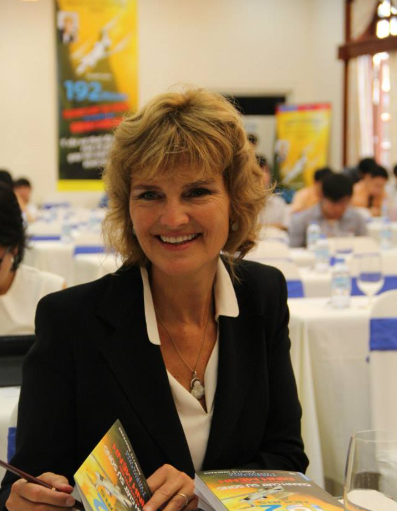
Over time, Herfkens became an author and public speaker.
She wrote Turbulence: A True Story of Survival, a memoir exploring the crash, the jungle, grief, and the lessons she believed came afterward.
The book allowed her to describe details that could not fit into a short interview.
It also turned an experience that had once been entirely personal into something she could share deliberately with others.
When Herfkens began speaking publicly about survival, she discovered that some of the things she had done instinctively matched established survival principles.
She had focused on immediate priorities.
She had conserved energy.
She had secured water.
She had broken large problems into smaller tasks.
She had remained near the crash site rather than attempting an impossible journey.
None of this had come from formal wilderness training.
Herfkens had been a banker, not a survival expert.
Her professional world before the crash involved international finance.
She worked with markets, risk, uncertainty, and complex decisions.
The jungle removed almost every element of that professional identity.
Money was useless.
Career status was irrelevant.
There were no meetings or transactions.
The only important questions were whether she could breathe and whether she could find enough water.
Her background may still have influenced the way she approached problems.
Financial work often requires accepting losses and adjusting quickly when circumstances change.
Herfkens later used this comparison when discussing personal adversity.
A loss cannot be undone by refusing to acknowledge it.
Remaining focused on what should have happened does not change what actually happened.
The crash provided the most extreme version of that lesson.
The holiday was gone.
Van der Pas was gone.
The aircraft was destroyed.
Her body was badly injured.
Those were fixed realities.
Rain, insulation material, breath, and the possibility of rescue were still available.
Those were the things she could work with.
Herfkens has also reflected on personality traits that may have helped her.
She described herself as independent from a young age.
As the youngest child in her family, she felt loved but also accustomed to solving problems without constant guidance.
She believes that independence encouraged improvisation.
She has additionally speculated that she may have had undiagnosed attention-deficit traits.
Her comments on this subject should be understood as personal reflection rather than confirmed medical diagnosis.
She has wondered whether certain traits contributed to creativity and improvisation.
It would be inaccurate to claim that ADHD caused her survival.
It would also be inaccurate to claim that medication would necessarily have changed her abilities.
Herfkens herself was reflecting on personality, not establishing scientific causation.
Chance remains an unavoidable part of the story.
Herfkens survived the initial collision when many people did not.
Others reportedly lived for some time afterward but suffered injuries too severe to survive without immediate medical care.
Her actions after the crash mattered enormously.
But survival cannot fairly be reduced to mindset alone.
People can make excellent decisions and still die from catastrophic injuries.
Herfkens herself experienced a combination of luck, instinct, endurance, and practical action.
Acknowledging chance does not diminish her accomplishment.
It makes the story more accurate.
She did not control the impact.
She controlled what she did afterward.
That difference is important.
Her later career as a speaker focused increasingly on this distinction between what people can and cannot control.
Extreme circumstances may remove most choices.
Even then, some small decisions can remain.
In the jungle, Herfkens could not choose whether Van der Pas survived.
She could choose whether to keep looking for water.
She could not choose whether rescuers immediately located the aircraft.
She could choose whether to conserve her strength while waiting.
She could not choose whether her body was broken.
She could choose how to respond to panic.
The idea became relevant far beyond aviation accidents.
Most people will never survive a plane crash.
But almost everyone eventually experiences circumstances that cannot be reversed.
Relationships end.
Jobs disappear.
Illness changes plans.
People die.
Children develop differently from what parents expected.
Herfkens’ message became that adaptation begins only after reality is acknowledged.
This philosophy did not erase her trauma.
She continued experiencing reminders decades later.
Healing was not a complete disappearance of memory.
Instead, life gradually expanded around what had happened.
The jungle itself became one of the most surprising symbols of that process.
Many people might expect the place connected with eight days of pain and death to remain terrifying.
Herfkens developed a different relationship with it.
She began referring to the jungle as a kind of safe place in her mind.
The same vegetation that surrounded the wreckage also helped calm her.
The leaves she watched while injured became connected with the mental state that kept panic under control.
Trauma and comfort therefore existed within the same memory.
This complexity is important.
Survivors do not all react in identical ways.
One person may avoid every reminder of an accident.
Another may feel drawn toward specific parts of the experience.
Neither reaction provides a universal model.
Herfkens’ relationship with the jungle was uniquely hers.
She eventually returned to Vietnam and revisited aspects of the history surrounding the crash.
Returning allowed her to connect the memories of 1992 with a present-day landscape.
The journey was not about pretending the accident had never happened.
It was about seeing the place as part of a longer life rather than only the location where everything ended.
Anniversaries also remained important.
Every November, the date of the crash returns.
Herfkens has developed rituals around the eight days that followed November 14.
Water often plays a central role.
A drink can represent something most people rarely think about.
For her, it once meant another few hours of survival.
She has also described allowing herself small gifts or moments of celebration.
Survival and grief do not cancel each other out.
Remembering the people who died does not require regretting the fact that she lived.
That balance developed gradually.
The crash eventually attracted interest from filmmakers and producers.
Herfkens has said that some proposed adaptations wanted to make the story more conventionally heroic or dramatic.
She did not always agree with those interpretations.
In her view, survival was partly possible because she stopped treating herself as the center of the universe.
The jungle was not a personal enemy.
The weather was not punishing her specifically.
The crash was not something she could reverse by asking why it had happened.
Removing that personal framing helped her concentrate on practical needs.
She later summarized the idea by saying that she had to “get over” herself.
The phrase did not mean her life lacked value.
It meant she needed to stop spending energy on the unfairness of the situation while immediate survival required attention.
That mental shift gave instinct more room to operate.
When thirsty, find water.
When panicking, breathe.
When exhausted, remain still.
When rain arrives, collect it.
Do what the moment requires.
This simplicity is part of what makes the story powerful.
There were no sophisticated technologies involved in her survival.
The aircraft insulation was crude.
The water came from rain.
The breathing technique required no equipment.
Rescue depended on people eventually finding the wreckage.
Her survival came from making use of basic resources while waiting.
The body also played an important role.
Her injuries were severe enough to immobilize her but not immediately fatal.
Had they been slightly different, the outcome could easily have changed.
Herfkens survived in a narrow space between terrible injury and survivable injury.
That reality should temper overly inspirational interpretations.
The other passengers did not die because they lacked determination.
Many suffered catastrophic trauma.
Herfkens happened to have injuries that allowed enough time for improvisation and rescue.
What she did with that time remains extraordinary.
She kept herself hydrated.
She controlled panic.
She stayed alive for eight days.
Those accomplishments are sufficient without comparing her morally with people who died.
The accident itself also deserves to remain more than a backdrop for inspiration.
Thirty families lost someone.
Crew members died while doing their jobs.
Passengers never returned home.
Van der Pas lost the future he expected.
Herfkens carried those realities with her afterward.
Her survival story exists alongside their deaths, not instead of them.
This is why the word “miracle” can sometimes oversimplify events.
For Herfkens and the families of the dead, the accident contained both survival and enormous tragedy.
One person returning home did not undo the losses.
Still, it gave one family an outcome they had almost stopped believing was possible.
Herfkens’ own family and colleagues had been waiting for information.
Reports initially gave little reason for hope.
As days passed, the possibility of survivors appeared increasingly remote.
Then rescuers discovered her alive.
That reversal made the story internationally remarkable.
Herfkens eventually returned to a life containing ordinary concerns again.
Work.
Marriage.
Children.
Divorce.
Parenting.
Travel.
Public speaking.
These later experiences mattered because they demonstrated that survival is not a final destination.
Being rescued does not automatically solve life.
It simply creates the possibility of having more of it.
Herfkens used that possibility fully.
She resumed her career.
She became a parent.
She wrote.
She spoke to audiences.
She continued flying.
She experienced additional grief.
She created new relationships.
The crash remained present, but it was no longer the only thing present.
This may be the deeper meaning of the philosophy she developed.
Accepting what is missing does not mean forgetting it.
It means making enough room to see what else exists.
In 1992, what existed was rainwater and jungle.
Years later, what existed included children, work, friendships, and another future.
The principle remained the same.
Herfkens’ story continues attracting attention more than three decades after the crash because the basic circumstances are so difficult to imagine.
A passenger aircraft goes down in remote jungle.
Nearly everyone dies.
One severely injured woman crawls away.
She has no food.
She has almost no water.
She cannot walk.
She waits eight days.
Then rescuers arrive.
The facts already contain enough drama.
They do not need exaggeration.
Herfkens was not a Wall Street trader traveling in luxury.
She was a Dutch international banker working in Madrid.
There were 31 people aboard the aircraft, not simply a small group of tourists.
The crash happened in difficult weather near Nha Trang.
Her partner’s name was Willem van der Pas.
She survived eight days before rescuers reached her.
These details matter because accuracy makes the story stronger.
Her experience is extraordinary without altering the record.
The most striking part may still be the way she describes small victories.
A sip of water became worth celebrating.
In ordinary life, people rarely congratulate themselves for drinking.
In the jungle, each sip meant that the plan was still working.
Two more hours had passed.
Her body was still functioning.
Rescue was still possible.
That method of measuring time kept the future from becoming overwhelming.
She did not need to know whether she could survive another week.
She needed only to survive until the next drink.
Then the next.
Then the next.
Eventually, those small intervals became eight days.
And on the eighth day, people finally arrived.
For Herfkens, the jungle where she lost the man she loved also became the place where she discovered how little a person sometimes needs to continue.
Water.
Breath.
Attention.
A small plan.
And enough hope to wait.
She never suggested that those things remove grief.
They did something more practical.
They allowed her to remain alive while grief existed.
That lesson continued long after her rescue.
Her life after 1992 became evidence that tragedy and future possibility can occupy the same biography.
One chapter can be devastating without becoming the final chapter.
Herfkens did not receive the future she planned with Van der Pas.
She received another future entirely.
It contained joy and difficulty she could not have imagined while lying beside the wreckage.
That is what makes the story larger than the eight days themselves.
The crash demonstrated how quickly a life can change.
The decades afterward demonstrated how much life can still contain after that change.
Annette Herfkens boarded Flight 474 expecting a holiday.
She left the Vietnamese jungle as its sole survivor.
More than thirty years later, she continues to describe what kept her alive in surprisingly simple terms.
Accept reality.
Notice what remains.
Use what you have.
Take the next breath.
Take the next sip.
And when circumstances remove the future you expected, begin again with whatever is still in front of you.
