
Antique markets, estate sales, and neighborhood yard sales often contain objects that appear ordinary at first glance but represent important chapters of everyday history. Among old furniture, worn kitchen utensils, and forgotten household tools, it is still possible to find vintage laundry equipment that once played an essential role in family life. One such item is the hand-operated laundry wringer, a practical device that was commonly used before electric washing machines became standard in homes.
Although many people today have never seen one in operation, these machines provide a fascinating glimpse into how previous generations managed one of the most demanding household responsibilities. At first glance, a vintage laundry wringer can appear unusual to modern eyes. Most examples consist of a sturdy wooden or metal frame supporting two heavy rollers positioned closely together.
A hand crank allows the user to rotate the rollers so that freshly washed fabric can pass between them. As clothing moves through the rollers, much of the excess water is squeezed out before the items are hung outside or indoors to dry naturally. While the mechanism appears simple, it represented a significant improvement over the earlier practice of wringing heavy, water-soaked fabrics entirely by hand.
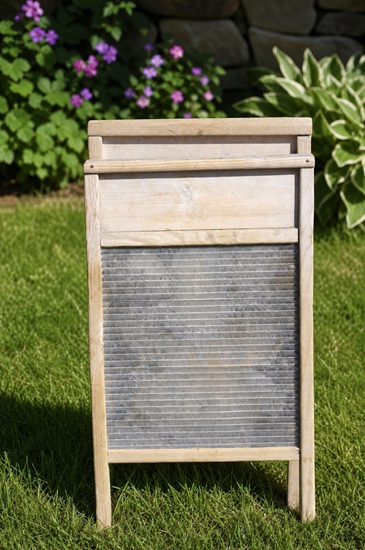
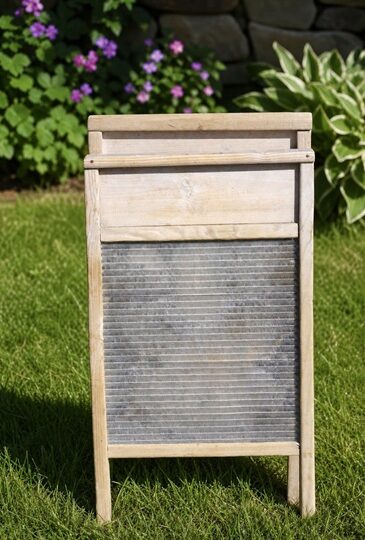
Long before automatic washing machines became widely available, laundry required considerable physical effort. Depending on the region and historical period, families often collected water from wells, hand pumps, rain barrels, or nearby streams before heating part of it for washing. Soap was carefully measured because it represented both an expense and a valuable household supply. Garments were scrubbed individually using washboards or by hand, rinsed several times, and then prepared for drying. Completing laundry for an entire household could occupy many hours, particularly in larger families where clothing, bedding, towels, and work garments all required regular cleaning.
The introduction of mechanical wringers helped reduce one of the most physically demanding parts of the washing process. Thick blankets, denim work clothes, towels, and bed linens absorbed large amounts of water, making them extremely heavy to lift and twist by hand. Passing these items through a wringer removed much of that moisture more efficiently while reducing strain on the hands and wrists. Although the task still required effort, the invention represented an important practical advancement for many households during the late nineteenth and early twentieth centuries.
Many wringers were manufactured with durability in mind. Heavy cast-iron frames, solid hardwood components, adjustable pressure mechanisms, and replaceable rubber rollers allowed these tools to remain in service for many years. Unlike many modern appliances that contain electronic components, mechanical wringers could often be repaired using basic tools. Families frequently maintained them for decades, and in some cases the same machine served multiple generations before eventually becoming a valued heirloom or collector’s item.
Laundry routines also reflected the social and economic realities of their time. In rural communities, washing was sometimes completed outdoors where larger quantities of water were more easily available. In towns and cities, some neighborhoods shared public washhouses equipped with large tubs and drying areas. These communal spaces often became places where neighbors exchanged news, discussed daily life, and supported one another while completing demanding household work. Although the primary purpose was practical, laundry day sometimes also provided valuable opportunities for social interaction.
Historical photographs, museum collections, and written accounts illustrate how carefully organized these routines often were. Washing generally followed a sequence that included sorting garments by fabric type and color, soaking heavily soiled items, scrubbing, rinsing, passing clothing through the wringer, and finally hanging everything on clotheslines to dry. Weather played an important role because sunshine and moving air greatly improved drying efficiency. Rain or cold temperatures could significantly extend the process, making careful planning an important part of household management.
As electricity became increasingly available during the twentieth century, household technology evolved rapidly. Electric washing machines gradually reduced the amount of physical labor required for laundry while improving efficiency and consistency. Automatic spin cycles largely replaced hand-operated wringers, and electric dryers later reduced dependence on outdoor clotheslines. These technological developments transformed household routines, saving both time and physical effort for millions of families around the world.
Although modern appliances have dramatically simplified laundry, historians often note that older household tools continue to offer valuable insight into everyday life. Unlike decorative antiques created primarily for display, laundry wringers were practical working devices used repeatedly under demanding conditions. Every worn handle, repaired bolt, and weathered wooden surface reflects years of regular use by families who depended on reliable household equipment to complete essential daily tasks.
Today, vintage laundry wringers are appreciated by collectors, museums, and history enthusiasts not because they represent hardship alone, but because they illustrate human ingenuity and adaptation. They remind us that technological progress often develops through gradual improvements to ordinary tasks that affect millions of people. By preserving these objects, communities help document the history of domestic life and the practical innovations that shaped modern households. Understanding how earlier generations cared for their homes provides valuable perspective on how dramatically everyday life has changed while encouraging appreciation for both historical craftsmanship and modern convenience.
As household technology continued to evolve throughout the twentieth century, the role of the traditional laundry wringer gradually came to an end. Electric washing machines became more affordable, plumbing systems improved, and automatic spin cycles made it possible to remove much of the water from clothing without manual effort. These innovations significantly reduced the time and physical labor required for washing clothes, allowing families to complete routine household tasks more efficiently. For many households, what had once required an entire day gradually became a task that could be completed with far less effort.
Despite these advances, vintage laundry wringers remain valuable historical artifacts because they illustrate how previous generations adapted to the resources available at the time. They are reminders that many everyday conveniences now taken for granted were once the result of continuous manual work. Historians often emphasize that domestic technologies deserve the same attention as other inventions because they transformed daily life for millions of people. Improvements in household equipment helped reduce physical strain while allowing families to dedicate more time to education, employment, and other responsibilities.
Many museums dedicated to social history include laundry equipment in their collections because these tools provide insight into ordinary family life rather than major historical events. While wars, political movements, and scientific discoveries often dominate history books, the routines of preparing meals, maintaining homes, and washing clothes shaped everyday life for generations. Objects such as laundry wringers help preserve these overlooked aspects of history by demonstrating how people managed essential tasks before modern conveniences became widely available.
Collectors also appreciate vintage wringers for their craftsmanship. Many surviving examples were built using cast iron, hardwood, and durable mechanical components designed to withstand years of regular use. Unlike many modern products that rely on electronic systems, these machines functioned through simple mechanical engineering that could often be repaired when parts became worn. As a result, some examples remain in working condition more than a century after they were originally manufactured, reflecting the emphasis many manufacturers once placed on durability and long-term service.
Restoring antique household equipment has become a popular hobby for many history enthusiasts. Restoration projects typically involve carefully removing rust, cleaning wooden surfaces, replacing damaged rubber rollers when appropriate, and preserving original finishes whenever possible. Collectors generally aim to retain the historical character of each item rather than making it appear brand new. This careful approach helps preserve the object’s authenticity while allowing future generations to better understand how it originally functioned.
In addition to museums and private collections, vintage laundry wringers occasionally appear as decorative pieces in homes, cafés, heritage buildings, and historical exhibitions. Their distinctive appearance often attracts curiosity from visitors who have never encountered one before. These conversations create opportunities to discuss how dramatically household work has changed over the past century and encourage greater appreciation for the practical innovations that transformed daily routines. In this way, a single antique object can become an educational tool connecting people with everyday history.
The story of the laundry wringer also highlights an important lesson about technological progress. Every generation develops new tools that simplify work, increase efficiency, and improve quality of life. Yet each new invention is usually built upon earlier ideas and practical experience. Understanding the history of household technologies reminds us that innovation often occurs gradually through countless improvements rather than through a single dramatic breakthrough. Appreciating these developments helps place modern conveniences within a broader historical context.
Looking back at traditional laundry methods also encourages respect for the resilience and resourcefulness of earlier generations. Families organized demanding household routines using the equipment available to them, often maintaining tools carefully so they would remain useful for many years. Their experiences illustrate how thoughtful design and practical knowledge contributed to daily life long before computerized appliances became common. Rather than viewing these tools simply as symbols of hardship, they can also be recognized as examples of problem-solving and engineering adapted to the needs of their time.
Today, modern washing machines continue evolving with features that improve water efficiency, energy conservation, and fabric care. Automatic sensors, multiple wash programs, and advanced materials represent the latest stage in a long history of household innovation. At the same time, preserving older technologies such as laundry wringers allows people to better appreciate how far these developments have progressed. By understanding both past and present methods, we gain a fuller picture of how everyday life has continually changed through practical invention and careful craftsmanship.
Ultimately, a vintage laundry wringer is more than an old household appliance. It is a tangible reminder of the history of domestic work, mechanical innovation, and the everyday efforts that supported families for generations. Preserving these objects helps ensure that the experiences, skills, and ingenuity of earlier generations are not forgotten. Whether displayed in a museum, restored by a collector, or discovered at a neighborhood yard sale, each surviving wringer continues to tell an important story about the evolution of household life and the enduring value of practical craftsmanship.

