
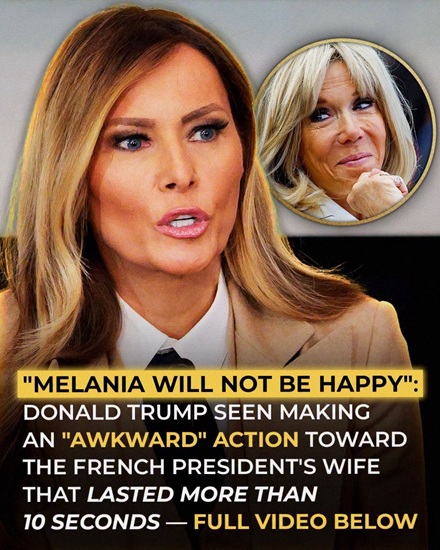
International diplomatic summits are carefully designed events where world leaders come together to discuss global issues, strengthen alliances, and present a unified image of cooperation. Yet in today’s media-driven world, even the smallest moments during these gatherings can attract worldwide attention. At meetings such as the G7 summit, figures like Donald Trump and Emmanuel Macron are constantly observed, not only for their political discussions but also for their public interactions.
While the official purpose of these summits is focused on topics such as international security, economic stability, and diplomatic cooperation, public attention often shifts toward informal and unscripted moments. These brief interactions between leaders are frequently captured by cameras and later analyzed in detail across global media platforms.
One of the most discussed aspects of modern diplomacy is nonverbal communication, especially handshakes, greetings, and physical gestures. These actions are traditionally symbolic, representing respect and diplomatic acknowledgment between nations. However, when these gestures appear unusual in timing or style, they often become the subject of public interpretation.
In highly visible political environments, every movement is recorded and can be replayed repeatedly. A handshake that lasts slightly longer than expected, a pause during conversation, or a particular facial expression can all be examined and discussed from multiple perspectives. These interpretations are often shaped more by public perception than by official meaning.
Media coverage of such events tends to amplify these moments further. Video clips circulate rapidly online, where viewers analyze them frame by frame, attempting to understand tone, intent, or underlying meaning. As a result, simple diplomatic gestures can quickly evolve into widely debated topics.
In many cases, experts in communication or body language are invited to provide analysis. These specialists may comment on posture, eye contact, or movement patterns to offer possible interpretations. However, such analyses remain subjective, as human behavior in formal settings can vary depending on context, pressure, and cultural norms.
Social media also plays a significant role in shaping how these moments are perceived. Users from different backgrounds often share contrasting opinions, leading to discussions that spread far beyond the original diplomatic event. This creates a cycle where interpretation becomes just as influential as the event itself.
The same interaction can be understood in completely different ways depending on the viewer. Some may see it as a standard diplomatic courtesy, while others may interpret it as unusual or symbolic. This variation highlights how perception can significantly influence public reaction to political imagery.
Broader geopolitical context also affects how these moments are viewed. Relations between countries, ongoing negotiations, and previous diplomatic exchanges all contribute to shaping public interpretation. Even neutral gestures can take on additional meaning when viewed through the lens of international politics.
Experts in international relations often emphasize that diplomatic behavior follows established protocols intended to ensure respect and consistency. However, within these formal structures, human interaction remains unpredictable, especially in high-pressure global events where leaders are constantly under observation.
As global communication becomes faster and more visual, public interest in these moments continues to grow. Audiences are no longer focused only on policy decisions but also on the personal dynamics between world leaders. Visual details, such as expressions and gestures, are increasingly part of how political narratives are formed.
This shift has changed how diplomacy is consumed by the public. Instead of relying solely on official statements or press releases, many people now engage with short video clips and images that circulate online, often shaping their understanding of events in real time.
Ultimately, these reactions demonstrate how modern diplomacy exists on two levels: the official level of negotiations and agreements, and the public level of interpretation and perception. Both play a role in how international events are understood in today’s interconnected world.
In conclusion, the attention given to small diplomatic gestures reflects the growing influence of media and digital platforms in global politics. While leaders focus on policy and international cooperation, audiences often focus on human interaction and visual symbolism, turning brief moments into widely discussed global narratives.

