
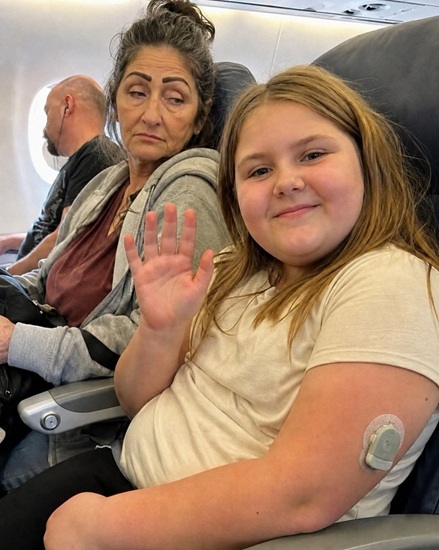
For many families, traveling by plane is simply another part of a vacation. Airports are busy, flights are crowded, and strangers spend a few hours together before continuing on their separate paths. For Sarah Mitchell and her nine-year-old daughter, Emma, the return flight after visiting grandparents was expected to be quiet and uneventful. They had packed their bags, arrived at the airport early, and boarded the plane with nothing more on their minds than getting home safely.
Neither of them imagined that one careless comment from another passenger would completely change the atmosphere inside the cabin. Emma had been diagnosed with Type 1 diabetes when she was only four years old. Since then, daily life had become a carefully organized routine involving blood glucose monitoring, insulin therapy, balanced meals, and emergency supplies that traveled everywhere with her. Despite her young age, she had learned how to recognize early warning signs when her blood sugar changed too quickly.
Her parents admired the courage she showed every day, even though managing a chronic medical condition required responsibilities that many children her age never had to face. Over time, Emma also became more aware of comments people occasionally made about appearance. Like many children, she sometimes compared herself to classmates and worried about fitting in.
The physical changes that accompanied growth, combined with the realities of managing diabetes, sometimes affected her confidence. Although her family constantly reminded her that health, kindness, and character mattered far more than appearance, she occasionally chose loose-fitting sweatshirts simply because they helped her feel less self-conscious around others.
Unfortunately, the flight was completely full, and Sarah had been unable to reserve two seats together. Instead, she sat directly across the aisle from Emma, close enough to watch her throughout the journey. Emma smiled politely as she greeted the passengers seated beside her. An older gentleman near the window responded warmly, but the woman sitting between them barely acknowledged the greeting. Instead, she looked Emma up and down before letting out a long sigh that immediately made the young girl uncomfortable.
Only moments after everyone settled into their seats, the woman quietly muttered a remark suggesting that some passengers should purchase additional seating if they required more space. Although the comment was not shouted, it was loud enough for nearby travelers to hear. Emma immediately lowered her eyes and pulled her arms closer to her body. Sarah noticed the change in her daughter’s expression instantly and calmly stood up, asking the woman to please avoid directing personal comments toward a child. Rather than apologizing, the passenger insisted she was simply expressing an opinion, leaving an awkward silence throughout the surrounding rows.
Sarah chose not to continue the disagreement because she wanted to protect Emma from further embarrassment. Instead, she offered her daughter a reassuring smile and reminded her that other people’s opinions never defined her worth. One of the flight attendants quietly approached to make sure everyone was comfortable and politely encouraged all passengers to maintain a respectful atmosphere for the remainder of the flight. The conversation ended, but the emotional impact of the exchange remained visible on Emma’s face.
As the aircraft reached cruising altitude, Sarah handed Emma a small carton of apple juice, asking her to keep it within easy reach. Carrying fast-acting carbohydrates was an important part of Emma’s diabetes management plan whenever they traveled. Before Emma could place the juice in the seat pocket, the same passenger made another dismissive comment, incorrectly suggesting that sugary drinks explained why some people struggled with their weight. Sarah calmly responded that the juice was emergency treatment recommended by Emma’s healthcare team in case her blood sugar dropped unexpectedly during the flight.
The explanation received little reaction from the woman, who simply shrugged and looked away. However, a nearby flight attendant overheard the conversation and quietly reassured Sarah that the crew understood the importance of passengers traveling with medical supplies. The attendant also reminded nearby travelers that many health conditions are not immediately visible and that people should avoid making assumptions about someone else’s circumstances. The respectful reminder helped ease some of the tension that had developed inside the cabin.
About an hour later, Emma glanced at the continuous glucose monitor attached to her arm. Within seconds, the device produced a loud alert indicating that her glucose level was falling quickly. Sarah immediately crossed the aisle and handed her the apple juice while the flight attendant knelt beside Emma to check whether she needed additional assistance. Remaining calm, Emma followed the treatment plan she had practiced many times before, slowly drinking the juice while continuing to monitor her glucose readings.
The flight attendant briefly explained to several nearby passengers that Type 1 diabetes is an autoimmune condition in which the pancreas no longer produces insulin. She explained that low blood sugar can develop unexpectedly and that consuming fast-acting carbohydrates, such as fruit juice, is often an important first step in treating mild hypoglycemia. Her calm explanation helped many passengers better understand why Emma always traveled with emergency supplies and why preparation was such an important part of her daily routine.
As Emma’s glucose level gradually returned to a safer range, the atmosphere inside the aircraft changed noticeably. The elderly gentleman sitting beside her smiled warmly and shared that one of his grandchildren also lived with Type 1 diabetes. Another passenger quietly offered a packet of crackers in case they were needed later, while several others complimented Emma for remaining calm throughout the situation. Their encouragement reminded everyone that empathy often begins with taking the time to understand another person’s experience rather than making assumptions.
After watching the interaction unfold, the woman who had made the earlier remarks remained silent for several minutes. Eventually, she turned toward Sarah and Emma and quietly apologized. She admitted that she had judged the situation without knowing anything about Emma’s medical condition or the daily challenges she faced. Sarah accepted the apology politely, explaining that many invisible medical conditions are misunderstood and that learning more about them helps create greater compassion. Emma smiled gently and said she simply hoped people would think twice before making comments about someone else’s appearance.
By the time the aircraft landed, the atmosphere felt entirely different from when the journey had begun. Several passengers wished Emma well as they collected their luggage, and members of the flight crew complimented her confidence and maturity. Walking through the airport hand in hand with her mother, Emma admitted that the kindness shown by complete strangers had helped restore her confidence after one painful moment.
Sarah reminded her that true strength comes from resilience, kindness, and courage—not from meeting someone else’s expectations. The experience became an unforgettable reminder that a few thoughtful words can have just as much power as careless ones, and that understanding another person’s circumstances is always more valuable than making assumptions.

